About this guide: This guide explains published specifications and reader-run checks. Thickness, compression, weight and traction should be considered for the exact mat rather than treated as a laboratory ranking.
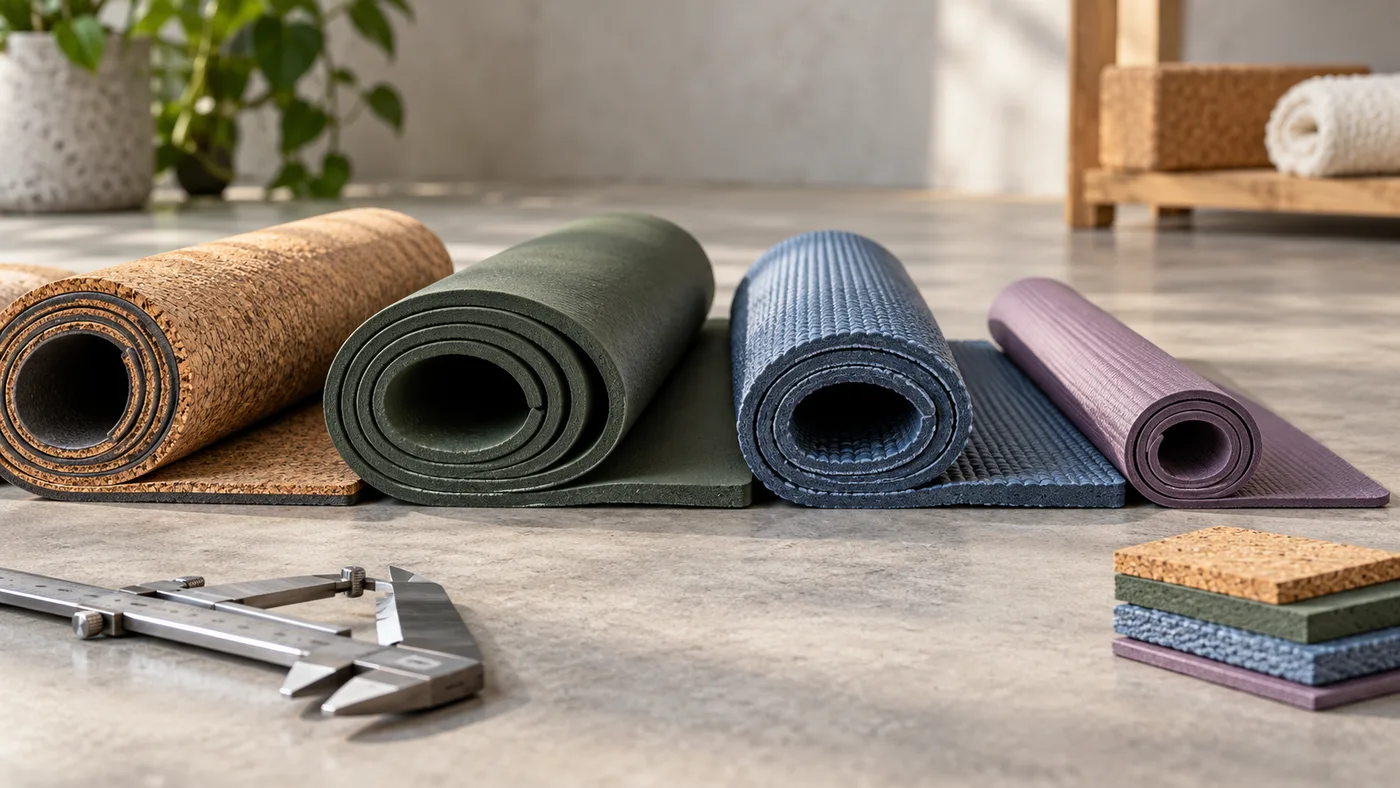
Place two 6 mm mats side by side and they may behave nothing alike: one can feel stable and dense while the other collapses under a knee. Millimeters describe distance from the floor; density influences support, surface construction changes sweat behavior, and total weight determines whether the mat survives the commute.
Begin with the practice surface, sweat level and transport limit. Thickness comes after those constraints.
Thickness at a Glance
| Thickness | Best use | Main benefit | Main cost |
|---|---|---|---|
| 1–2 mm | Travel or personal top layer | Folds and packs | Almost no hard-floor cushion |
| 3–4 mm | Mobile studio practice | Balance feedback and lower weight | Less knee comfort |
| 5–6 mm | Regular home/studio use | Practical cushion-stability balance | More weight |
| 8–10+ mm | Floor exercise or very gentle work | Immediate softness | Wobble, bulk and deep compression |
These ranges are starting points. A dense 6 mm Manduka PRO behaves differently from a soft 6 mm foam mat.
1–2 mm: Travel Layer
A travel mat is meant to add personal grip over a studio mat, carpet or clean floor. It folds or rolls into luggage and weighs much less.
It does not meaningfully cushion knees on hard tile. Wrinkles and uneven surfaces can also destabilize practice. Choose it as a second mat when portability is the job, not as a universal first mat.
3–4 mm: Feedback and Mobility
This range gives more direct contact with the floor and often suits balance-focused practice or regular commuting. It can be enough for practitioners who do not have sensitive knees and prefer minimal compression.
Add a small knee pad or folded blanket rather than buying an unstable plush mat for the entire sequence.
5–6 mm: Balanced Daily Use
Dense 5–6 mm mats are common because they offer joint protection while retaining a stable base. Lululemon The Mat 5mm combines this thickness with an absorbent top; Manduka PRO combines 6 mm with closed-cell density. Same range, different sweat behavior.
This is a strong starting range for home practice, but check weight. Dense construction can exceed five or seven pounds.
More Than 8 mm: Comfort With a Stability Cost
Thick exercise mats help with supine work, gentle stretching and some rehabilitation contexts. In standing balance, soft foam compresses under heels and palms, forcing extra corrections.
If pain drives the choice, obtain appropriate clinical advice rather than assuming maximal softness is safest. A stable mat plus targeted padding may be better.
Density: The Missing Specification
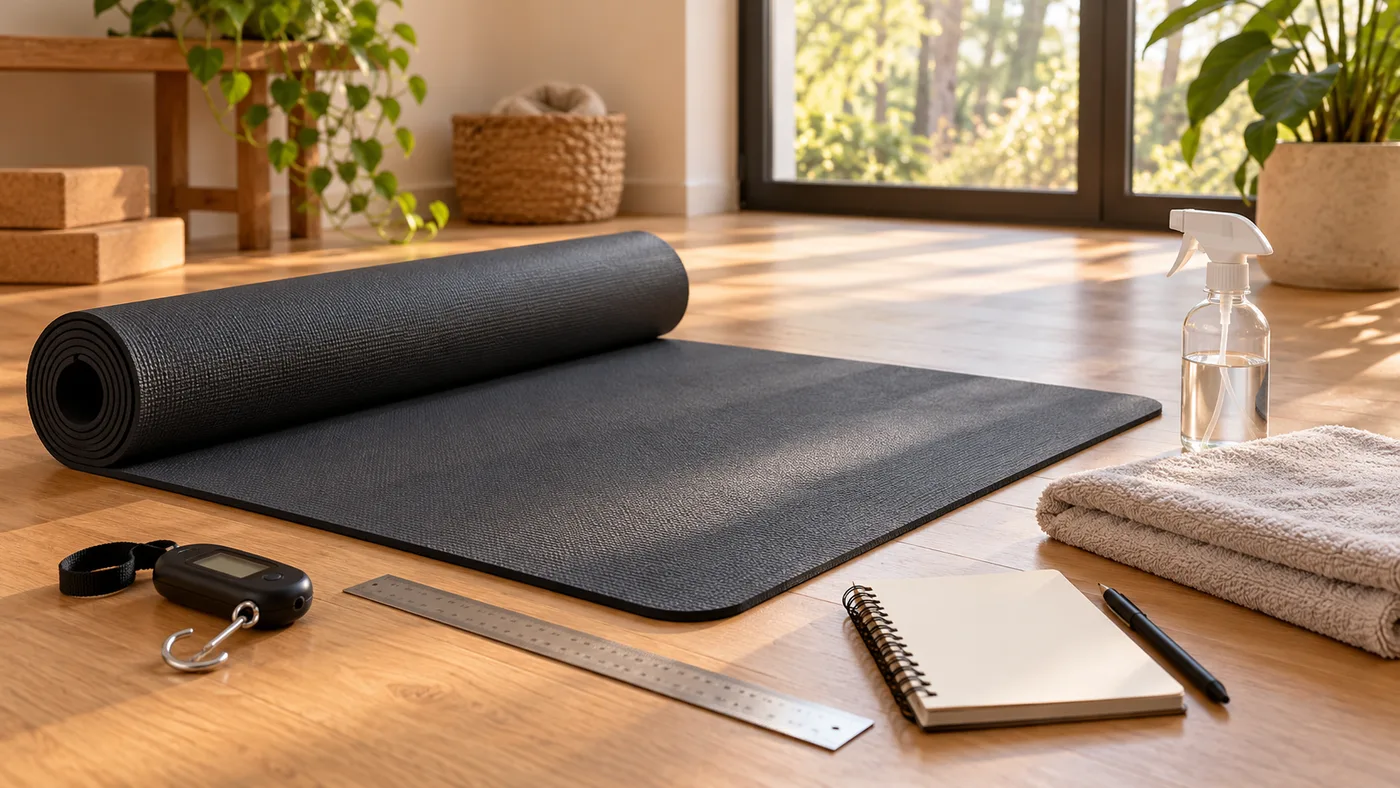
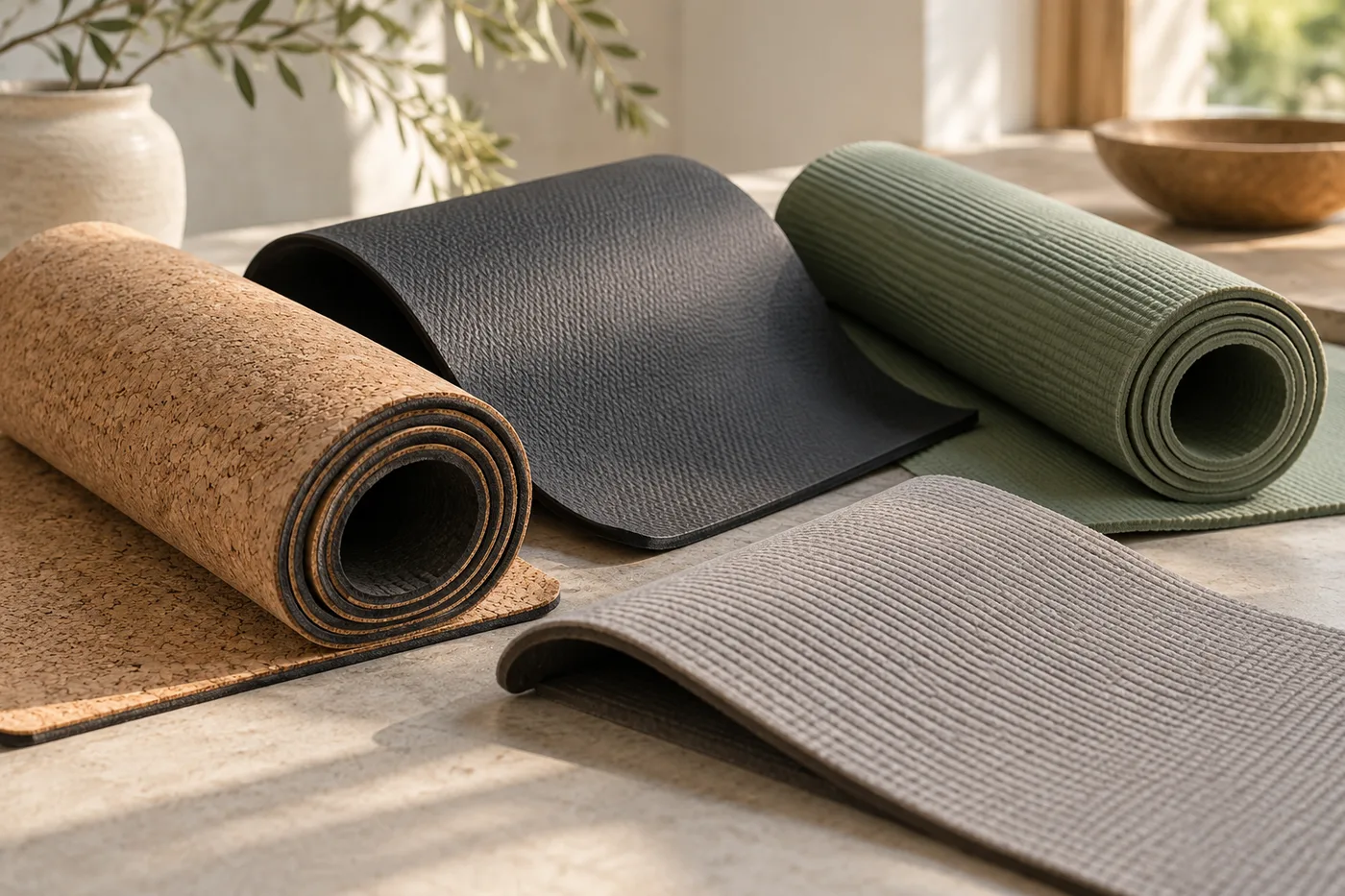
Manufacturers often publish thickness and weight but not density. You can still test behavior:
- Press a thumb for five seconds.
- Observe dent depth and recovery.
- Stand on one foot.
- Hold tabletop for 30 seconds.
- Compare comfort and wobble.
A mat that bottoms out under the knee provides less effective protection than its millimeters suggest.
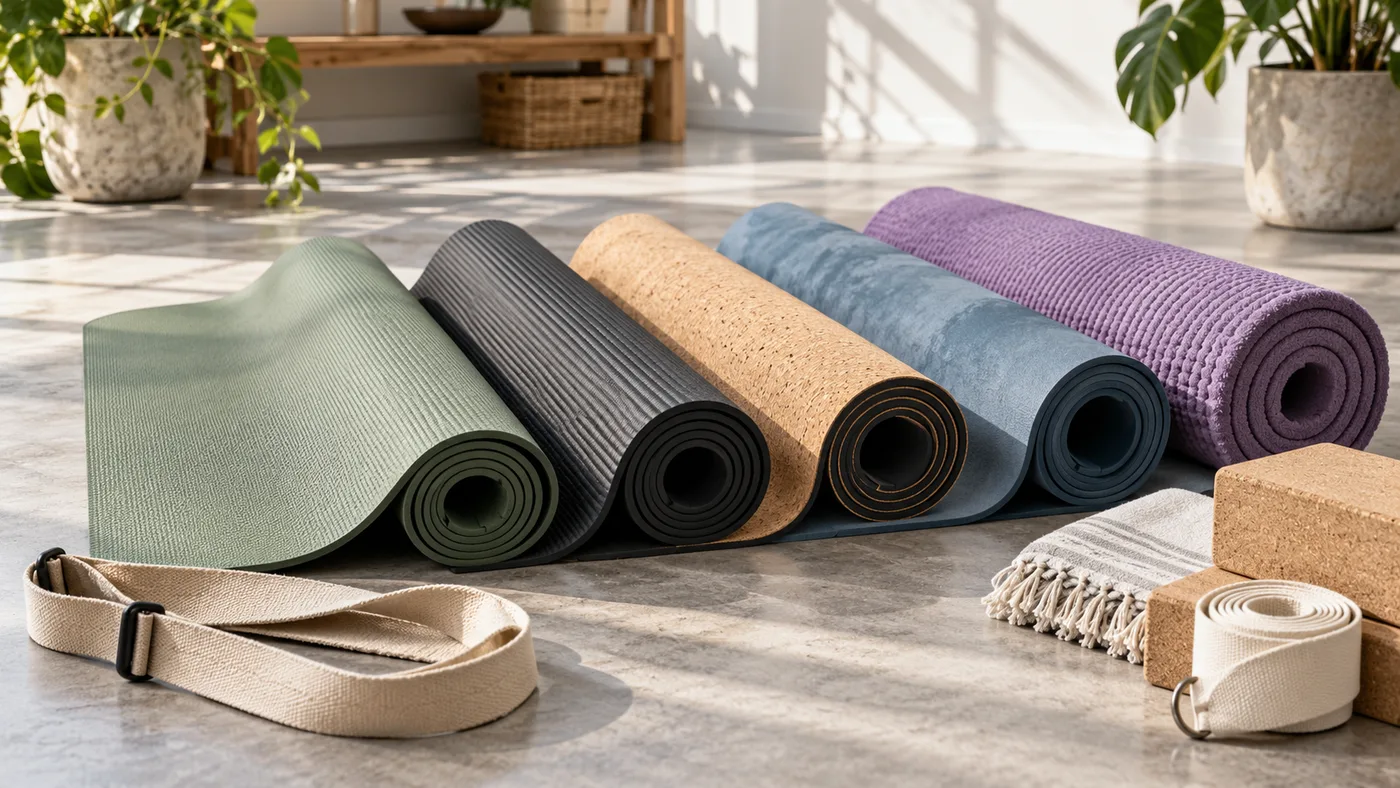
Surface: Open, Closed or Absorbent Top
Closed-cell
Resists moisture absorption and wipes clean easily. Sweat can remain as a film and reduce grip. Manduka recommends a towel for sweaty PRO use.
Open-cell or porous rubber
Often feels tactile and grippy but absorbs more moisture and requires careful drying. Odor and cleaning effort may increase.
Polyurethane top
Can absorb/manage moisture and produce strong damp grip, as on Lululemon The Mat. It may show marks, attract debris and demand prompt drying.
Cork
Changes character when damp and can feel less tacky when dry. Backing and construction determine flatness and weight.
Material Trade-Offs
Natural rubber
Good floor contact and traction; heavier, odorous when new and inappropriate for some latex-sensitive people. Protect from prolonged sun.
PVC
Can be dense, durable and closed-cell. Environmental concerns must be weighed against verified certification, service life and replacement frequency.
TPE
Usually light and cushioned. Formulations vary, so the acronym does not predict durability.
EVA/NBR foam
Often inexpensive and soft. Useful for general floor exercise; may dent or stretch more than a yoga-specific dense mat.
Cork or textile tops
Surface behavior depends on the substrate and adhesive. Inspect the entire construction.
Size and Weight
Standard mats may feel short for tall bodies or long traveling transitions. Measure the space used in downward dog and a long lunge; add margin at head and feet.
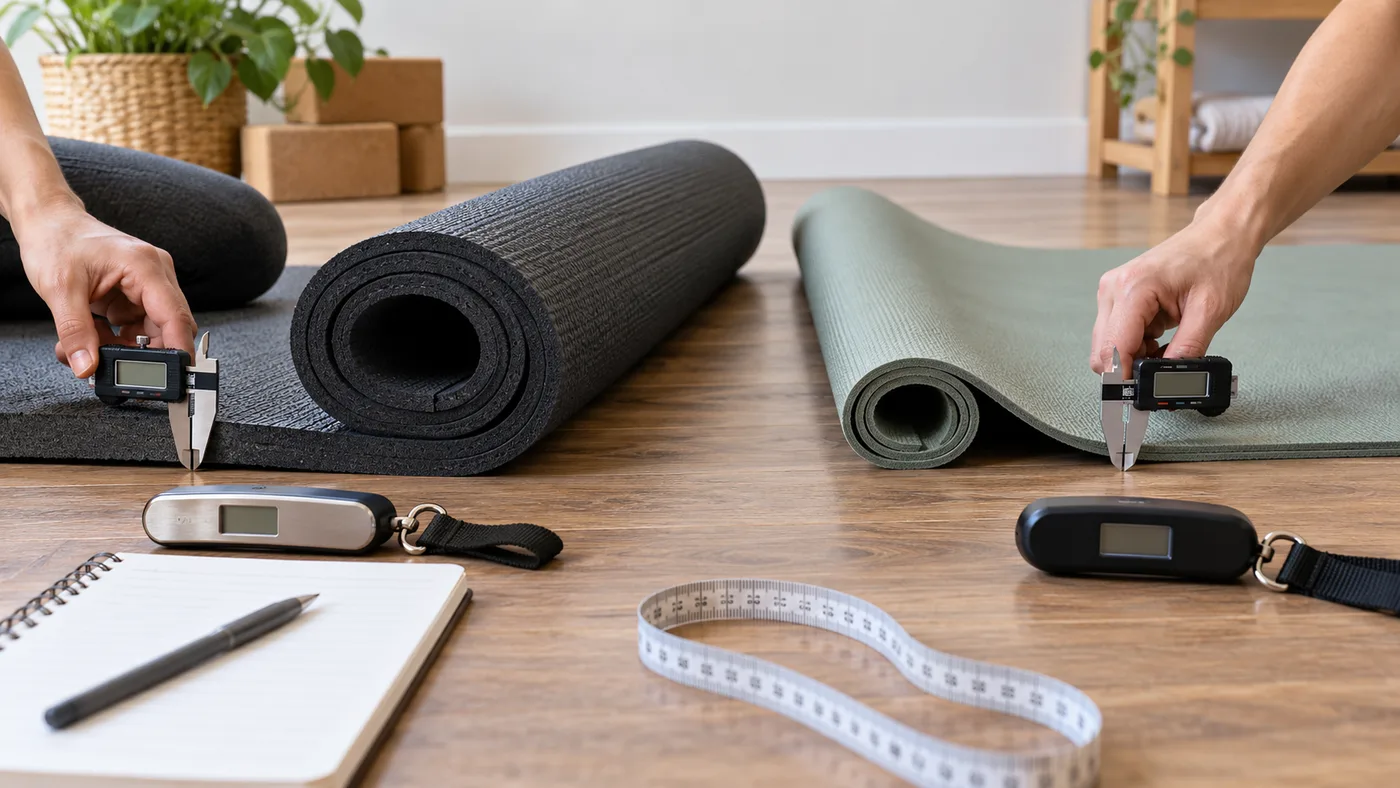
For transport, perform a realistic carry test with water, towel and clothing. The Manduka versus Adidas comparison shows which exact-model weights, rolled dimensions and complete carry setups need to be checked before comparing portability. It does not establish a carrying advantage for an unspecified Adidas mat.
Wet-Grip Test
With clean hands and within return rules:
- hold downward dog dry;
- mark hand/foot positions;
- lightly mist only those zones;
- repeat;
- add the intended towel if necessary.
Do not use lotion. Do not apply salt or abrasive treatment unless officially approved. The best yoga mats shortlist routes by grip, travel and joint need.
Cleaning and Storage
The exact manufacturer instructions win. Generally:
- do not soak unless approved;
- avoid essential oils and harsh cleaners;
- dry both sides fully;
- keep away from prolonged sun/heat;
- roll in the recommended direction; and
- never leave a damp mat in a car or bag.
REI's mat-cleaning guide is a useful general reference.
One-Page Buying Worksheet
- Primary practice: ___
- Sweat level: low / medium / high
- Hard-floor knee sensitivity: low / medium / high
- Balance priority: low / medium / high
- Commute: home / car / walk / transit / flight
- Material restrictions: ___
- Minimum dimensions: ___
- Maximum carry weight: ___
- Cleaning tolerance: low / medium / high
- Budget: ___
Choose the least specialized mat that satisfies the top three constraints.
A Five-Minute Support-and-Stability Test
Test a new mat indoors while it is still returnable. Begin in tabletop and notice whether the knees feel protected without sinking deeply. Move to Downward-Facing Dog and a high plank: the hands should not creep forward on a dry surface, and the mat should not stretch or bunch. Stand in Warrior II and Tree Pose to check whether the foam delays balance feedback. Finally, step on and off the edges to see whether they curl or become a trip point.
Repeat the hand test with slightly damp palms only if the manufacturer permits it, then let the mat dry fully. This sequence cannot predict years of durability, but it exposes a mismatch between cushion, grip and stability more reliably than pressing a thumb into a display mat. For product comparisons, record room temperature, floor type, footwear, moisture and the exact model so that later observations are comparable.
Common Mat Selection Problems
Is 5 mm good for beginners?
Often, if the mat is dense and has reliable grip. It balances cushion and control for many people.
What thickness is best for bad knees?
There is no medical universal. Density, pose duration and targeted padding matter. Persistent pain deserves professional assessment.
Which material is least slippery?
Surface and moisture matter more than material name. Test dry and damp grip on the exact model.
Can I use a fitness mat for yoga?
Yes for some gentle floor work. Very soft or stretchy mats can make standing balance and transitions less stable.
Selection Rule
Choose density before chasing maximum thickness, surface before brand and carrying weight before fantasy. The best mat supports the practice often enough that its compromises become invisible.