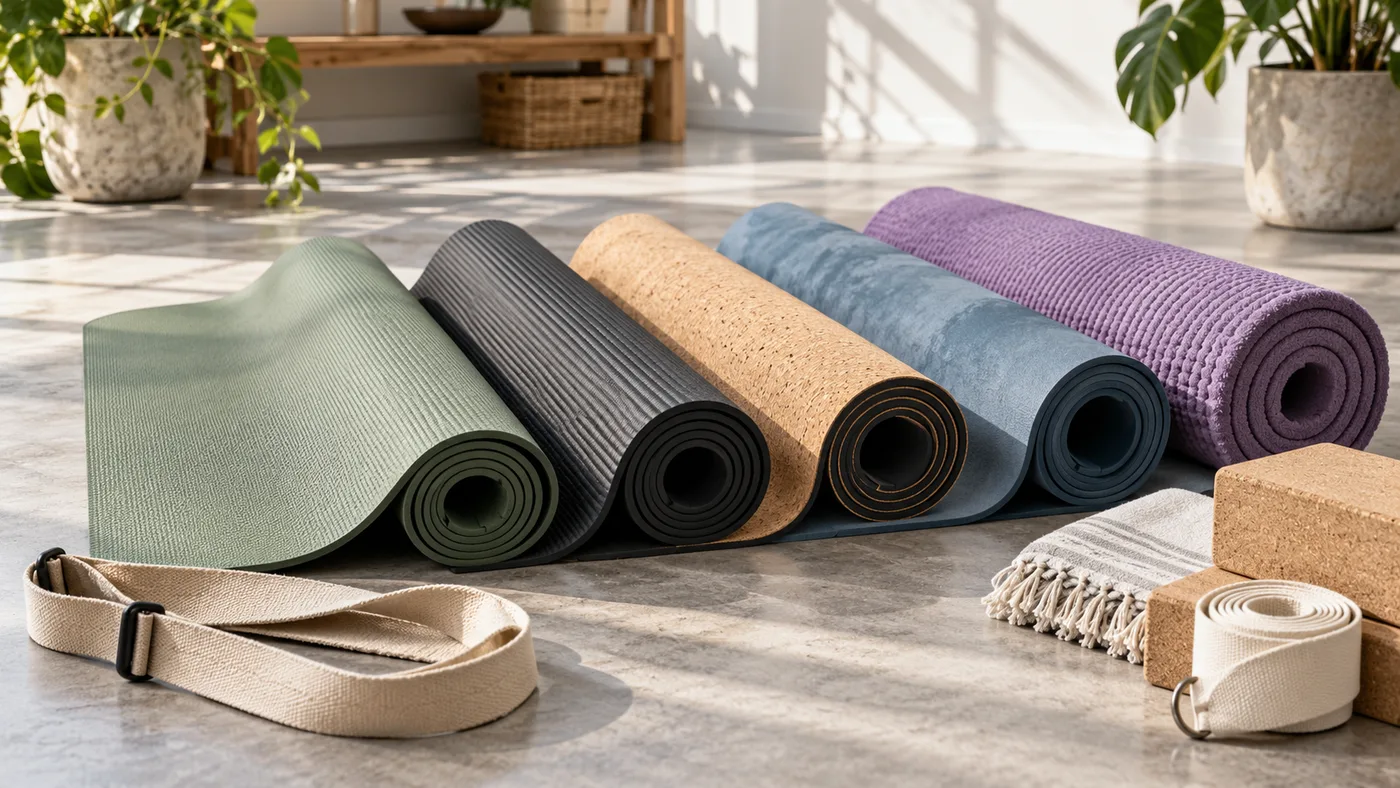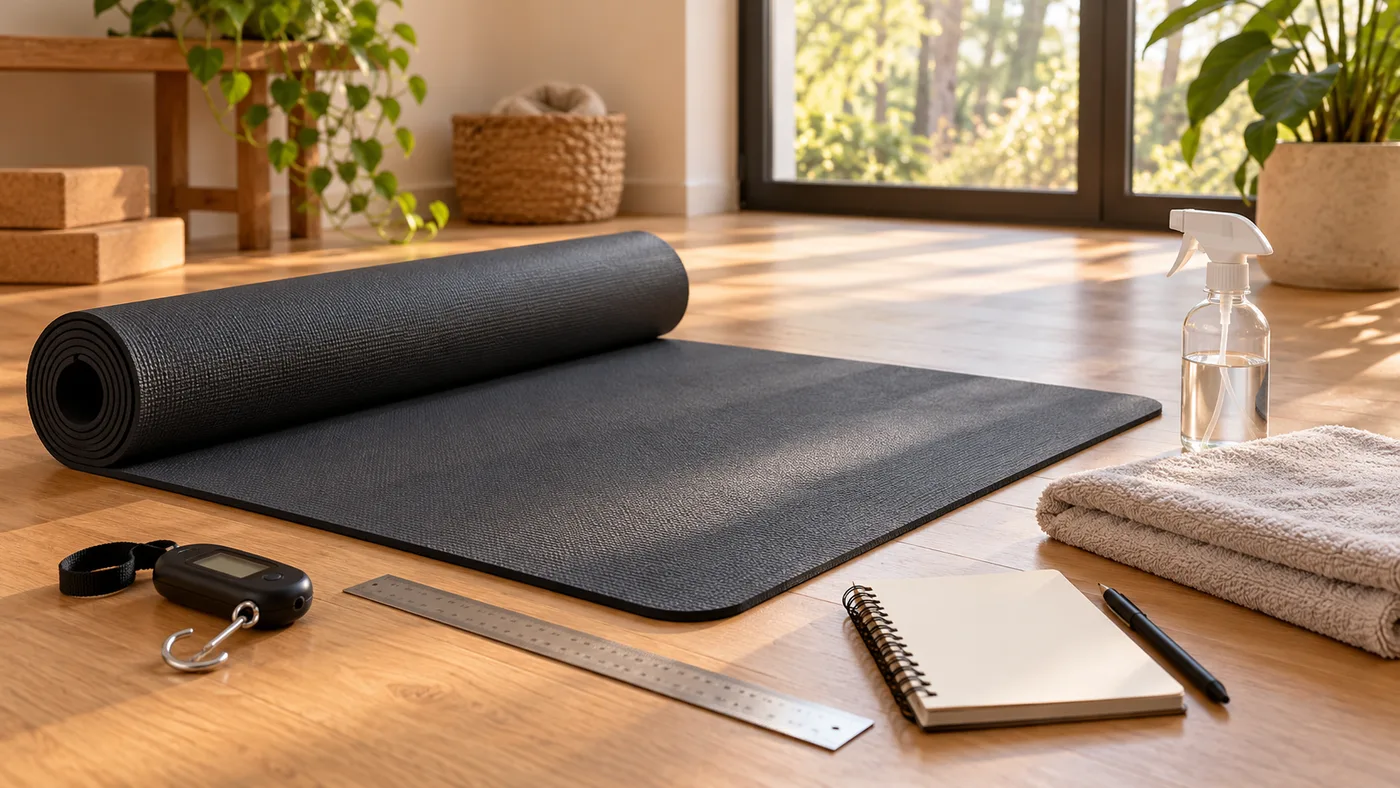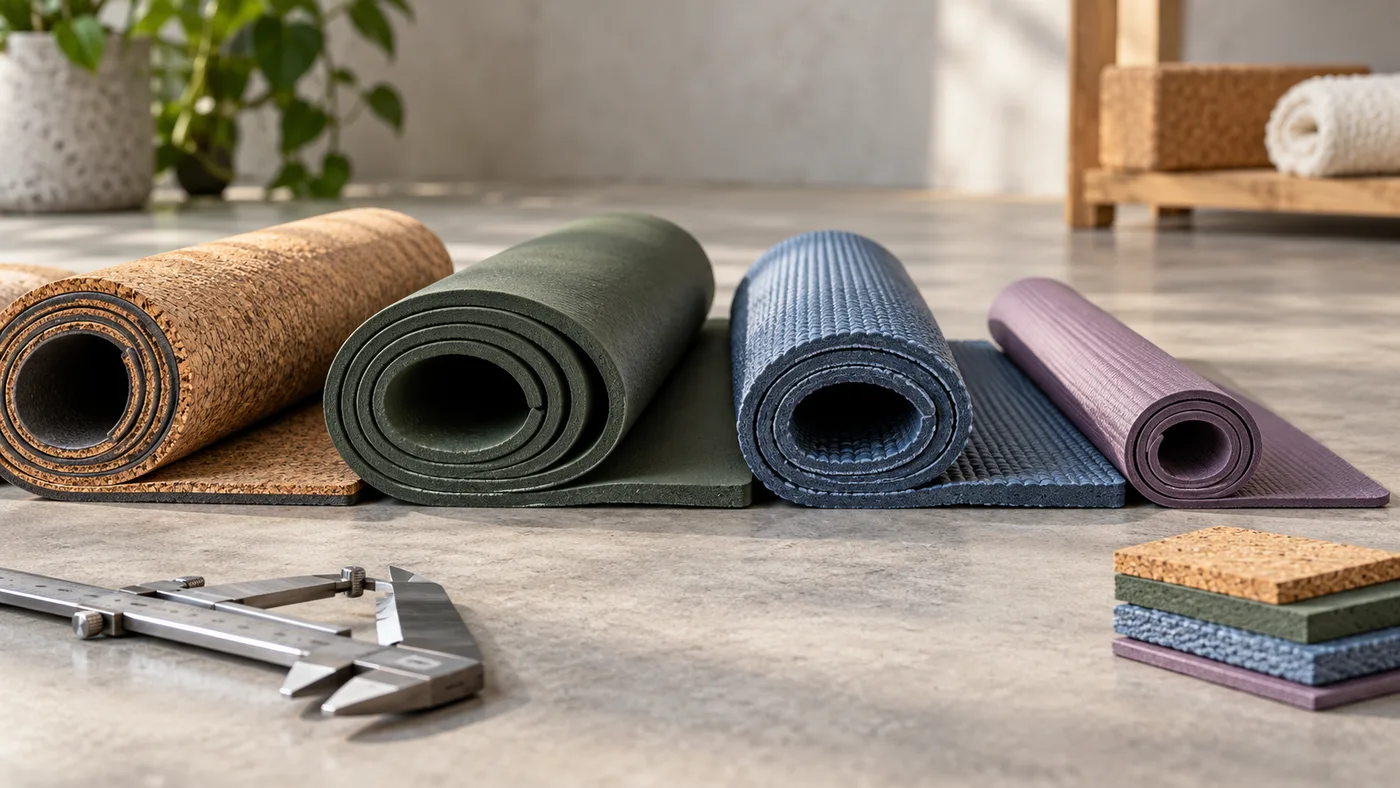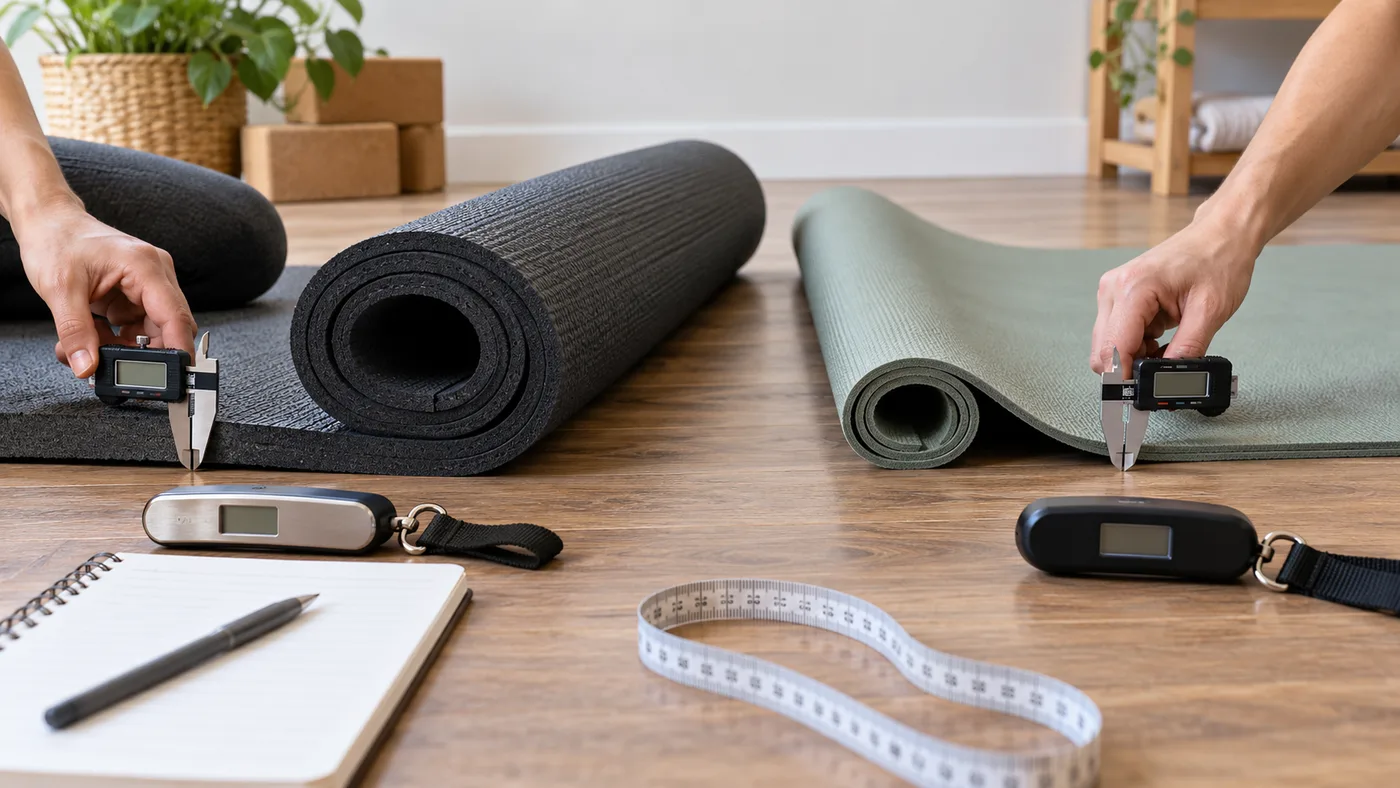
“Manduka versus Adidas” is not yet a valid product test. Manduka PRO identifies one exact 6 mm, closed-cell PVC model; “Adidas yoga mat” can refer to products with different thicknesses, materials, surfaces and regional listings. The useful job of this page is to show how to select an exact Adidas counterpart before comparing it with the documented Manduka benchmark.
About this guide: This is an exact-model comparison framework. Manduka PRO identifies a specific model; an Adidas counterpart has not been selected, so there is no matched grip, cushioning, weight or value result.
Current evidence boundary: Manduka PRO can be evaluated from its official specification. No conclusion about Adidas grip, weight, cushion, cleaning or value is defensible until an exact SKU and market are locked. For hot yoga, neither brand name answers the wet-grip question.
First, Compare Exact Models
Manduka's range is relatively easy to map. The current Manduka PRO page lists the standard PRO at 6 mm, 71 by 26 inches and 7.5 pounds. The surface is closed-cell; the material is OEKO-TEX Standard 100-certified PVC; the mat is latex-free; and the product is backed by a limited lifetime guarantee subject to terms.
“Adidas yoga mat” is not one specification. The brand has sold different thicknesses, dimensions and materials across countries and retailers. Before comparing, write down the exact Adidas model number, thickness, weight, surface and return policy. A 4 mm textured yoga mat and a 10 mm training mat should not receive the same verdict.
| Decision factor | Manduka PRO 6 mm | Adidas candidate (exact SKU required) |
|---|---|---|
| Design priority | Dense stability and longevity, as described by Manduka | Verify the exact model's stated intended use |
| Surface | Closed-cell | Model-specific |
| Weight | 7.5 lb standard | Check exact listing |
| Sweat absorption | Resists absorption | Model-specific |
| Break-in | May improve with practice | Model-specific |
| Location to evaluate | Home or regular studio, subject to the buyer's carry needs | Assess using verified weight, dimensions and intended use |
| Warranty | Limited lifetime terms | Check market and retailer |
Cushioning: Density Matters More Than Millimeters
Thickness gives nominal depth, not a complete account of behavior under load. Manduka describes the PRO as a dense 6 mm mat designed for cushioning and stability. How its compression, knee comfort and balance feel compare with an Adidas candidate remains unmeasured until that candidate is identified and both are evaluated under the same conditions.
If the selected candidate is more compressible, compare pressure comfort in floor work with stability in standing balance. Do not infer either benefit or drawback from the Adidas name, the thickness or the word “soft” alone.
Use three tests:
- Thumb test: press firmly for five seconds and observe recovery.
- Balance test: stand on one foot for 20 seconds with eyes open.
- Knee test: hold tabletop on a hard floor for 30 seconds.
No single test crowns a winner. The best mat keeps the practitioner comfortable enough to practice without making balance needlessly unstable. The mat thickness and material guide explains the broader choices.
Evidence boundary: Manduka's published design is a reason to investigate the PRO, not a measured comparative result. Neither mat can be credited with better cushioning or balance until the exact candidate and the relevant observations are documented.
Dry Grip, Wet Grip and Break-In
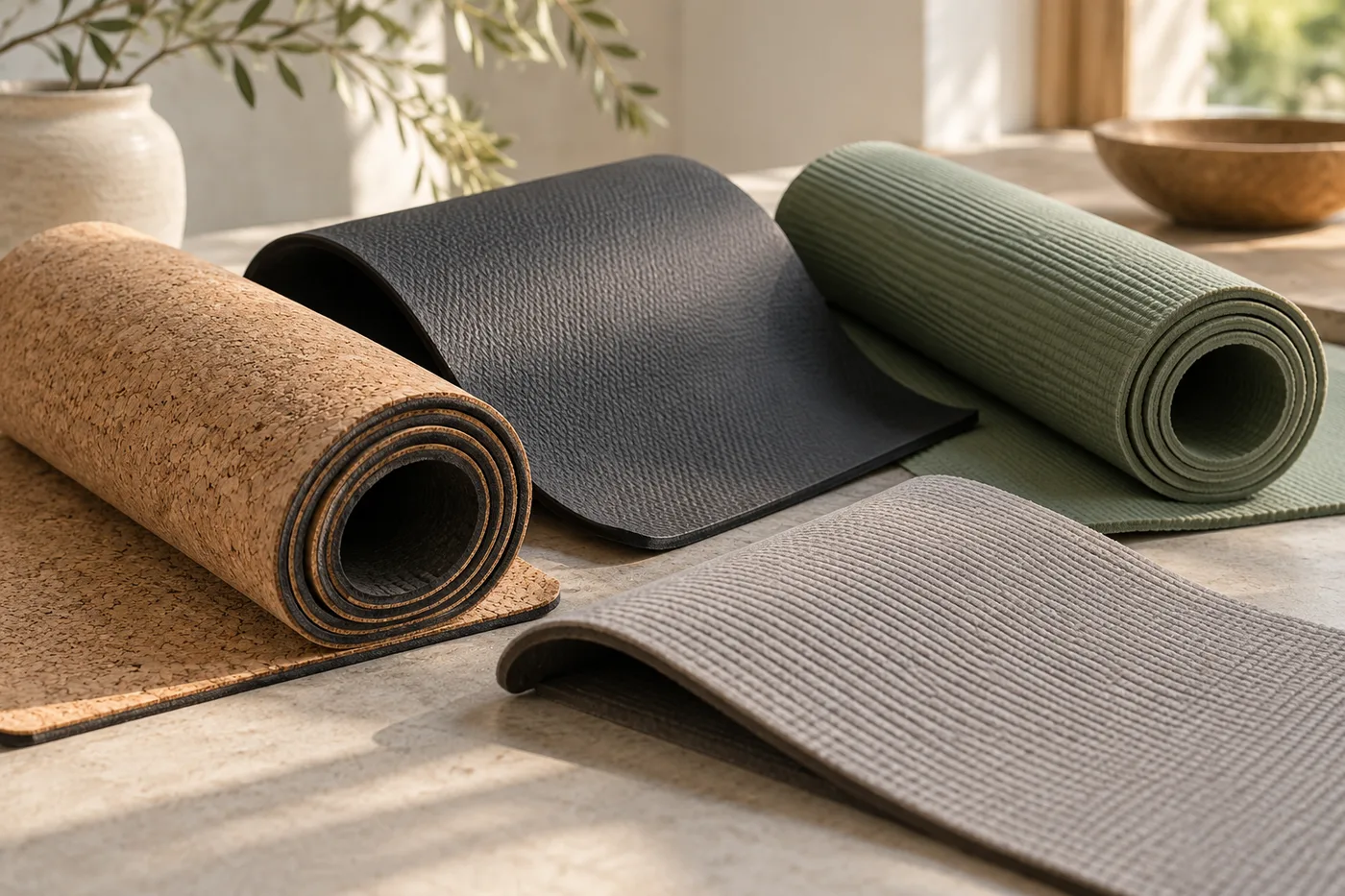
Manduka describes the PRO as having a fabric-like surface that improves with practice. Because the surface is closed-cell and does not absorb sweat, moisture can remain on top. Manduka itself recommends a compatible towel for sweaty or heated practice. That is a refreshingly important limitation.
Adidas grip depends on the exact product. Texture that feels secure with dry hands can become slick when damp. Marketing photographs cannot answer this.
A fair test uses clean, lotion-free hands:
- five breaths in downward dog when dry;
- a light water mist, never oils;
- five more breaths with hands in the same marks;
- a side-plank transition; and
- towel-assisted repetition if the class is heated.
Never perform an aggressive salt treatment or abrasive scrub unless the manufacturer explicitly permits it. Damage caused by internet “break-in hacks” may not be covered.
Evidence status: Model- and sweat-dependent. For an absorbent-top alternative to investigate, use the 2026 yoga-mat shortlist.
Portability: Verify Both Complete Setups
Manduka lists the standard PRO at 7.5 pounds before adding a strap, water and clothing. That is a known carrying load to evaluate against your route, stairs and transport. A mat kept in one room creates a different carrying requirement from one taken to class every day.
An Adidas candidate's carrying load is unknown until its model-specific weight and rolled dimensions are verified. Simulate the entire commute for each exact model by loading a bag with its listed weight plus your bottle, towel and clothes, then walk for ten minutes. The result is more informative than reading “portable.”
Evidence boundary: The PRO's published weight provides one comparison input. An Adidas candidate cannot be credited with a transport advantage until its verified weight, rolled dimensions and complete carry setup are recorded.
Cleaning and Odor
A closed-cell mat does not absorb sweat as readily, which makes the PRO straightforward to wipe. Manduka recommends its tested cleaner or warm water and instructs users to dry the mat before rolling. Manduka's PRO care instructions specify rolling with the top surface facing outward and storing the mat in a cool, dry place. Follow the instructions for your exact model rather than applying that direction to every mat.
For an Adidas mat, identify the material first. Natural rubber, TPE, PVC and mixed foams tolerate different cleaners and sunlight. Use a damp cloth and the exact label instructions; avoid soaking, essential oils and strong household disinfectants unless approved. REI's yoga-mat cleaning guide offers sensible general principles, but the manufacturer remains authoritative for the specific surface.
Materials and Environmental Claims
Manduka PRO is PVC, a choice some buyers reject. The brand's argument is durability: a mat kept for many years can reduce replacement frequency. It also cites OEKO-TEX certification and German manufacture. Those claims describe chemical testing and production, not universal environmental superiority.
An Adidas mat may use TPE, EVA or another formulation depending on model. “PVC-free,” “natural” and “recyclable” answer different questions. Ask:
- What is the exact material?
- Is a certification linked and specific?
- How long is the realistic service life?
- Can the product be recycled where I live?
- Does the brand offer repair, take-back or parts?
- Will I actually keep and use it?
The lowest-impact mat is not automatically the one with the greenest color or shortest ingredient list.
Durability and Value
Manduka's published construction and guarantee may be relevant to someone researching a mat for frequent, long-term use. They do not establish its cost per year for that buyer. The guarantee has conditions; read them before assuming every cosmetic change is covered.
The Adidas candidate's price, durability and value remain open questions. Record the exact model's purchase cost, care requirements, return terms and any model-specific wear evidence. Compare both products over the same period of use rather than assuming one brand is the budget option.
Calculate:
annualized cost = (purchase price + accessories + replacement cost) ÷ years of real use
Add a towel if wet grip requires one and a carrying system if weight requires it.
Scenario Decisions
Consider the Manduka PRO's documented design when:
- the mat will live at home or a regular studio;
- you prioritize balance stability;
- you prefer a closed-cell, easy-wipe surface;
- you accept a break-in period or towel for sweat; and
- you expect frequent, long-term use.
Before considering an Adidas candidate, verify:
- its exact weight and rolled size suit your actual commute;
- its stated intended use matches the activities you do;
- its pressure comfort and balance feel work for you;
- its full price and required accessories fit your budget; and
- model-specific dry and damp grip observations meet your needs.
These requirements remain unresolved until the exact candidates are checked:
- Foldable travel: verify foldability and packed dimensions rather than assuming either candidate meets the need.
- Material restrictions: obtain the exact model's complete material and latex disclosures.
- Hot-yoga wet grip: check model-specific evidence and any required towel; the unnamed Adidas candidate cannot be included or ruled out on brand alone.
- Practice area: confirm that the actual length and width accommodate your body and movements.
Questions to Answer with the Exact Model
Is the Manduka PRO too heavy?
For long commutes, often yes. For home practice, its weight helps it stay planted. Test the real carry rather than the number alone.
Does Manduka PRO become grippy immediately?
Not for everyone. The brand notes that performance improves with practice and recommends a towel when sweat makes the closed-cell surface slick.
Is a thicker Adidas mat better for knees?
A greater nominal thickness does not establish greater knee comfort. Assess the exact candidate's compression, recovery and standing stability under relevant conditions; no Adidas-specific result has been established here.
Which is better for beginners?
There is no brand-level answer from the available comparison. A beginner can investigate the PRO's documented construction, then compare a named Adidas model by grip, comfort, dimensions, carry needs and total cost. Until that candidate is selected, the comparison cannot recommend it as cheaper, more versatile or more suitable for beginners.
What Can Be Concluded Before the Adidas Model Is Named
Manduka PRO supplies a specific proposition: dense, closed-cell stability in a heavy home-or-studio format. “Adidas” supplies no single competing proposition. The article can guide model selection today, but it cannot award portability, price, grip or value to Adidas as a brand. A publishable head-to-head needs an exact model, exact market, matched conditions and documented results.