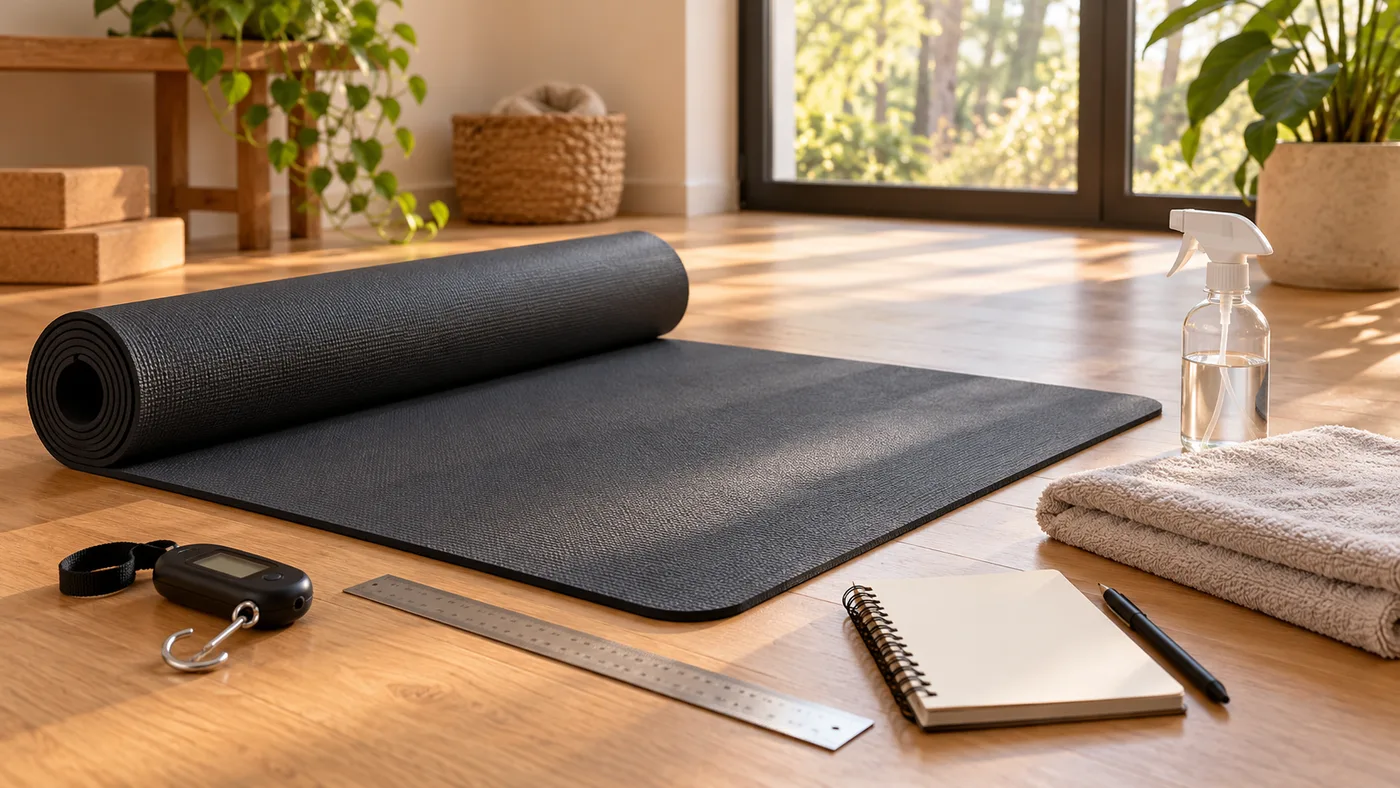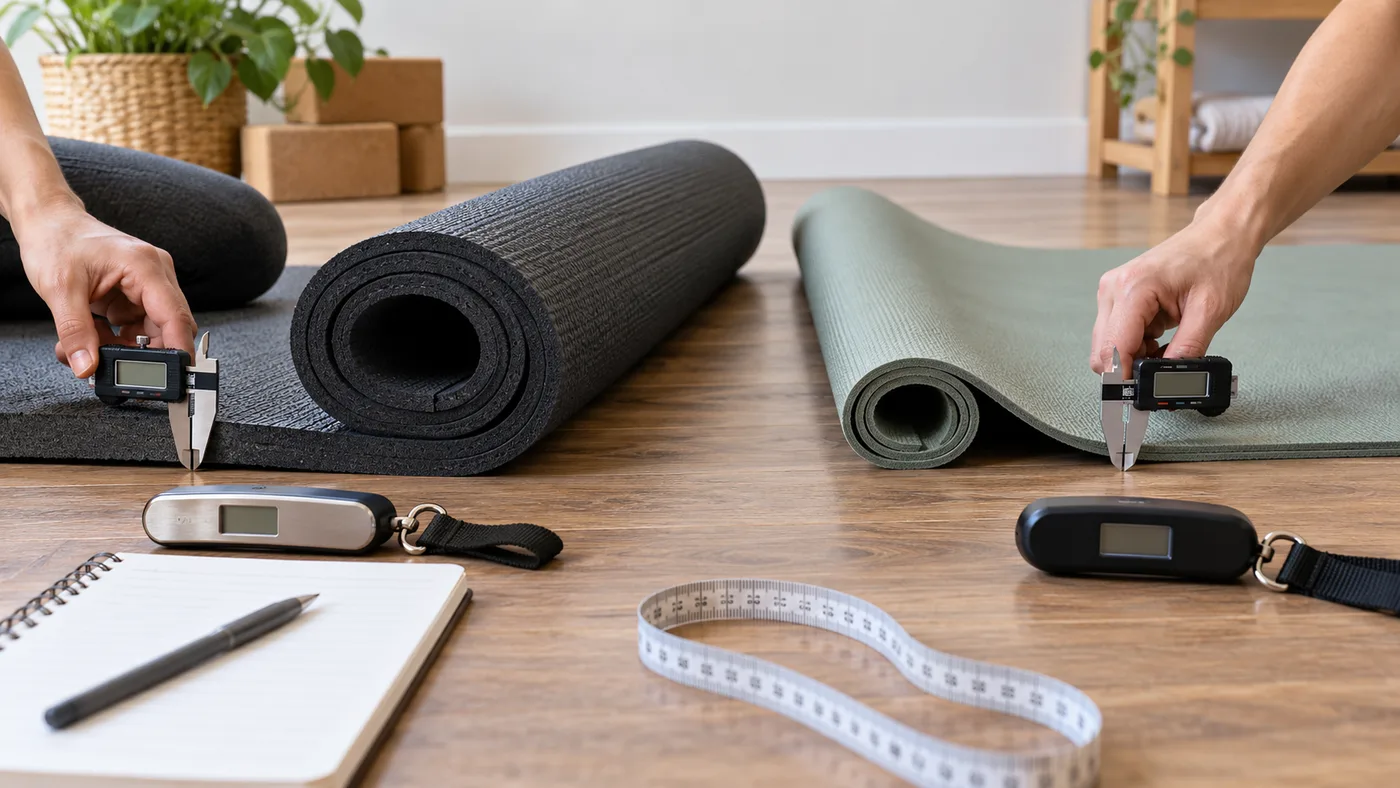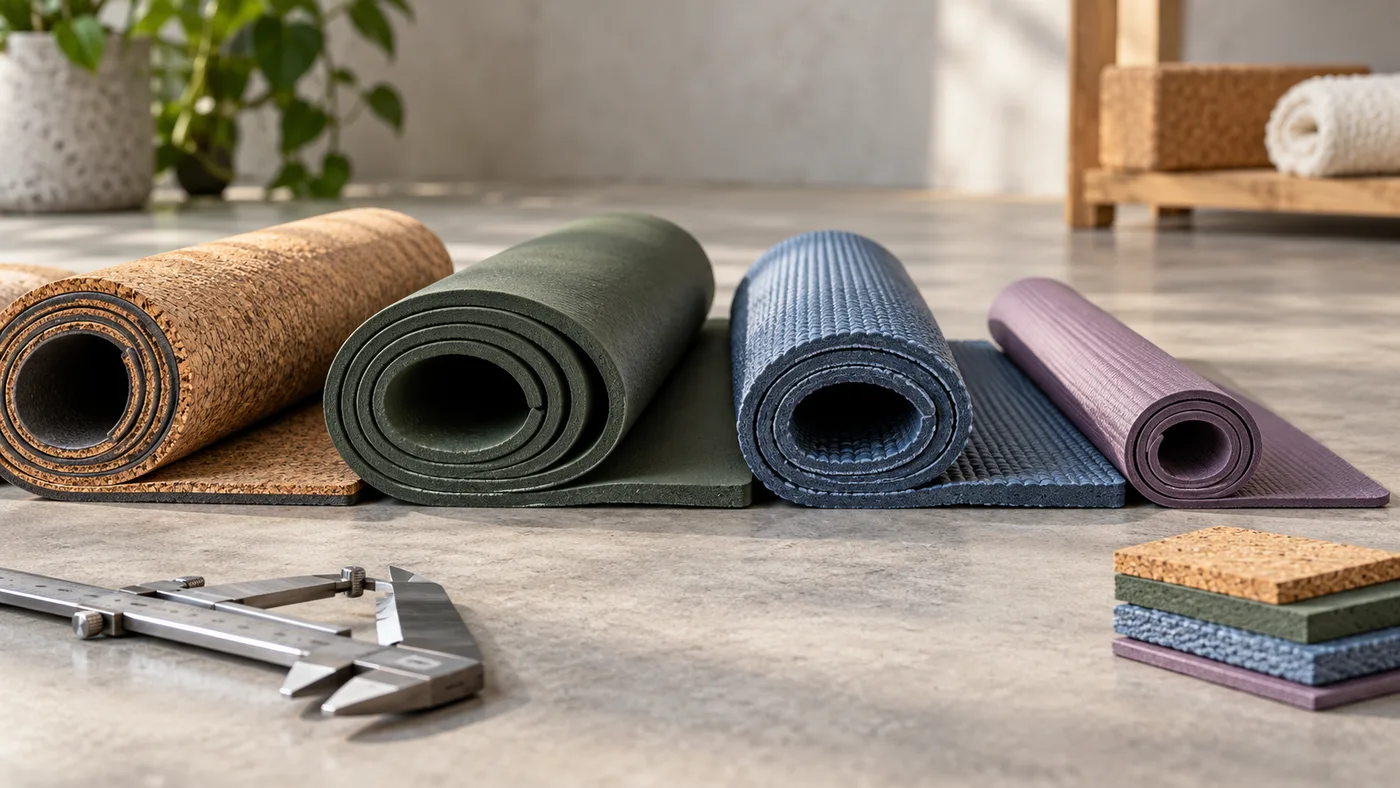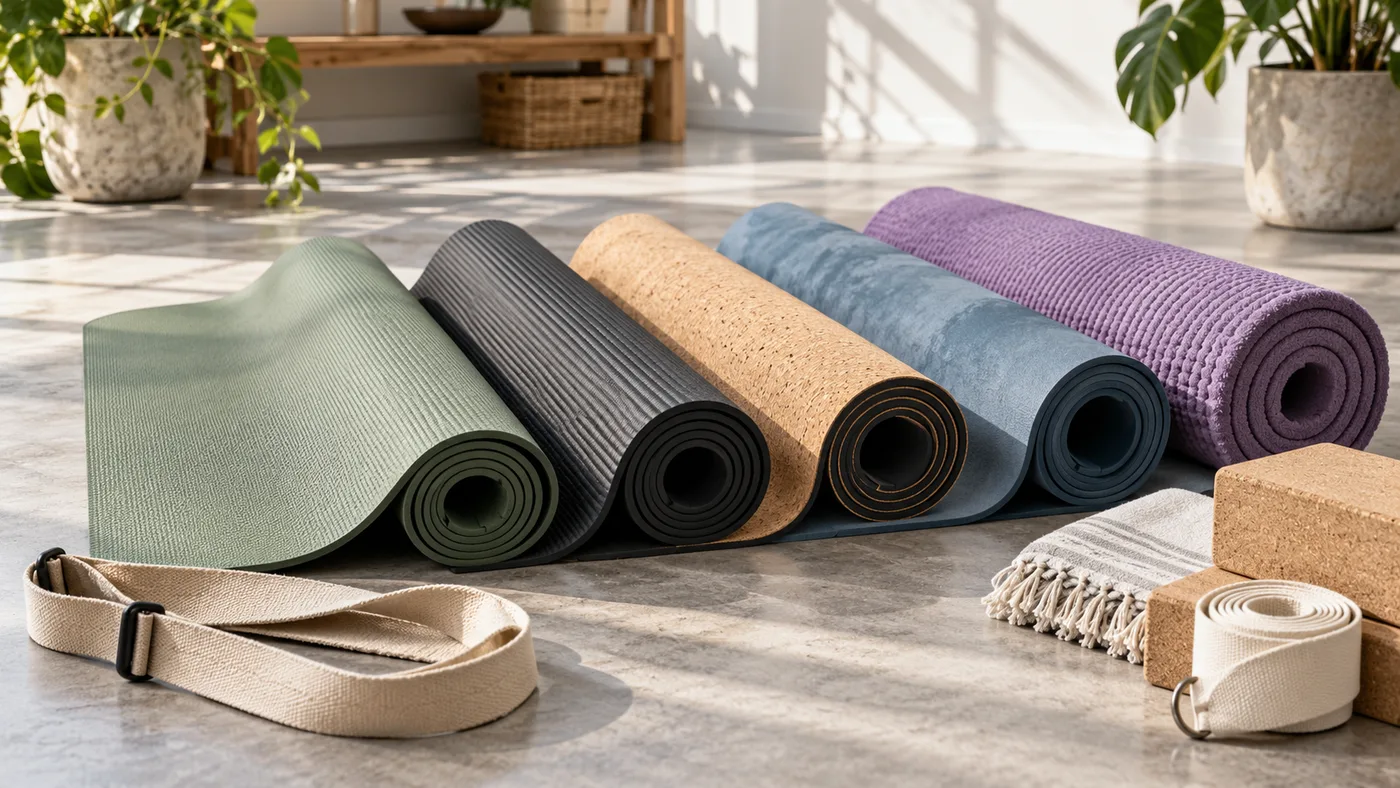
A hot-yoga practitioner, a home practitioner and an airline traveler are buying different tools. This research shortlist therefore contains five identifiable models with distinct use cases, plus two routes where naming a universal product would overstate the available evidence: choosing a cork construction and choosing a first general-purpose mat.
Specifications and availability were last checked on October 22, 2026, but prices, colors and variants change. Recheck the linked manufacturer page before purchase.
About this guide: This research shortlist uses specifications and attributed outside testing. The named models are research candidates; the cork and beginner entries are buying routes rather than product awards.
The Five Models and Two Routes at a Glance
| Evidence match | Named model or buying route | Why it merits research | Main limitation |
|---|---|---|---|
| Sweaty-practice model | Lululemon The Mat 5mm | Absorbent top; outside tests report useful damp grip | Heavy; shows marks; contains natural rubber/possible latex |
| Stable-home model | Manduka PRO 6mm | Dense support, closed-cell surface, long-life design | 7.5 lb; sweat can sit on top |
| Lighter-studio model | Manduka PROlite 4.7mm | PRO-style construction with less thickness and weight | Still not a travel mat; break-in may be needed |
| Natural-rubber model | Jade Harmony | Tactile surface and familiar natural-rubber construction | Rubber smell, weight and latex sensitivity |
| Travel model | Manduka eKO Travel SuperLite 1.5 mm | Thin, foldable and packable | Minimal joint cushioning; natural-rubber sensitivity warning |
| Cork buying route | A cork-top model with documented backing and verified flatness | Damp-grip potential and distinctive texture | Quality varies; dry grip can feel different |
| Beginner buying route | A 4–5 mm mid-price mat that passes the reader's grip test | Balanced, lower-risk way to learn preferences | Not category-leading in every metric |
A shortlist is only as useful as its exclusions. We did not name a thick 10–15 mm exercise mat as the best option for sensitive joints because softness can reduce balance stability. We also did not call every natural-rubber mat “eco-friendly”; material origin, lifespan and local disposal need separate evidence.
What a Mat Test Would Need to Measure
This is a research shortlist, not a scored product test. A future matched comparison could use the following illustrative weighting, with every mat assessed on the same hard floor:
- grip dry and lightly damp: 30%;
- stability and density: 20%;
- joint comfort: 15%;
- cleaning and odor: 10%;
- weight and rolled size: 10%;
- dimensions and edge flatness: 5%;
- durability after repeated use: 5%;
- warranty/material transparency: 5%.
The test should include at least downward dog, low lunge, tree pose, forearm plank, a controlled transition and a ten-minute carry. Until those records exist, the recommendations below are evidence-led editorial matches, not invented first-person testing.
Sweaty-Practice Model to Investigate: Lululemon The Mat 5mm
Lululemon's current listing specifies a moisture-absorbing polyurethane top, reversible natural-rubber base, 5 mm thickness and 5.24-pound weight. That combination targets the central hot-yoga problem: sweat forming a slippery film under hands and feet.
The absorbent surface earns its place on the research list, but it increases maintenance. Sweat marks can be visible, lint can cling and the mat must dry fully before rolling. The official listing also warns that natural rubber may contain latex. Read the detailed Lululemon The Mat buying guide before accepting the weight and care trade-off.
Most relevant to: frequent vinyasa or heated classes in one location.
Main mismatch: long walking commutes, regular travel or a rubber-free requirement.
Stable-Home Model to Investigate: Manduka PRO 6mm
The Manduka PRO is defined by density, not plushness. Its 6 mm closed-cell PVC structure feels firm and floor-like while protecting pressure points. The closed surface resists sweat absorption and wipes clean easily.
Its disadvantages are equally specific: the standard size weighs 7.5 pounds, the surface can need break-in, and sweat may remain on top. Manduka recommends a towel for sweaty practice. That makes the PRO better as a dedicated home/studio anchor than a hot-yoga or commuter solution.
Most relevant to: frequent home practice, standing balance and buyers prioritizing long service.
Main mismatch: immediate wet grip or low carrying weight is the leading requirement.
Lighter-Studio Model to Investigate: Manduka PROlite 4.7mm
The official PRO series comparison places PROlite between a home mat and a true travel mat. It retains dense closed-cell construction in a thinner, lighter format. It is a sensible compromise for a person who likes Manduka's stable feel but actually carries the mat.
Less thickness means less cushioning for long kneeling holds. More portability does not make it foldable. Use a knee pad if the surface otherwise suits the practice.
Most relevant to: regular studio commuters who value density.
Main mismatch: carry-on folding or maximum knee cushion is required.
Natural-Rubber Model to Investigate: Jade Harmony
Jade Harmony is a longstanding natural-rubber choice because its open texture creates immediate traction without a smooth top film. That grip can feel reassuring in dry practice and normal sweat.
Natural rubber has consequences: odor, weight, sensitivity risk, sunlight care and gradual material aging. Confirm current dimensions, rubber disclosures and care on the official Jade Harmony product page, and never assume “natural” means safe for a latex-sensitive user.
Most relevant to: practitioners researching tactile natural-rubber grip.
Main mismatch: rubber sensitivity, odor or very easy cleaning is a concern.
Travel Model to Investigate: Manduka eKO Travel SuperLite 1.5 mm
A travel mat should be judged on suitcase behavior, not knee comfort. The current official listing describes the eKO Travel SuperLite as a 1.5 mm, foldable, closed-cell natural-rubber mat weighing 2.2 pounds in the standard size. It can serve as a personal surface or layer over a compatible studio mat.
Its thinness is the feature and the limitation. On hard tile, knees and wrists receive little cushioning. Thin mats may also wrinkle over uneven surfaces.
Most relevant to: flights, retreats and hotel practice.
Main mismatch: it will be the only mat used on hard floors.
Cork Buying Route: Choose Construction, Not the Word “Cork”
Cork changes texture as it becomes damp and appeals to people who dislike a sticky synthetic feel. Yet a cork veneer is only one part of a mat. The backing controls weight and floor grip; adhesive and thickness affect durability; storage affects curling.
Before buying, check edge flatness, backing material, dry-hand grip and whether the manufacturer explains care. Avoid a model that markets cork heavily but hides the substrate.
Most relevant to: practitioners who enjoy cork texture and practice with moderate moisture.
Main mismatch: strong immediate dry tack is required or correct storage is impractical.
Beginner Buying Route: A Balanced 4–5 mm Model
Beginners rarely know whether wet grip, travel weight or dense feedback will matter most. A moderately priced 4–5 mm mat with adequate dry grip is a safer first purchase than a specialized premium model.
Test rather than speculate:
- hands remain planted in downward dog;
- feet do not wobble excessively in tree;
- knees tolerate 30 seconds in tabletop;
- the mat lies flat;
- the real commute feels manageable; and
- the return terms allow an indoor evaluation.
The beginner pose guide gives a useful test sequence.
Material and Construction Guide
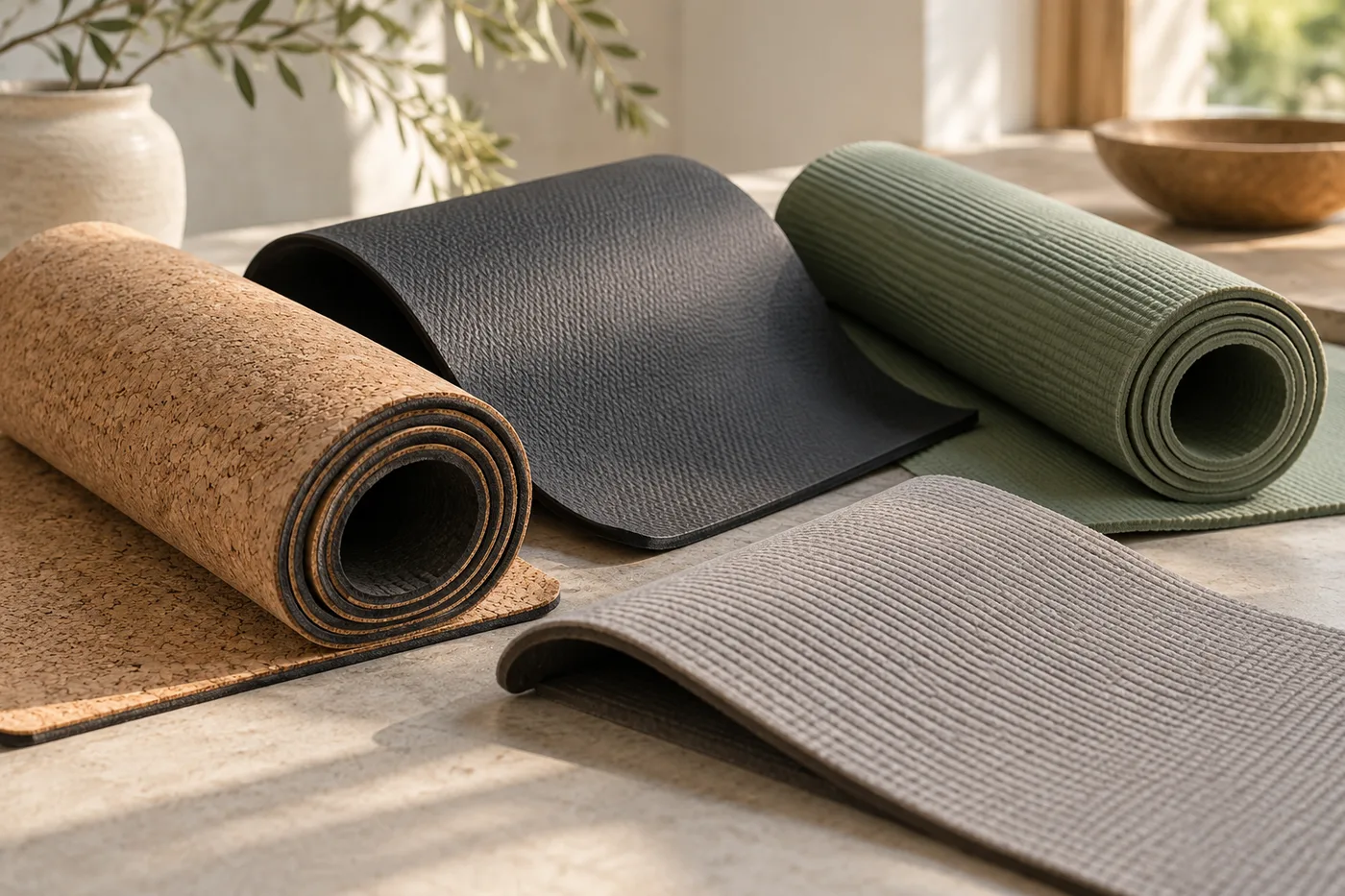
Polyurethane-top mats
Strong damp grip and moisture management; commonly heavier and more mark-prone. They must dry thoroughly.
Closed-cell PVC
Dense, durable and easy to wipe. Sweat stays on the surface, and environmental concerns should be considered alongside long lifespan and certification.
Natural rubber
Tactile, stable and often grippy. It can be heavy, odorous and unsuitable for latex-sensitive users; sunlight can accelerate aging.
TPE and EVA
Often light and affordable. Density and longevity vary widely, so the acronym alone predicts little.
Cork
Distinctive texture that can improve with moisture. Performance depends heavily on backing, thickness and construction quality.
For a more detailed trade-off analysis, see the mat thickness and material guide.
Six Tests to Perform Before Keeping Any Mat
- Dry grip: five breaths in downward dog without lotion.
- Damp grip: lightly mist hand positions if the return policy permits.
- Balance: 20 seconds in tree on each side.
- Pressure: tabletop and low lunge for 30 seconds.
- Edge behavior: unroll for one hour and inspect curling.
- Carry: walk with the entire class bag for ten minutes.
Also measure the practice area. A body or stride that regularly leaves a standard mat deserves extra length more than a fashionable color.
Cleaning and Storage
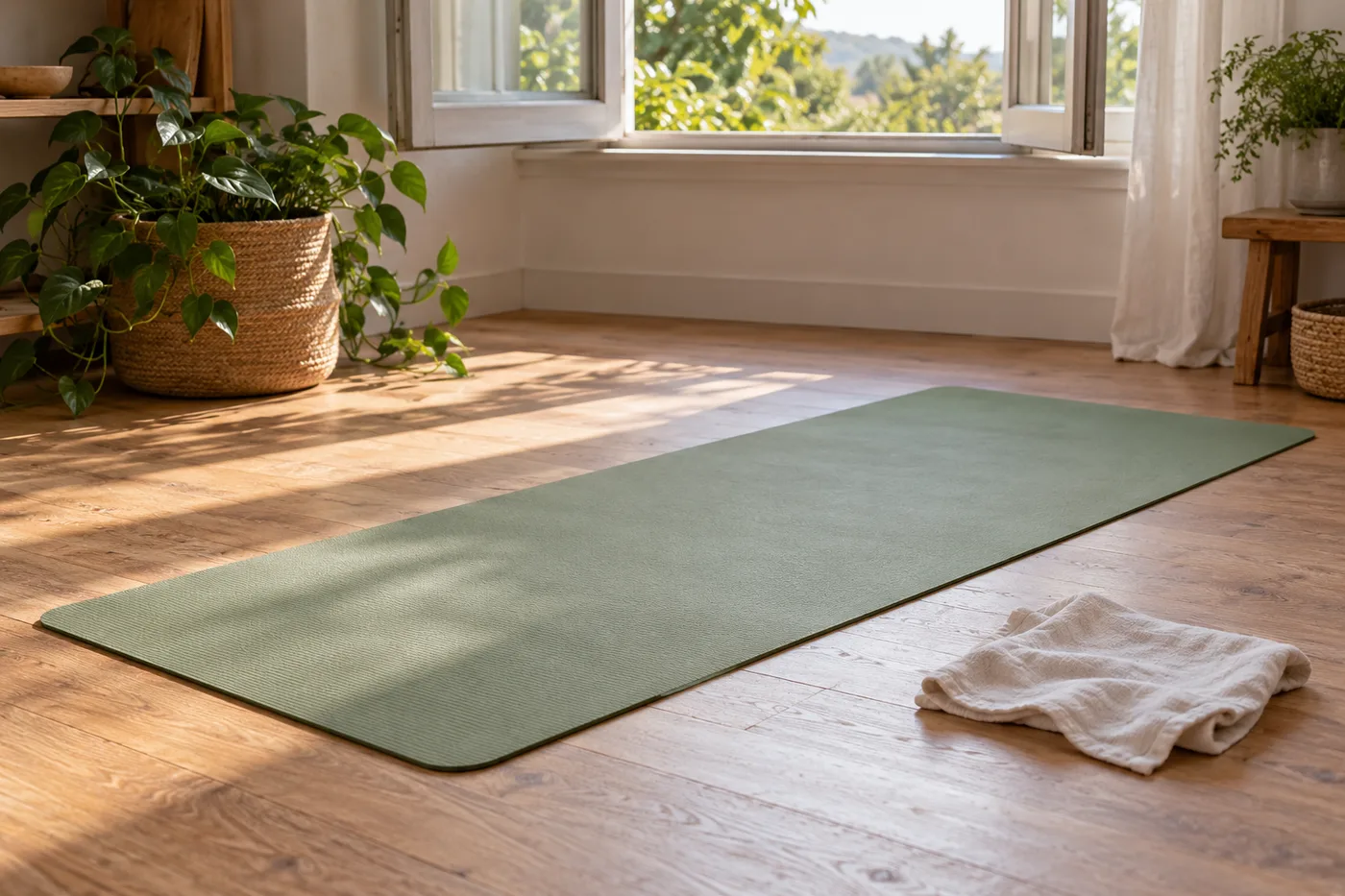
Follow the exact manufacturer's instructions. As a general rule, wipe rather than soak, avoid essential oils and harsh household cleaners, dry fully and store away from prolonged high heat or sunlight. REI's cleaning guide is a useful baseline, while the product page governs the particular material.
Questions the Shortlist Cannot Answer for Everyone
Is 6 mm too thick for yoga?
Not if it is dense. A dense 6 mm mat can be more stable than soft 8 mm foam. Test compression, not the number alone.
Do I need a hot-yoga towel?
If sweat remains on a closed-cell surface, often yes. An absorbent-top mat may delay that need but does not make a towel impossible.
How much should a beginner spend?
Enough to obtain safe grip, flat edges and appropriate cushion—without paying for specialized features before preferences are known.
When should a mat be replaced?
Replace it when grip cannot be restored with approved cleaning, tears or exposed layers create hazards, edges curl persistently, or compression makes practice unstable.
How to Use This Shortlist
Start with the failure mode. Slipping directs attention to wet grip; wobbling directs attention to density; knee discomfort calls for measured cushion without uncontrolled compression; an unused heavy mat makes transport the constraint. The list narrows research, but it cannot become a tested ranking until every named candidate completes the same protocol.
Sources and Further Reading
- Lululemon official The Mat 5mm specifications
- Manduka official PRO specifications
- Manduka official PRO-series comparison
- Manduka official eKO Travel SuperLite 1.5 mm specifications and care
- Jade Yoga official Harmony mat specifications
- OutdoorGearLab yoga-mat testing
- WIRED yoga-mat and gear guide
- Yoga Journal mat guide
- REI yoga-mat cleaning guide