About this guide: This clothing-selection guide organizes practical considerations by class type. Check movement, coverage and comfort on your own garments; pictured examples illustrate categories rather than demonstrate a named product's performance.
Imagine wearing the same loose cotton outfit to a humid heated flow, a long supported yin class and an outdoor winter session. It may cling in one room, cool too quickly in another and snag underfoot outside. Class conditions—not a universal “yoga look”—decide what works.
Start with five variables: room temperature, pace, desired support, time on the floor and whether the class includes inversions or equipment. A workable outfit allows a full breath, stays clear of hands and feet and does not demand constant adjustment.
Quick Outfit Formulas
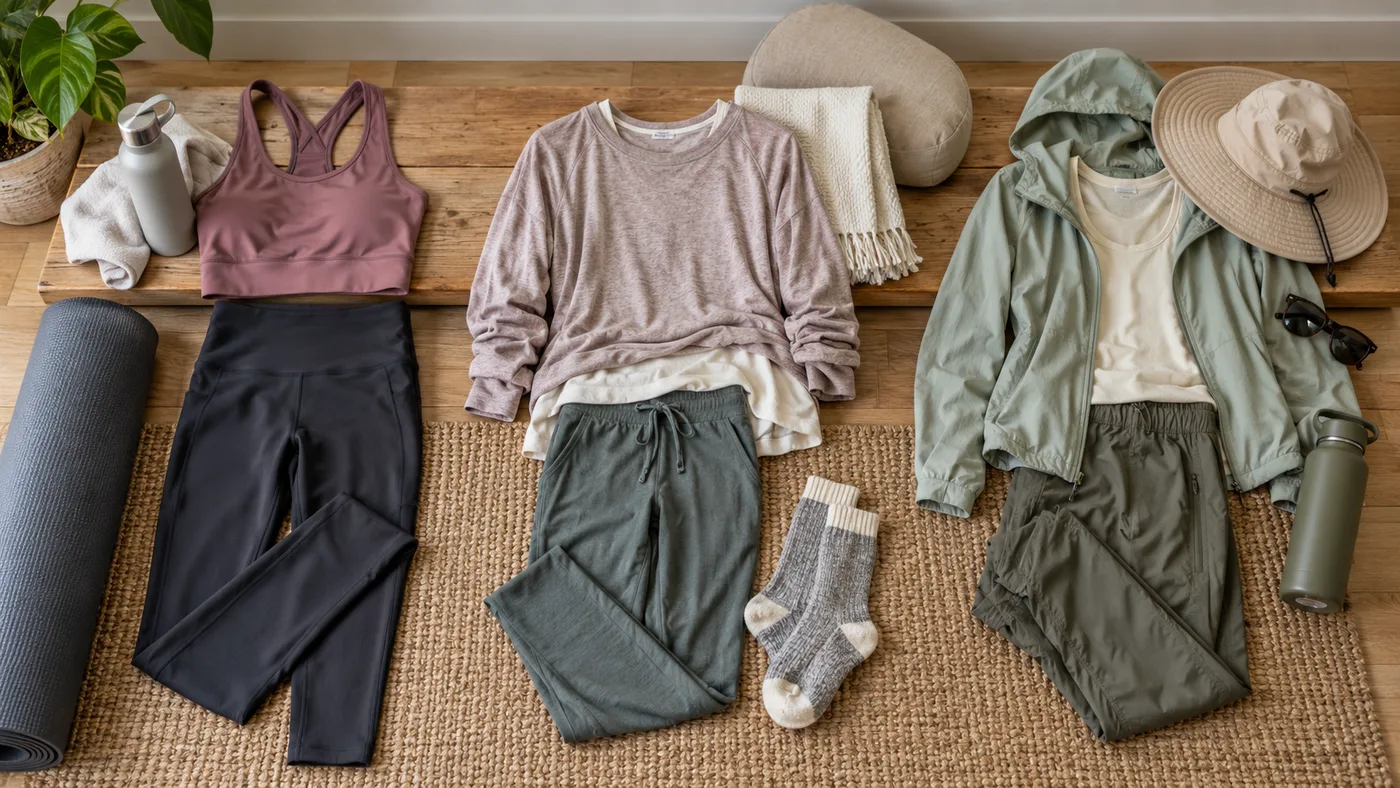
| Class | Outfit formula |
|---|---|
| Hatha/beginner | Medium-weight bottom + secure top + light layer |
| Vinyasa | Stable waist + fitted quick-dry top + appropriate bra |
| Hot | Lightweight quick-dry bottom + minimal secure top + towel |
| Yin/restorative | Soft low-compression layers + warm removable layer |
| Ashtanga/power | Sweat-ready fitted clothing + stable waistband |
| Outdoor | Technical base + weather layer + sun/insect plan |
Hatha and Beginner Classes
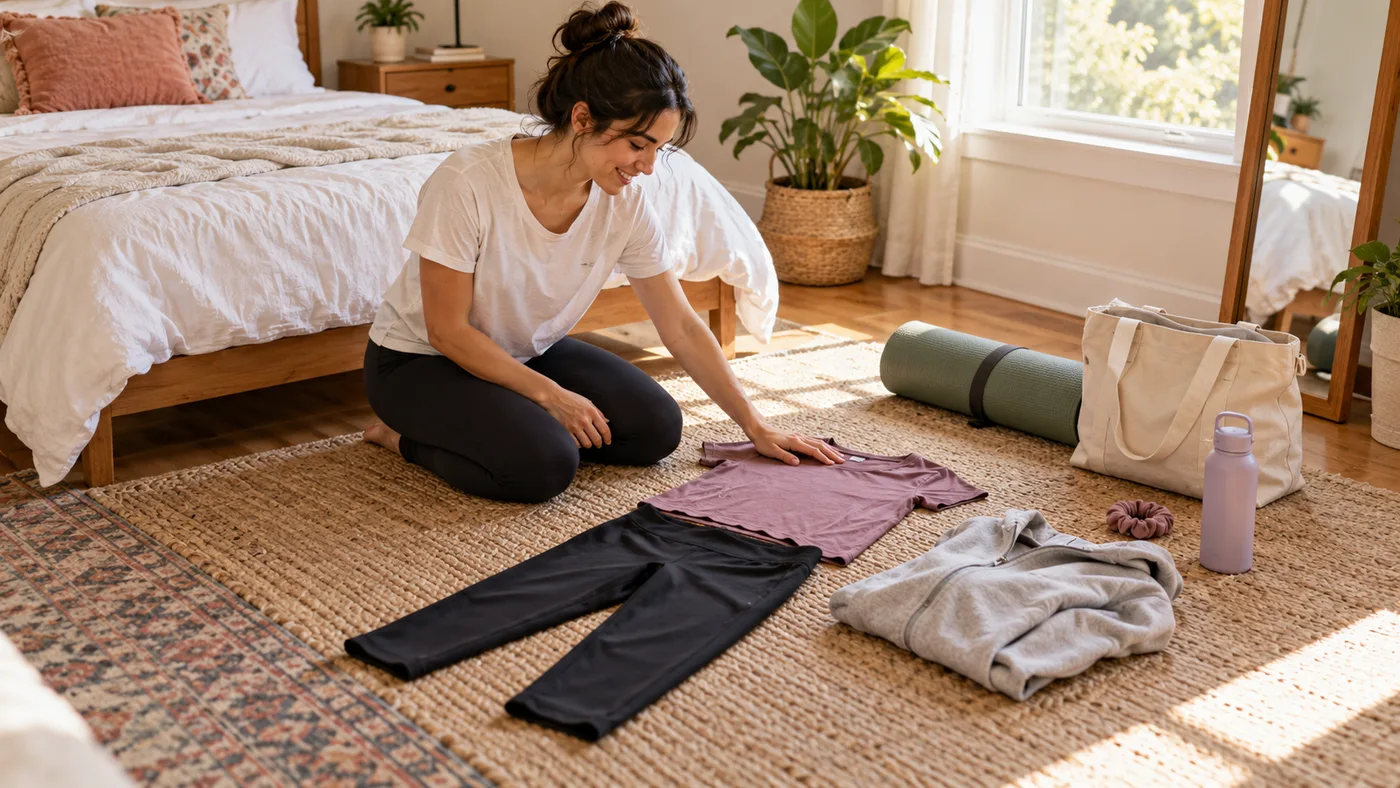
Choose a medium-weight legging, tapered stretch pant or secure short. Add a fitted or tuckable top and low-to-medium support suited to the individual. Bring a long sleeve for opening and rest.
The beginner wardrobe guide builds this from clothes already owned.
Avoid: very wide hems, rigid jeans, tops that cover the face and an untested pale legging.
Vinyasa
Repeated folds, lunges and Downward Dog demand waistband recovery and a top that stays. Four-way stretch and a gusset are useful. Medium compression often balances security and breath.
Test three Sun-Salutation-like rounds at home. If the waist needs adjustment every transition, change cut or size. Use the compression guide.
Hot Yoga
Use light, quick-drying fabric and the fewest layers compatible with personal coverage. High heat does not require revealing clothing; a lightweight fitted tee can work if it dries well. Avoid heavy cotton that becomes saturated.
A stable waistband and grippy towel matter once damp. Pale colors may show sweat; check opacity wet and dry. Clothing cannot prevent heat illness, so read the hot-yoga evidence and safety guide.
Yin and Restorative Yoga
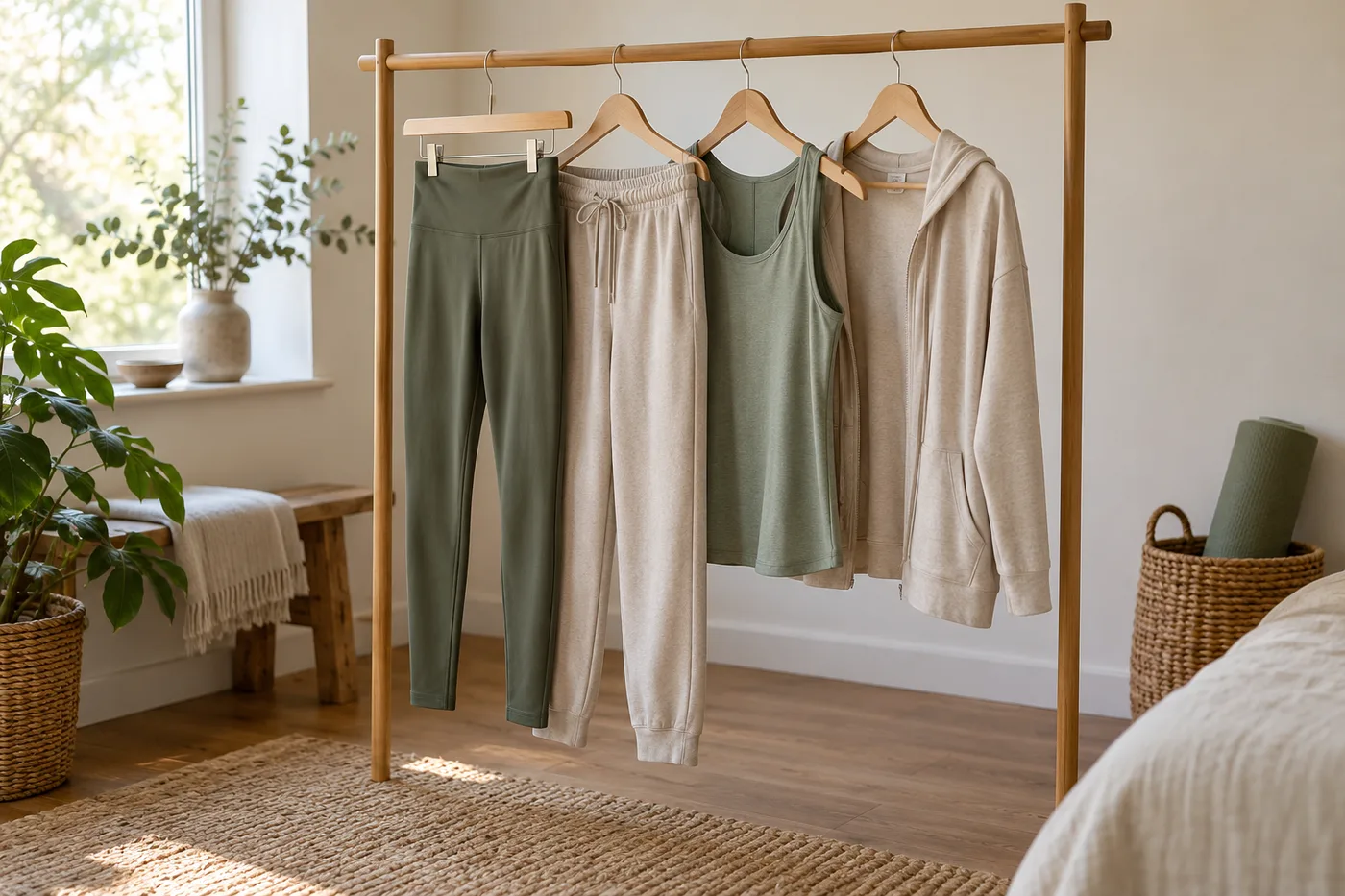
Long holds make pressure obvious. Choose soft low-compression pants, a gentle support layer, warm socks if allowed and clothing without back zippers or bulky pockets.
Body temperature may fall during stillness. Add a sweater or blanket that is easy to remove. Taper loose pants so hems do not travel.
Ashtanga and Power Yoga
Expect repeated movement and sweat. Use a stable waistband, fitted quick-dry top and support matched to any jumping transitions. Avoid hardware that presses during floor work.
A soft lounge legging may feel wonderful at first yet migrate under repeated movement. The pants-by-practice guide helps choose more structure.
Pilates and Barre
Close-fitting clothing can help an instructor see alignment. Smooth rear construction is comfortable for floor work; grip socks may be mandatory.
Do not assume a built-in-bra top supplies enough support. Test arm reach, plank, curl-up and any light impact included in the class.
Outdoor Yoga
Layer rather than choose one heavy garment:
- moisture-managing base;
- removable insulation;
- wind/rain shell as needed.
Add sun protection, insect strategy and a durable bottom that tolerates the ground. Cold weather requires warm hands/feet without slippery ordinary socks during standing poses.
Aerial or Inversion-Heavy Classes
Follow studio rules. More coverage at waist and backs of knees may protect skin from apparatus. Avoid zippers, jewelry, buckles and loose drawstrings that can snag. This is a distinct equipment environment, not ordinary mat yoga.
What Men Can Wear
A fitted or semi-fitted technical shirt plus lined short, compression short under loose short, or tapered stretch pant works. Check that shorts provide coverage in wide positions and that drawcord knots do not press in prone poses.
Clothing principles are not gendered: breath, security, coverage, temperature and support.
Accessibility, Sensory Needs and Modesty
Clothing can be adapted without changing the purpose of practice. A long fitted tunic over a secure legging, sports hijab, higher neckline or lightweight long sleeve may provide desired coverage while remaining clear of hands and feet. Test heat and movement exactly as with any other outfit.
People with sensory sensitivity may prefer flat seams, tag-free construction and lower compression. Anyone using braces, ostomy supplies, glucose monitors or other devices should follow clinical guidance and make sure clothing does not dislodge equipment. Contact the studio before class when privacy, changing space or assistance matters.
The First-Class Fit Test
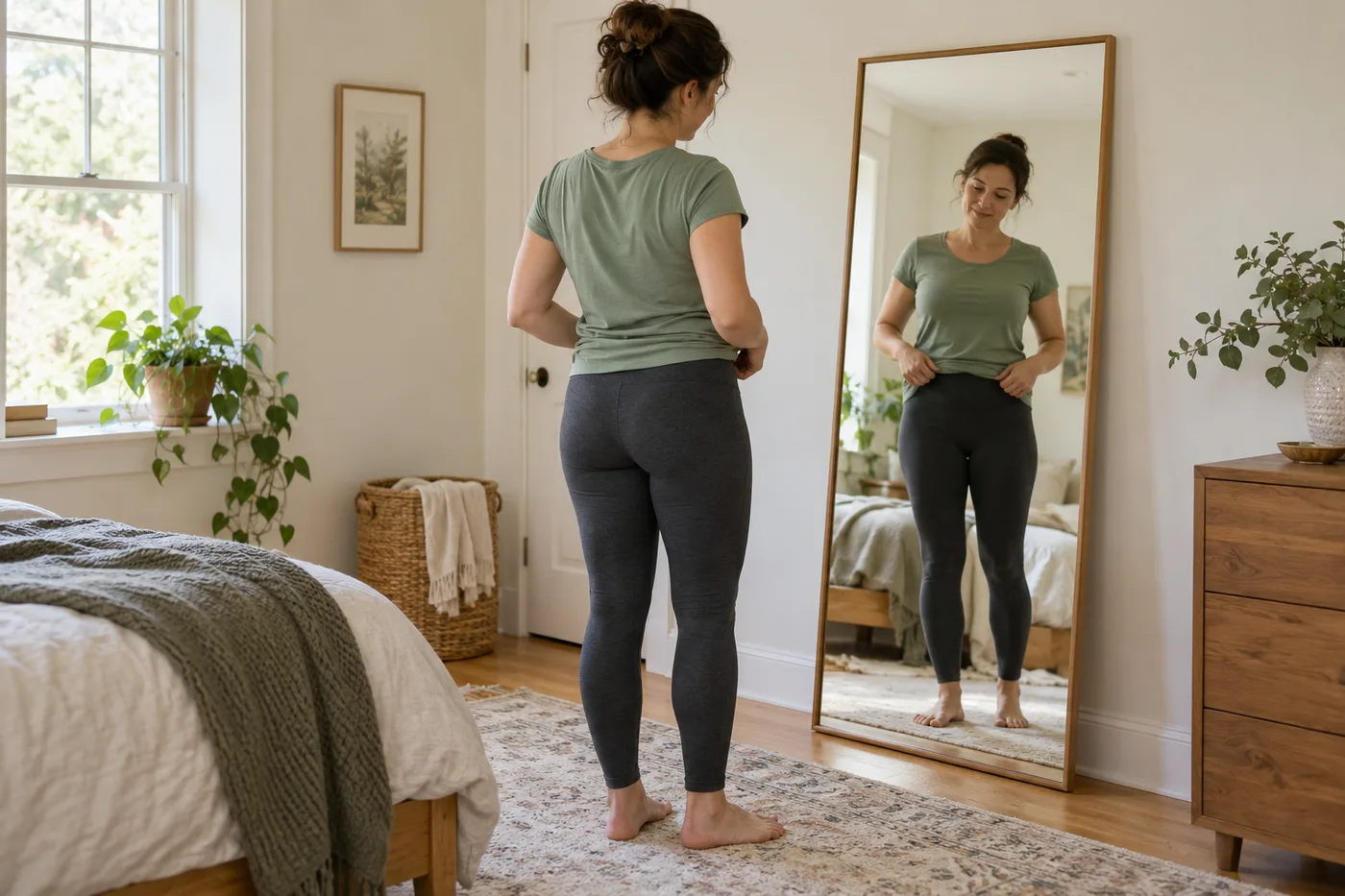
Before attending:
- raise arms overhead;
- fold forward;
- perform Downward Dog;
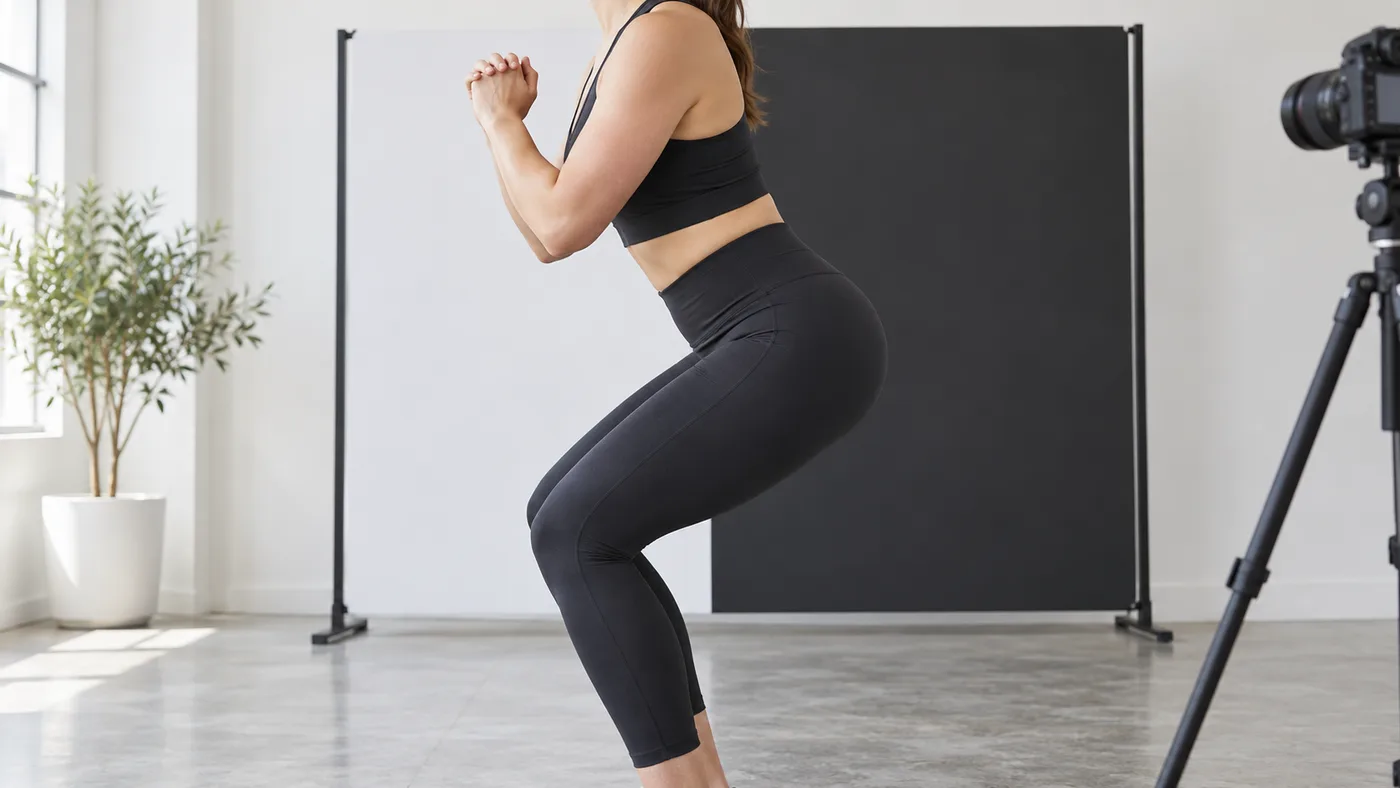
- squat and side lunge;
- sit cross-legged;
- lie on back; and
- take five full breaths.
Use the opacity guide for bottoms. Remove jewelry and empty unsecured pockets.
Fabric and Construction Matter More Than the Outfit Name
| Class condition | Useful construction | What commonly fails |
|---|---|---|
| High sweat | Lightweight fabric, secure waistband, minimal loose layers | Cotton that stays saturated; tops that fall over the face |
| Long floor holds | Soft seams, warm removable layer, non-pinching waist | Zippers or thick pockets pressed into the body |
| Fast transitions | Close fit, four-way stretch, stable bra/support system | Wide hems and drawstrings that catch or shift |
| Inversions | Tucked or close-fitting top, opaque bottoms | Loose shirts and untested pale leggings |
| Outdoor practice | Layering, sun/temperature plan, ground-tolerant fabric | Delicate brushed surfaces on rough ground |
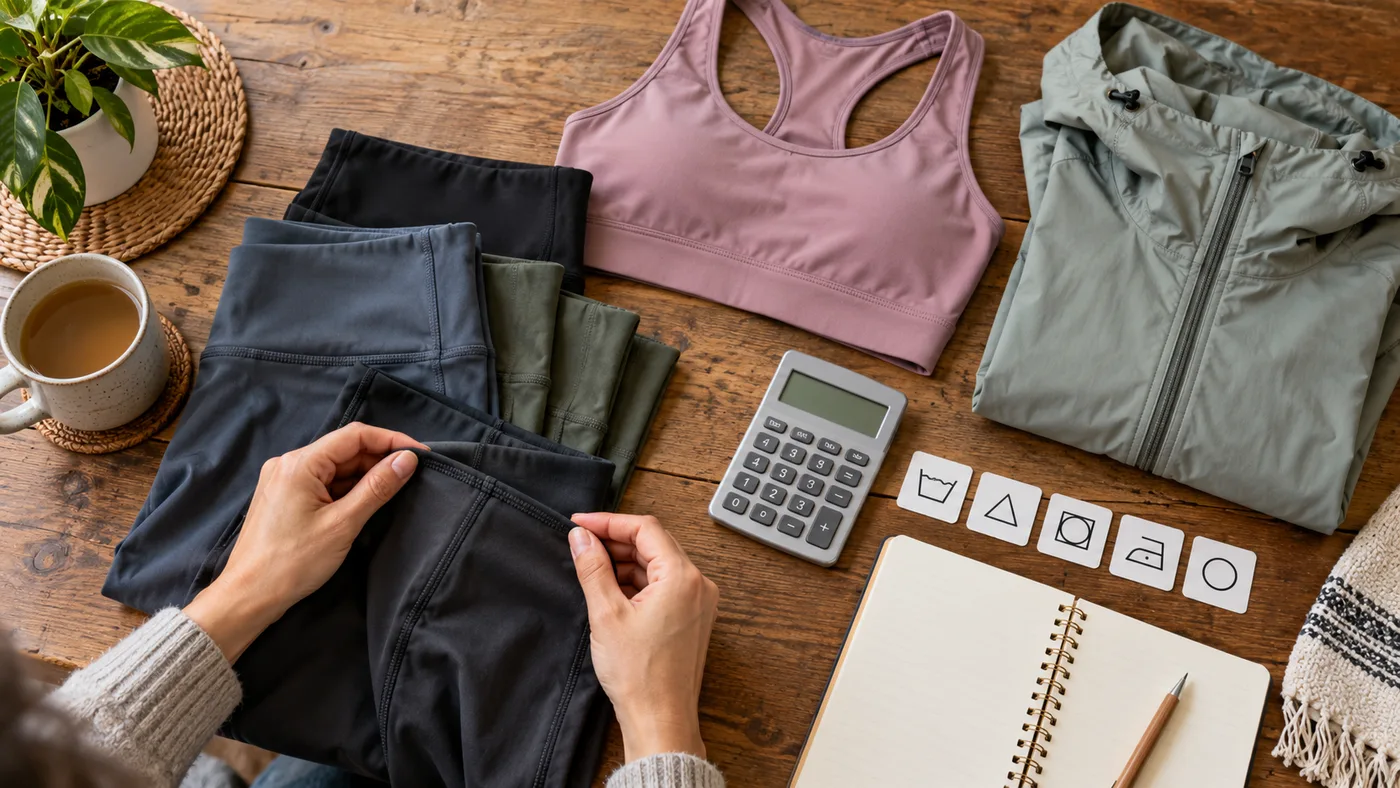
Fiber percentages alone do not predict comfort: knit structure, fabric weight, finishing and garment pattern also matter. Treat “moisture-wicking,” “buttery” and “second skin” as claims to test. The best outfit is the one you stop noticing after the first few minutes because temperature, coverage and support remain stable.
What to Bring
- light layer;
- water according to class/needs;
- towel if heated or required;
- hair tie/headband if useful;
- mat only if not supplied;
- any personal medication;
- grip socks only where required.
Shoes generally remain outside mat practice, but venue rules differ.
What to Avoid
- Clothing that restricts breathing
- Loose hems under feet
- Exposed zippers on the spine
- Heavy jewelry
- Regular slippery socks
- Unsecured phones or keys
- New clothing without movement testing
- Fabric-softener residue that affects wicking
- Fragrance-heavy products in shared rooms
Four Last-Minute Wardrobe Questions
| Item or choice | Check before class |
|---|---|
| Sweatpants | They can work when they stretch, taper away from the feet and do not overheat. Test deep knee and hip movement. |
| Shorts | Test coverage in lunges, seated positions and Downward Dog; a secure inner liner may help. |
| Bra or support layer | Match support to the body and class impact. A sports bra is one option, not a universal requirement. |
| Black fabric | It can simplify opacity and coordination, but it may show lint and absorb heat outdoors. Fabric performance and fit matter more than color. |
The One Rule to Remember
Dress for the class's hardest condition: heat, movement, stillness, floor contact or weather. A good outfit disappears from attention after the first breath.
Sources and Further Reading
Source-use note: brand pages and editorial product tests helped identify garment features to inspect. They do not substitute for the article-specific outfit, fabric-drying and coverage tests required above.