About this guide: This guide explains a reader-run opacity check for an exact size and color. Results depend on the garment, fit, lighting and movement; the method does not certify a named product as squat-proof.
Opacity can change between two colors of the same legging and between standing, squatting and hinging. It depends on the exact fabric, size, underwear contrast, lighting and degree of stretch. A useful “squat-proof” claim therefore needs reproducible conditions, not a brand-level promise.
The protocol below tests the exact garment through several movements in honest light and separates true sheerness from underwear lines, stretch shine and sweat marks.
Why Leggings Become See-Through
A knit contains loops and spaces. When stretched, those spaces open and a light underlayer can become visible. Five factors interact:
- Fabric density: heavier or tighter knits often resist opening, though weight alone does not guarantee it.
- Stretch percentage: the more a garment must expand over the body, the more the knit opens.
- Color and dye: pale colors and certain prints reveal contrast differently.
- Underwear contrast: black under white exaggerates a problem that nude-toned underwear may reduce.
- Wear: friction, heat and repeated stretching thin high-load areas.
Seam strain can also expose thread or pull fabric away from the body. If the center seam looks shiny or radiating lines spread from the crotch, size or pattern shape may be wrong.
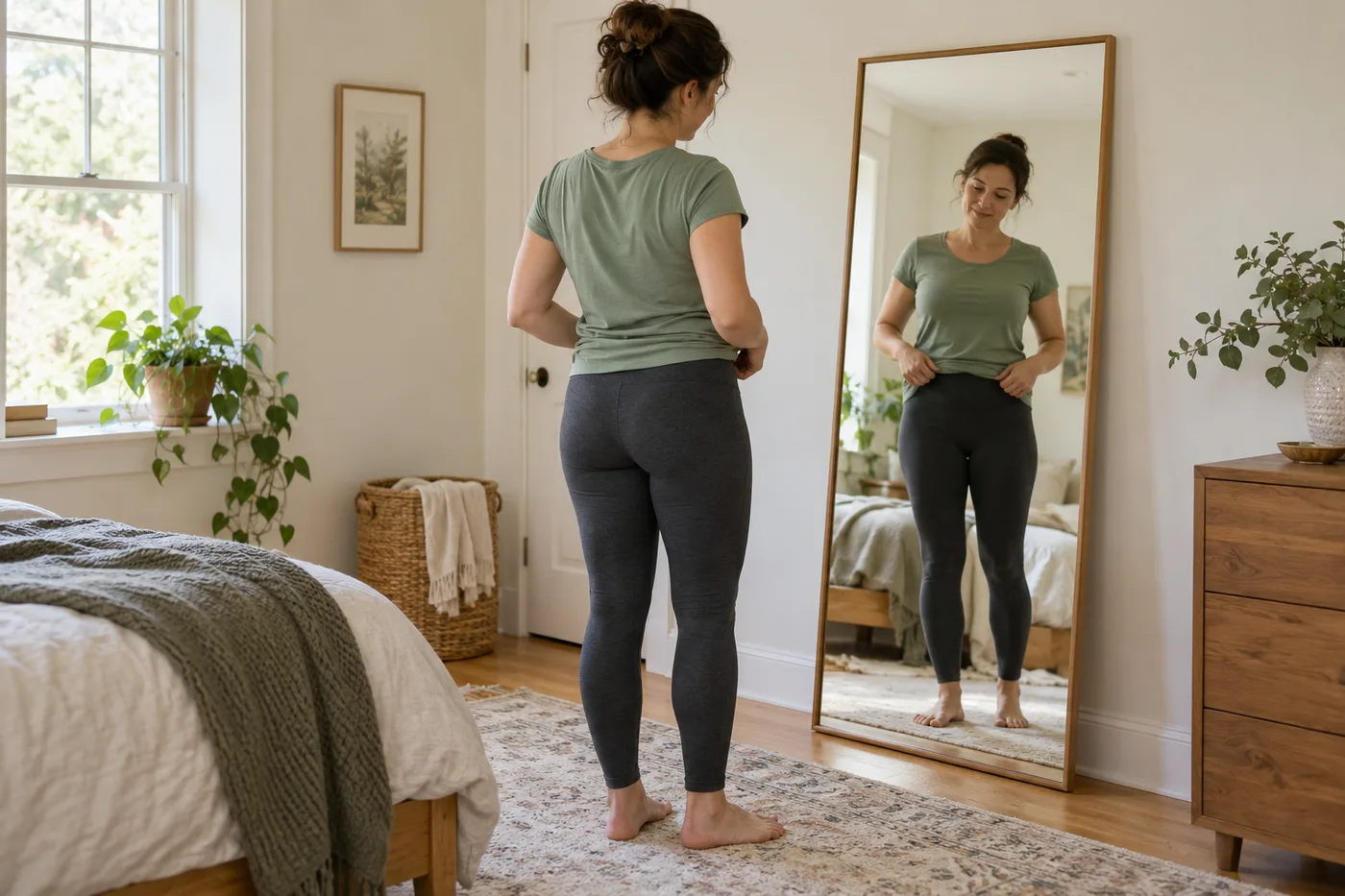
The Seven-Minute Home Test
Keep tags attached and follow the return policy.
1. Establish honest light
Use indirect daylight or bright even indoor light. Avoid a spotlight directly behind the body, which can make almost any stretched fabric look translucent, and avoid a dim fitting room that hides real problems.
2. Use normal underwear
Wear the color and cut intended for exercise. Testing with unusually dark underwear can identify maximum risk, but it may not represent real use.
3. Stand and breathe
Check baseline coverage and whether the waist restricts a full breath. A garment that is opaque only while standing has not passed.
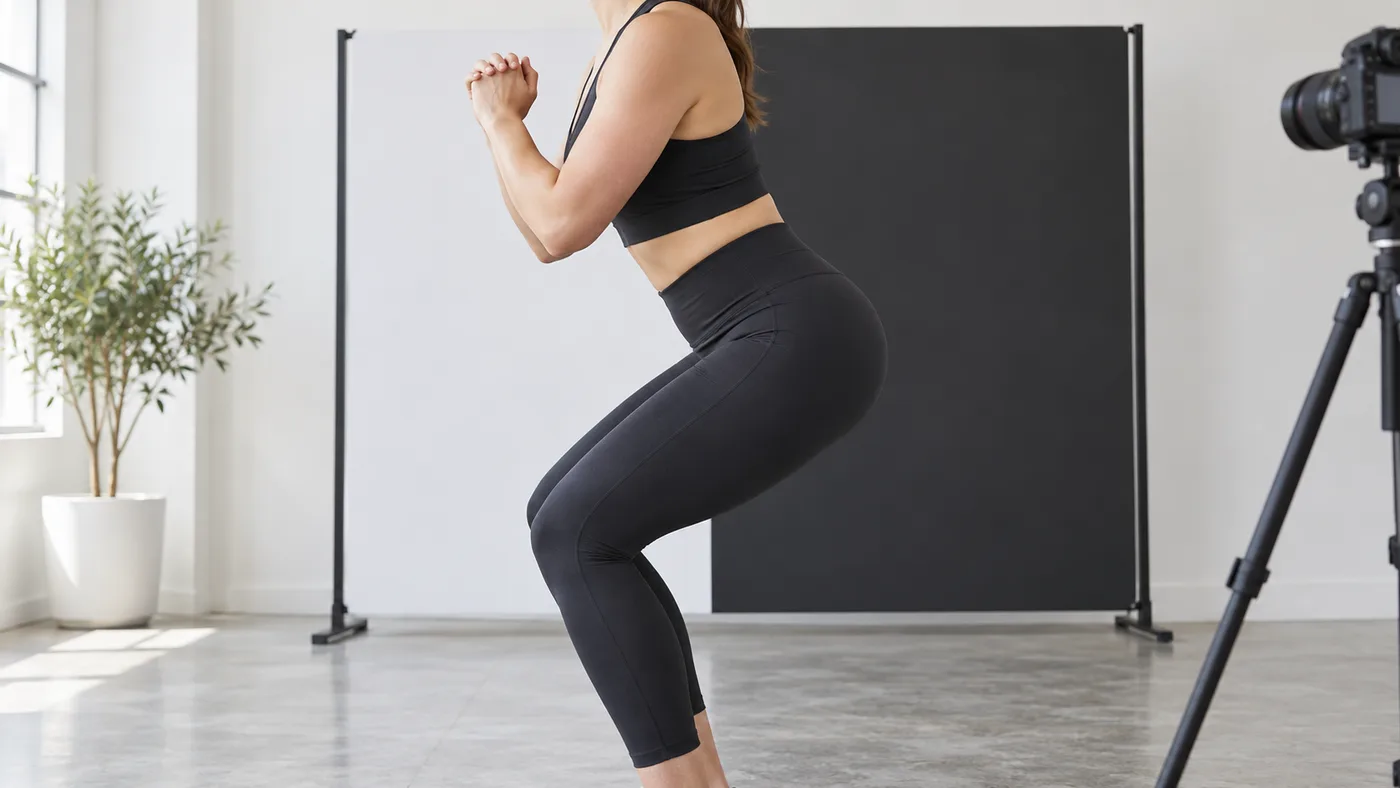
4. Squat
Use a comfortable deep squat while keeping heels stable. Observe the center seat and upper thighs from a normal distance.
5. Hip hinge or forward fold
This stretches fabric differently from a squat and often reveals center-seat tension.
6. Side lunge
Side-to-side stretch can expose inner-thigh and gusset problems.
7. Move and re-check
Walk for two minutes, then repeat. Fabric and waistband may settle with warmth.
Record the exact style, size and color. “Brand X is squat-proof” is not a transferable conclusion.
Normal Texture Versus Failure
A close camera can show skin texture, seam shadow or underwear edges through many garments. The practical failure is clearly visible underwear color or pattern during ordinary movement at a normal viewing distance.
Separate:
- sheerness: light passes through the knit;
- visible underwear line: an edge presses against fabric;
- stretch shine: fibers reflect light while still opaque;
- sweat mark: moisture darkens fabric;
- seam stress: stitching or fabric visibly strains.
Each problem has a different solution.
Fit Is Often the Fix
Sizing down for a “sculpted” appearance increases stretch and seam load. Try the next size and compare:
- breathing;
- waistband movement;
- crotch lines;
- opacity; and
- fabric recovery.
If the larger size slides while the smaller is sheer, the cut may not suit the body's waist-to-hip ratio. Change model rather than accepting a bad compromise. The compression and fit guide explains contoured waistbands and compression levels.
Color Strategy
Dark neutral shades usually minimize contrast, but black is not magically opaque. Prints can disguise sweat and lines while distorting when stretched. Pale colors require a more careful daylight test.
Never rely on reviews of another color. Dye and finishing can change hand feel and apparent density even within a collection.
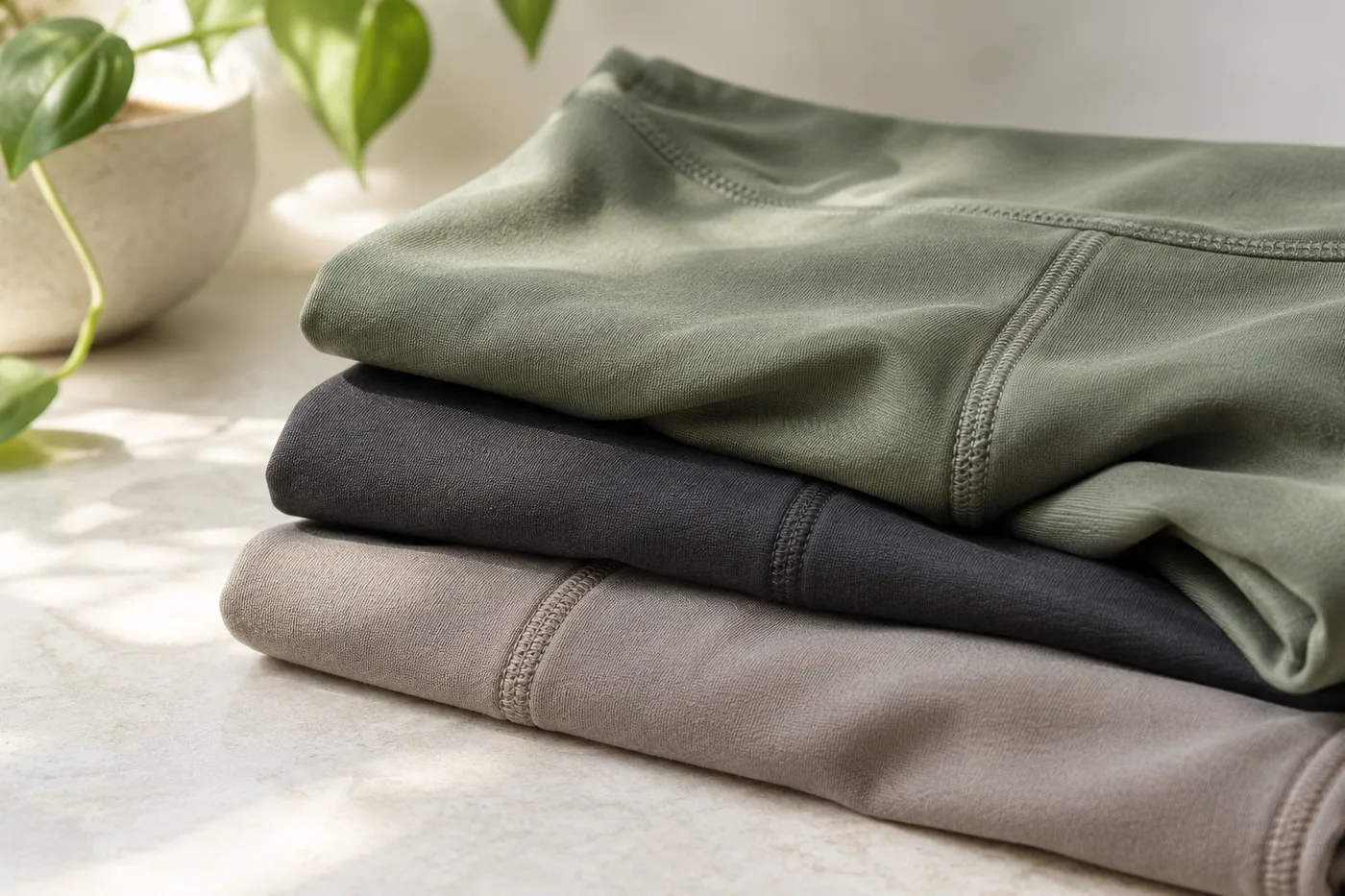
Fabric and Construction Clues
Useful signs include:
- dense, even knit;
- strong recovery after gentle stretch;
- gusset that sits without pulling;
- seams lying flat;
- waistband that spreads tension; and
- no obvious thin zones at the seat.
Fiber percentages do not prove opacity. CRZ Butterluxe and Athleta Elation illustrate how similar-sounding soft fabrics can have different compression and construction.
Match Opacity to Activity
Yoga demands coverage through folds and lunges. Strength training adds barbell friction and deep hip flexion. Running adds repeated movement and sweat. A lounge legging that passes one squat may still lack abrasion resistance or waistband security for training.
Use the practice-based pants guide after the opacity test. “Squat-proof” is one criterion, not a complete recommendation.
Protect Opacity Over Time
- Wash cold with soft garments.
- Turn leggings inside out.
- Close zippers and separate hook-and-loop.
- Skip fabric softener.
- Minimize high heat.
- Avoid sitting on rough stone or wood.
- Inspect inner thighs and seat regularly.
Replace or downgrade a pair when high-friction zones become visibly thin, seams open or the waist no longer recovers. Clothing does not need to be thrown away at the first cosmetic pill; it may still serve low-stakes home use if structurally safe.
Shopping Checklist
- Exact color and size tested
- Indirect daylight used
- Squat, hinge and side lunge completed
- Normal underwear worn
- Full breathing possible
- Waist stays without restriction
- Return deadline saved
- Care routine is realistic
- Intended activity—not just mirror fit—considered
Buying Online Without a Fitting Room
Measure a successful legging flat at the waist, hip, rise and inseam, then compare garment measurements when available. Save the product page, color name and return terms because listings change. Order one size/color first; do not remove tags or buy a multipack until the daylight test is complete. Reviews are most useful when they identify the exact size, color, body measurements and lighting—otherwise they cannot reproduce the condition being judged.
Four Opacity Edge Cases
Are thicker leggings always squat-proof?
No. A soft thick knit can still open under excessive stretch. Density, fit and color interact.
Does seamless mean more opaque?
No. Seamless refers to construction; knit zones can still vary in density.
Should I size up if leggings are sheer?
Try it. If the waist then slides, change the cut or fabric rather than forcing either size.
Can underwear solve sheerness?
Low-contrast underwear can reduce visibility, but it does not repair genuinely overstretched or thinning fabric.
The Pass-or-Return Standard
The honest answer to “Are these squat-proof?” is always conditional. Test the exact pair, in the exact size and color, through the movements that matter. A seven-minute daylight check is more reliable than a brand-wide slogan.