About this guide: These calculations and fit checks are a reader-run evaluation method. Brand examples illustrate categories; confirm current prices, subscription terms and returns before purchase.
Imagine two checkout totals: a $25 legging with paid returns and a $45 pair with free returns. The lower ticket can become the more expensive experiment after postage, replacement and non-use. This guide treats affordability as a full purchase cycle: define the job, control transaction risk, test one item and expand only after wear and washing.
Step 1: Define the Activity Before the Brand
Write the garment's main job in one sentence.
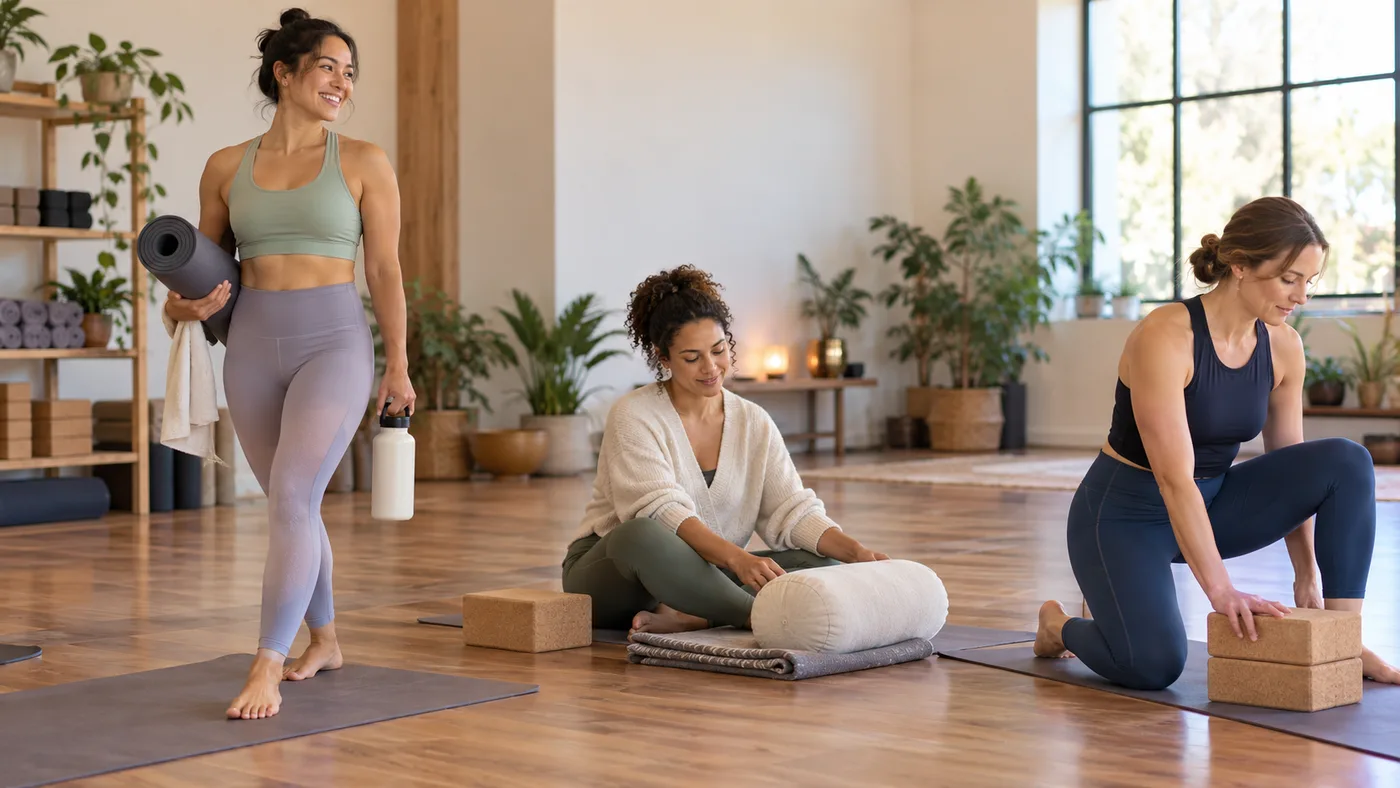
- Yoga/Pilates: stretch, stable waist, floor-comfortable seams.
- Running: drawcord, bounce-controlled pockets, quick drying.
- Strength: abrasion resistance, recovery and opacity.
- Hot classes: low bulk and rapid moisture handling.
- Daily wear: comfort, storage and seated fit.
Soft budget lines such as CRZ Butterluxe can be excellent for low-impact use yet disappointing for running. The practice-based yoga-pants guide prevents this category error.
Step 2: Set a Total Budget
Include tax, delivery, return shipping, membership, alterations and likely replacement. A subscription's introductory price is not the annual cost. Before joining, record:
- monthly charge;
- credit expiration;
- pause and cancellation rules;
- minimum purchase;
- return method; and
- what happens to unused credits.
Take a screenshot or save the terms on the purchase date. Do not join merely because a timer claims scarcity.
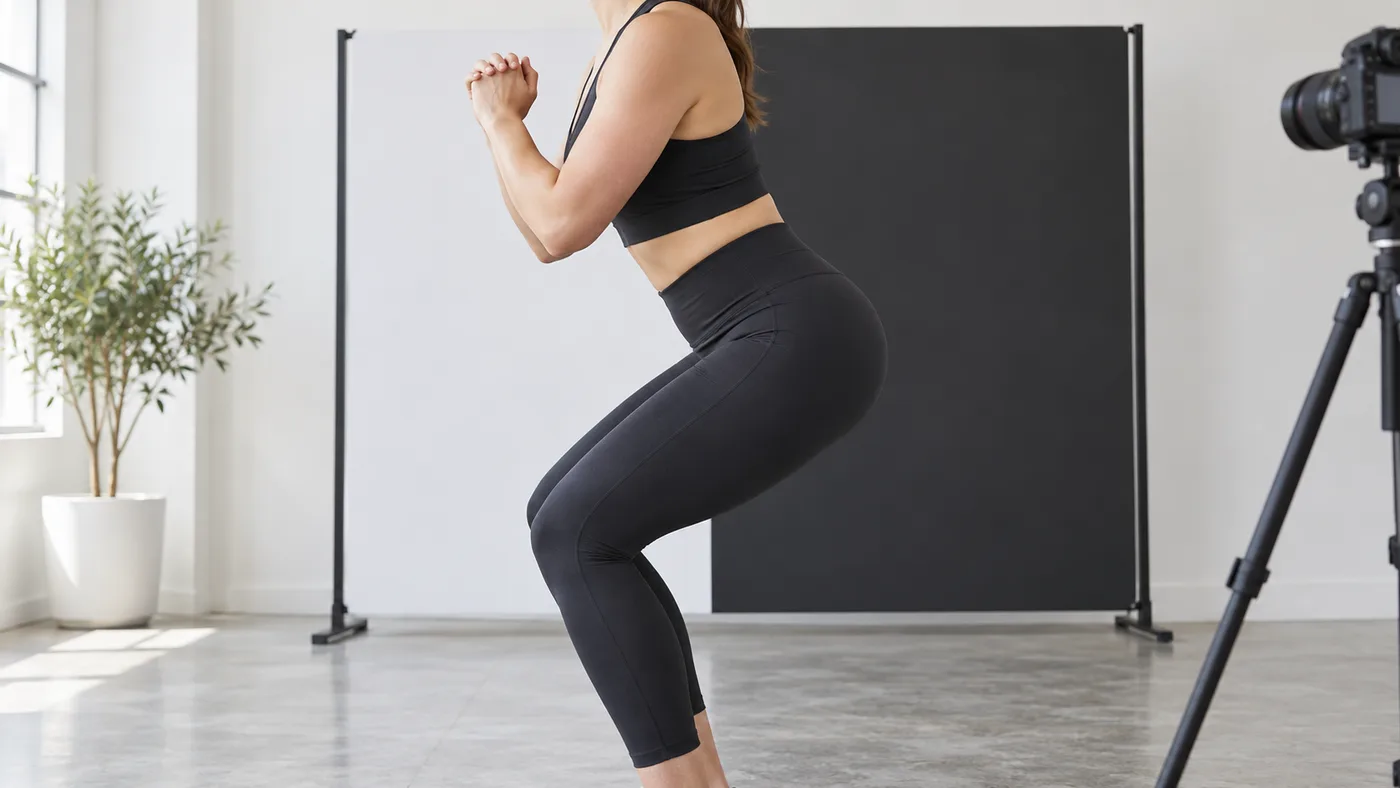
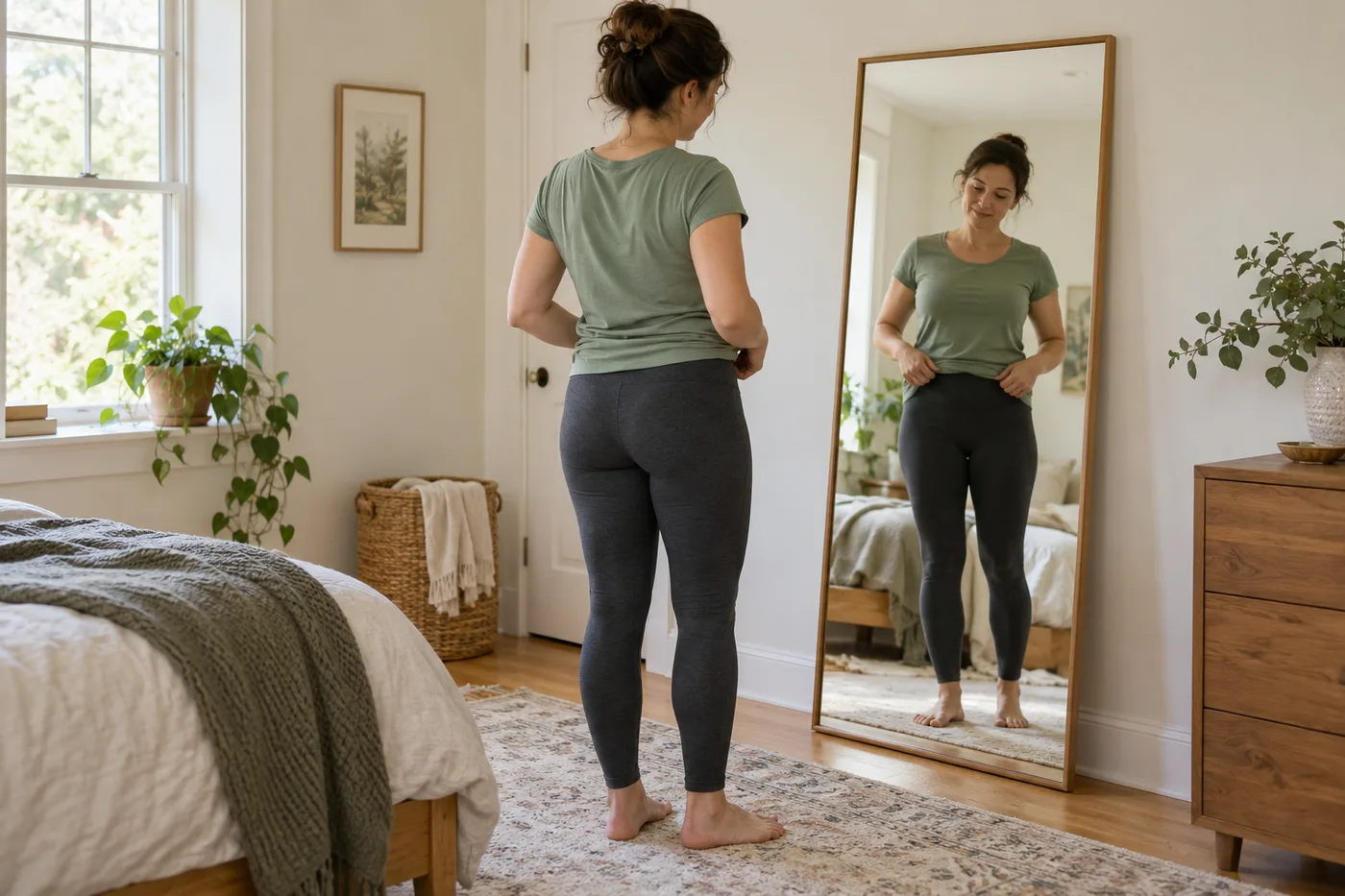
Step 3: Use a Home Movement Test
Keep tags attached and follow the return policy.
- Five deep breaths while seated.
- Ten squats.
- Five lunges per side.
- Forward fold and overhead reach.
- One minute walking with intended pocket contents.
- Daylight opacity check.
- Five minutes seated after movement.
Reject the garment for pain, numbness, severe rolling, constant sliding, visible seam strain or unsafe pockets. Normal skin texture and underwear edges are not the same as sheerness. Use the squat-proof guide.
Step 4: Read Construction, Not Adjectives
“Buttery,” “sculpting” and “second skin” have no standardized values. Inspect:
- flat, even seams;
- gusset shape;
- waistband layers;
- pocket reinforcement;
- fabric recovery after gentle stretch;
- hem alignment; and
- whether prints distort under normal movement.
Fiber percentages alone do not reveal knit density, brushing or durability. Two 80/20 blends can perform differently.
Step 5: Buy One and Run a Five-Wash Trial
One new garment says little about a collection. Wear it in the intended activity, then follow the label for five wash cycles. Log:
- waistband movement;
- odor retention;
- drying time;
- pilling;
- seam changes;
- color loss; and
- whether you choose it voluntarily.
Only then buy a second color. This turns a lower price into lower trial risk instead of overconsumption.
Where to Save
Save on trend colors, lounge pieces, backup tops and simple layers. Brands such as CRZ Yoga, Colorfulkoala, Old Navy and Aerie may offer useful basics, but evaluate exact products.
Spend according to consequence, not prestige. A high-impact sports bra, winter running layer or safety-relevant shoe deserves fit and performance priority. Expensive does not guarantee correct; cheap does not excuse failure.
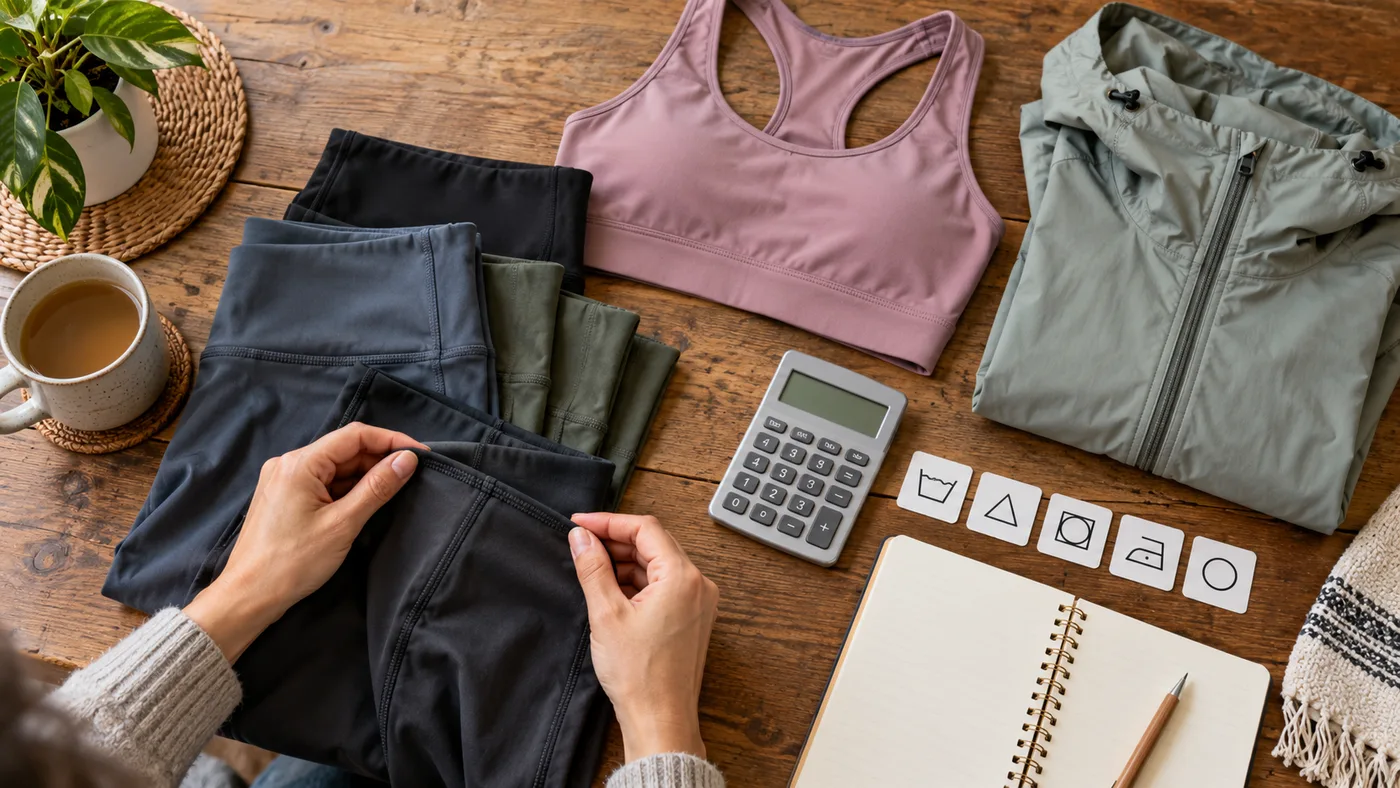
Cost per Wear
Use two calculations:
first-year cost = price + shipping + returns + care + replacement
cost per wear = first-year cost ÷ actual wears
A $25 top worn 50 times costs $0.50 per wear. A $15 sale top worn twice costs $7.50. Track actual use for three months instead of predicting an ideal future self.
Return Policy Checklist
Before ordering, confirm:
- deadline begins at order or delivery;
- worn/washed items are eligible or not;
- sale items are final;
- return shipping is deducted;
- refund goes to card or store credit;
- international duties are refundable; and
- the seller is the brand or a marketplace third party.
A generous return policy can make a moderately priced brand a better value than a cheaper, final-sale-only option.
Care Is Part of Affordability
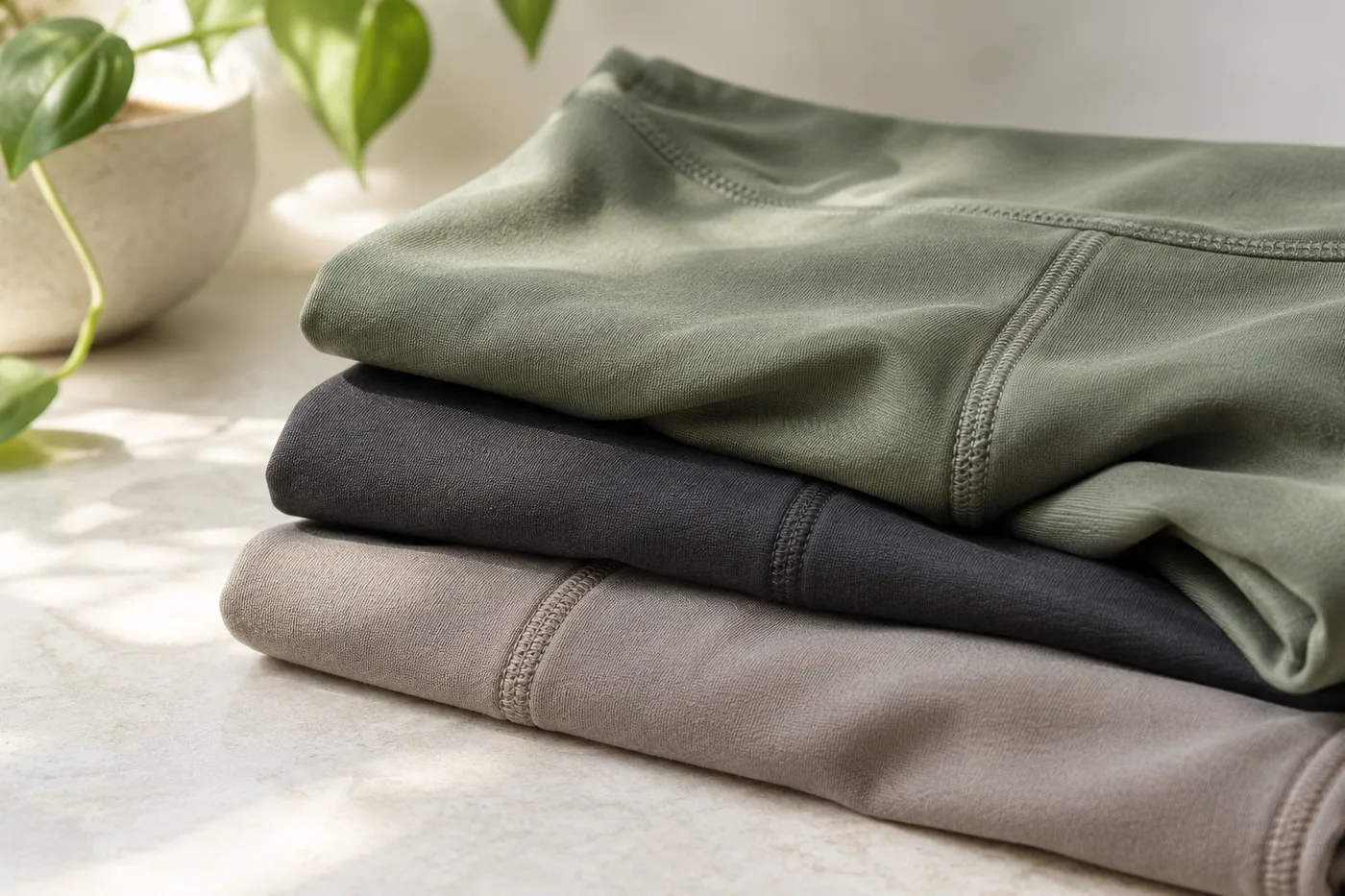
Cold water, correct detergent dose, no softener and minimal heat generally protect stretch fabrics. Separate towels, zippers and hook-and-loop. Air-dry when practical.
Do not buy a garment requiring hand washing if the real household routine is a mixed hot wash. The best product survives your sustainable behavior.
Red Flags
- “Exact dupe” based only on appearance
- No exact fiber or care information
- Product photos reused across seller names
- Reviews describing a different item
- Countdown timers that reset
- Subscription terms hidden after checkout
- No real return address
- All benefits and no limitations
- Health or “detox” claims attached to fabric
Outlet, Resale and Final-Sale Decisions
An outlet or resale purchase can lower cost without lowering product quality, but it reduces certainty. Confirm the exact model, fabric version, condition and alteration history. Photograph undisclosed wear immediately. For used leggings, inspect the gusset, inner thighs, waistband recovery and care-label legibility.
Final sale is appropriate only after the same model and size are proven. A 60% discount on an unknown fit transfers all risk to the buyer. When returns are impossible, include the probable resale loss in the price comparison.
A Three-Level Shopping Plan
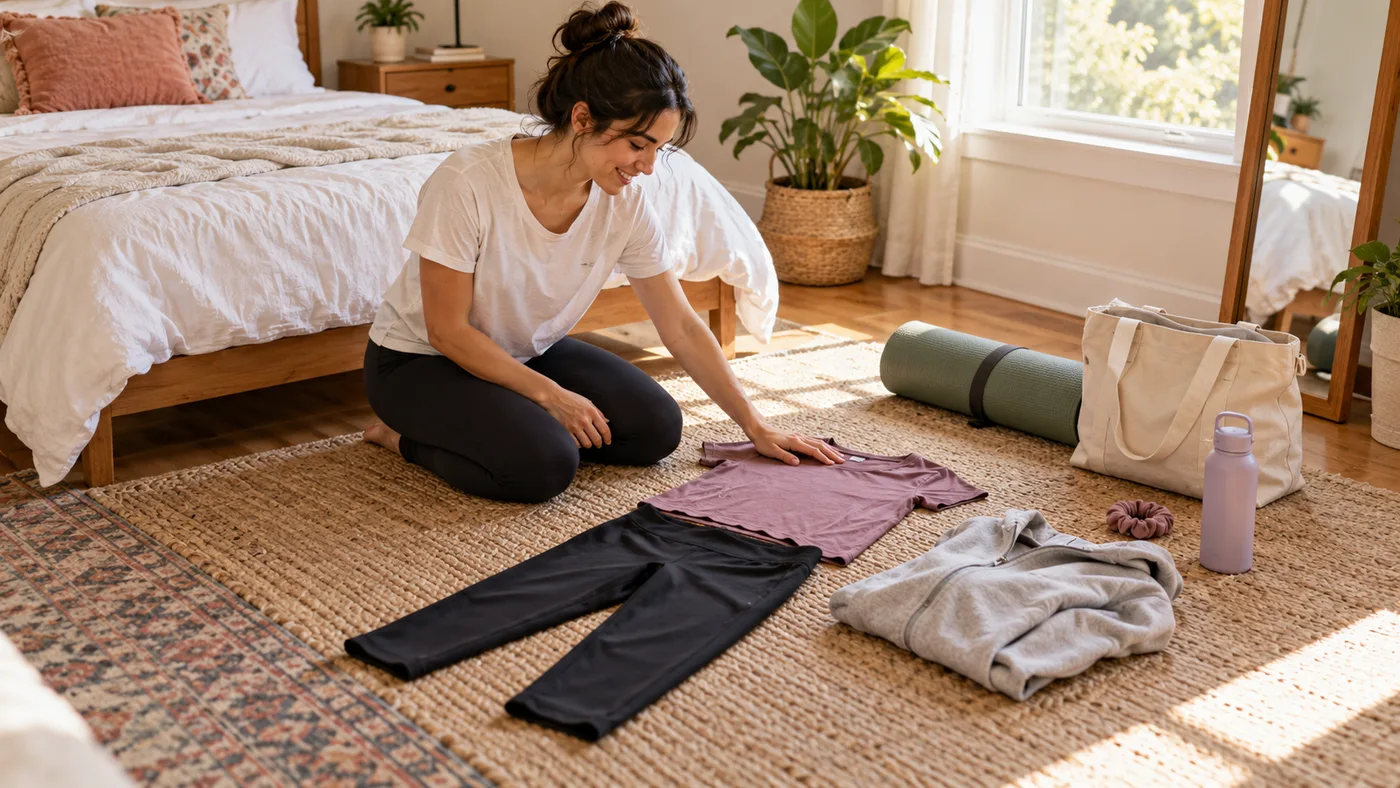
Level 1 — one functional outfit: Use current clothes and replace only the item causing distraction.
Level 2 — two-outfit rotation: Add enough for laundry between recurring classes.
Level 3 — specialized piece: Add hot-yoga, winter, running or compression gear only when the routine proves the need.
The beginner yoga clothing guide supplies a minimal first kit; the Lululemon alternatives guide helps when a specific premium feature is the benchmark.
Calculate the Hidden Transaction Cost
The ticket price is only the first line of the purchase. Add shipping, return postage, duties, tailoring, special-care supplies and the value of items that cannot be returned after a home test. A $24 legging with $9 return postage is not a low-risk experiment; a $45 pair with free returns may be the cheaper decision.
Before checkout, save a screenshot of the product description, promotion terms and return window. Confirm whether “final sale” applies to the color or discount code, whether the return becomes store credit, and when the clock starts. For resale, ask for the unstretched waistband, rise and inseam measurements plus close photographs of the crotch, inner thighs, hems and care label. These checks are unglamorous, but they prevent the most common affordable-activewear failure: buying a low price that cannot be converted into useful wear.
Four Questions to Answer Before Checkout
Are affordable leggings less durable?
Sometimes, but price alone cannot answer. Fit, knit, friction and care matter. Use a five-wash trial and inspect high-friction zones.
Should I size down for compression?
No. Select a more compressive fabric. Sizing down can create sheerness and seam stress.
Are subscription brands always poor value?
No. They can work for planned regular purchases, but only after annual cost and cancellation rules are understood.
How many pieces should I buy?
One test item, then enough to support the actual weekly routine and laundry schedule.
One Rule to Keep
The advantage of affordable activewear is optionality, not volume. Define the job, calculate total cost, test one exact product and let repeated use—not a promotion—decide whether it deserves space in the wardrobe.