About this guide: This guide covers ordinary activewear fit, not medical compression garments. Brand compression labels are not standardized; examples describe published product positioning rather than measured pressure levels.
A waistband can stay in place and still be wrong if it changes normal breathing. Compression describes resistance and pressure; it does not establish quality, opacity or correct size. A low-compression legging may suit long floor-based practice, while a firmer tight may help with pocket bounce yet feel intrusive when seated.
Select a fabric engineered for the desired hold. A smaller size is a fit change, not a compression technology.
Compression Levels
| Level | Sensation | Best use | Common drawback |
|---|---|---|---|
| Low | Barely-there, highly yielding | Yin, gentle yoga, lounge, travel | Sliding, limited support |
| Medium | Supportive hug | Vinyasa, Pilates, barre, general gym | Heat or waist pressure |
| High | Firm hold | Running, impact, selected strength work | Restrictive for long yoga holds |
These labels are not standardized across brands. CRZ Butterluxe explicitly describes very gentle compression; Athleta Elation describes medium compression. Use brand language as a clue, then verify by movement.
Low Compression
Low compression prioritizes range and sensory comfort. It suits long seated positions and everyday wear, but the waistband needs compatible anatomy. Soft fabric can migrate during fast transitions.
Choose low compression when you value freedom and do not need strong support. Avoid using a smaller size to prevent sliding; try a contoured waist or different cut.
Medium Compression
Medium compression balances support and mobility for many studio practices. It can improve perceived stability and keep pockets from bouncing. A reinforced waistband may distribute pressure better than a single thin layer.
It should still allow deep ribcage and abdominal breathing. If breath becomes shallow or skin goes numb, the fit is wrong regardless of appearance.
High Compression
Firm tights are useful for impact and some strength training. They often require more effort to pull on and can show seam stress if the pattern is wrong.
High compression is not automatically better for yoga. Long folds, twists and seated work may make strong abdominal pressure uncomfortable. People with medical or sensory concerns should seek individualized guidance when needed.
Waistband Shapes
Straight band
Simple and smooth; may gap on bodies with a larger waist-to-hip difference.
Contoured band
Curves inward at the top and can reduce gapping. Too much contour may dig.
Fold-over or crossover
Flexible styling and lower front pressure for some bodies. Can roll during vigorous movement.
Drawcord
Useful for running security. A knot may press during prone yoga or Pilates.
Reinforced multi-layer band
Multiple layers may change pressure distribution, but they do not establish stability on their own. Check rolling, sliding and breathing comfort on the exact garment; warmth and rise comfort vary by body.
Rise and Torso Length
“High rise” is not a fixed location. Measure from crotch seam to top edge and compare with torso length. A band that reaches the ribs on one person may barely reach the waist on another.
Test seated folds, not only standing. Rolling at the top can indicate excess height, insufficient contour, incorrect size or simply soft tissue moving normally. Pain is not required for support.
Inseam and Leg Fit
Measure a successful garment from crotch to hem. Check:
- hem position;
- calf tightness;
- bunching behind knees;
- crotch placement; and
- whether fabric twists around the leg.
A shorter inseam cannot correct a poor rise. Petite and tall options may change rise or proportions as well as length; verify specifications.
Seven Signs of Correct Fit
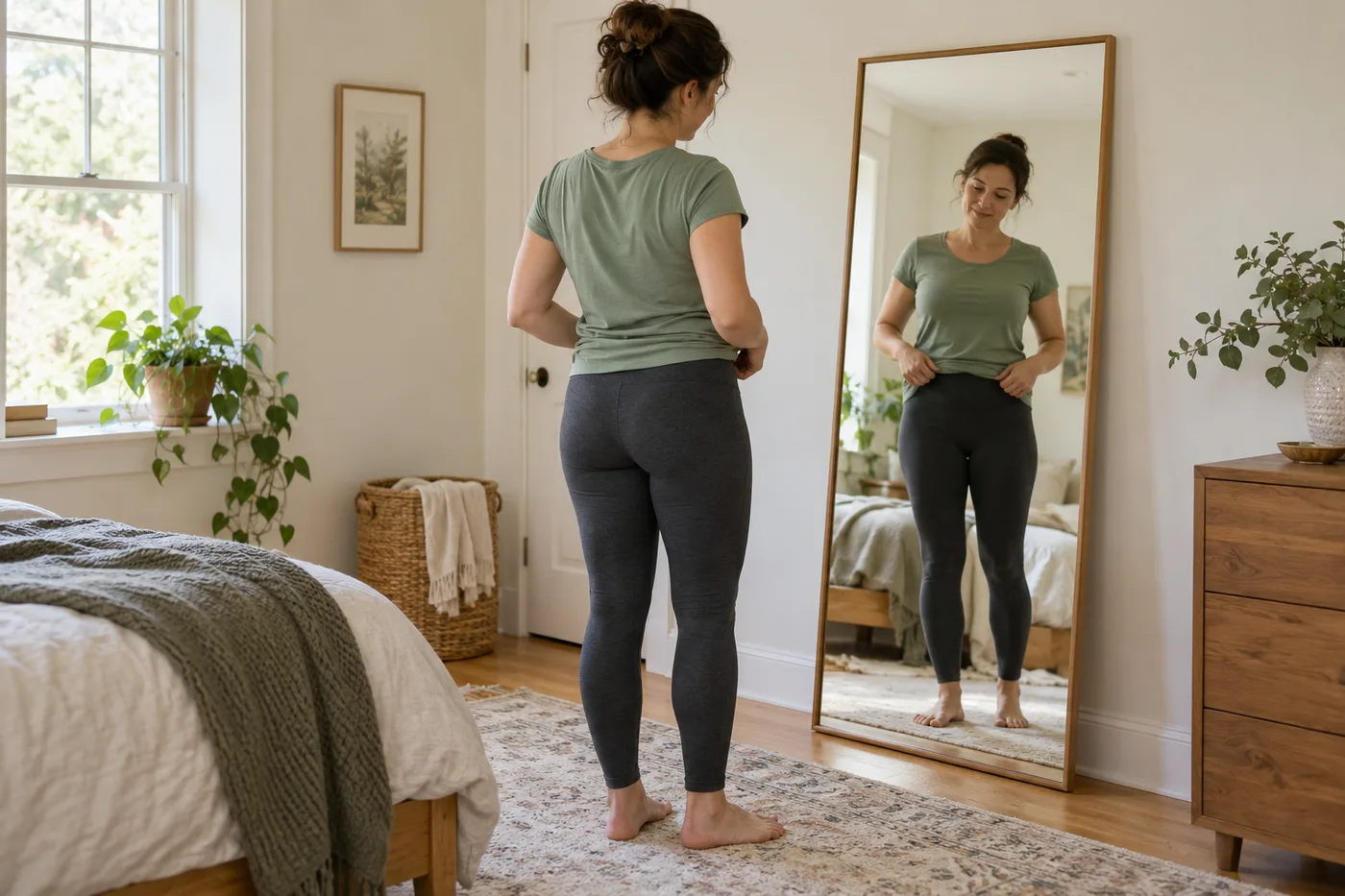
- Full breath without sharp pressure.
- Waist broadly stable through squat and fold.
- Gusset sits close without pulling.
- No strong radiating crotch lines.
- Fabric remains acceptably opaque.
- Hem stays clear of heel.
- Normal skin sensation throughout wear and after removal; no numbness or tingling.
The squat-proof guide covers opacity separately.
Diagnose Common Problems
Waist slides: too little contour, wrong size, overloaded pockets or low recovery.
Waist rolls: rise too high/low for fold, top edge too rigid or band/body mismatch.
Crotch pulls: insufficient rise, wrong pattern or size too small.
Knee wrinkles: excess length, loose lower leg or fabric recovery issue.
Sheerness: excessive stretch, low density, color contrast or wear.
Ankle flare: calf/ankle proportion mismatch, not necessarily a size failure.
Match Compression to Practice
- Hot yoga: low-to-medium, lightweight and quick-dry.
- Vinyasa: medium with stable waist.
- Yin/restorative: low and pressure-free.
- Pilates/barre: medium, smooth seams.
- Running: medium-to-high with drawcord/pockets.
- Strength: medium-to-high, dense and abrasion-aware.
The practice-based pants guide turns these into outfit choices.
Care and Recovery
Elastane loses performance through heat, chemical residue and repeated high stretch. Wash cold, avoid softener, separate rough items and minimize high heat. Rotate pairs if practicing daily so fabric can recover between wears.
Replace a legging when the waistband no longer returns, seams fail or high-friction zones thin. Cosmetic pilling alone may not end functional life.
Sensory and Health Boundaries
Some people enjoy uniform pressure; others find it distracting or intolerable. Compression that causes pain, numbness, tingling, skin color change or breathing restriction is not a fitness benefit. Fitness leggings are also not the same as medically graded compression garments. People seeking compression for circulation, swelling or a medical condition should use professional guidance rather than substituting a fashion label.
Buying Worksheet
- Main activity: ___
- Preferred sensation: barely-there / supportive / firm
- Torso: short / average / long
- Desired rise: ___
- Successful inseam: ___
- Pocket load: none / keys / phone
- Heat sensitivity: ___
- Non-negotiable flaw: ___
- Budget: ___
Use the answers to select a construction, then a brand—not the reverse.
Compare Two Sizes Without Guessing
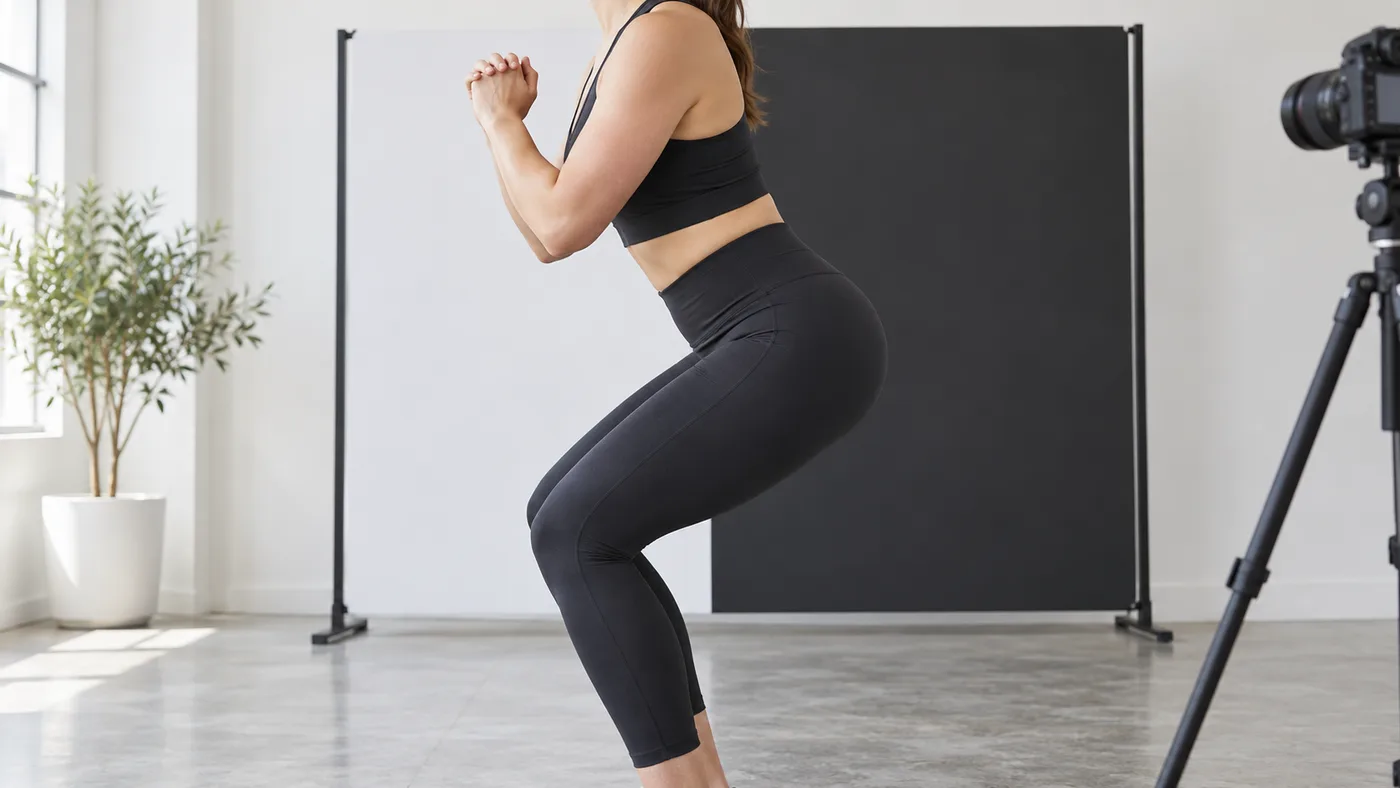
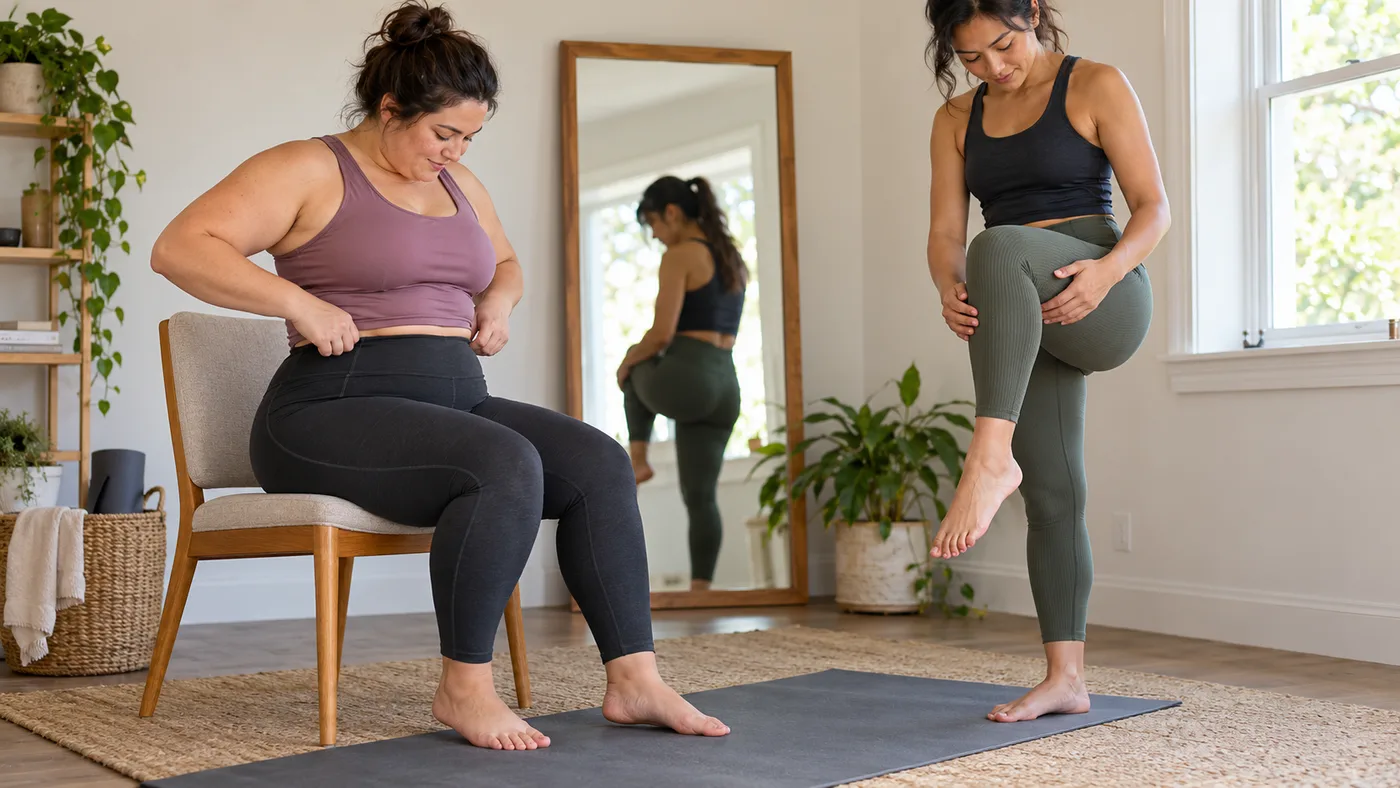
When you fall between sizes, test both in the same color and style if the return policy allows. First stand normally for two minutes; a waistband that feels impressive only because you are holding your breath is too restrictive. Then complete a deep squat, forward fold, high knee, lateral lunge and seated position. Check whether the smaller size becomes sheer, cuts into the abdomen or pulls the gusset forward. Check whether the larger size slides, wrinkles behind the knees or requires repeated lifting.
Film the side and back views in consistent lighting rather than relying on a mirror twist. Recheck after ten minutes, because migration often appears after body heat and movement. Choose the size with the fewest adjustments, not the smoothest static silhouette. If neither size works, the pattern—not your body—is the problem; change the rise, waistband shape or brand.
Fit Questions That Need Context
Does compression improve yoga performance?
A secure fit may reduce distraction, but more pressure is not automatically better. Technique and comfort matter more than garment tightness.
Should leggings leave marks?
Temporary light impressions can occur; pain, numbness, deep grooves or restricted breathing indicate a problem.
Are compression leggings the same as medical compression?
No. Medical compression is prescribed and graded for specific clinical use. Fashion/fitness terminology is not equivalent.
Why do leggings roll even in the correct size?
Rise, contour, torso shape, movement and fabric recovery can all contribute. Try a different waistband architecture.
What Good Fit Feels Like
Compression should match the activity and disappear from attention. Choose low for freedom, medium for stable studio support and high only when the task benefits. Correct fit never requires trading normal breathing for a flatter appearance.