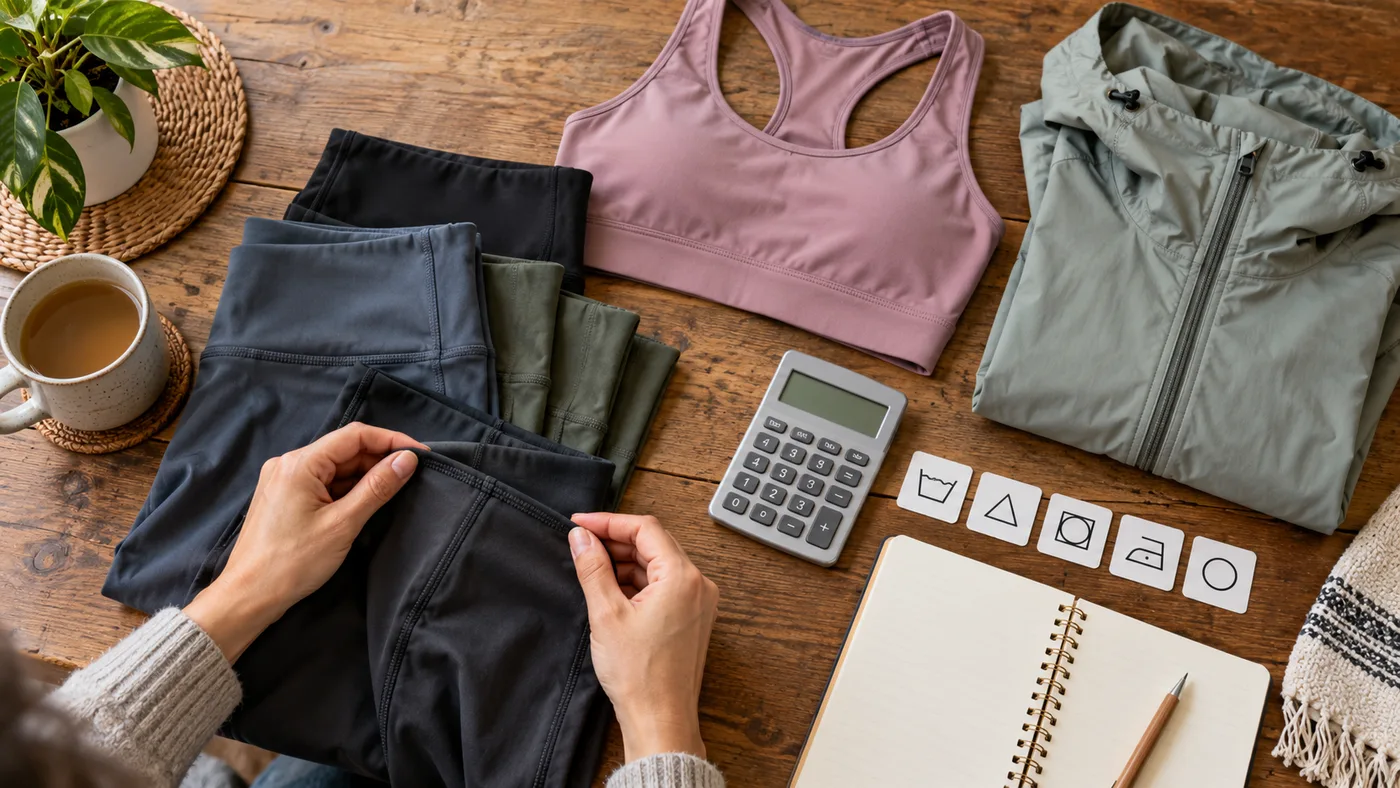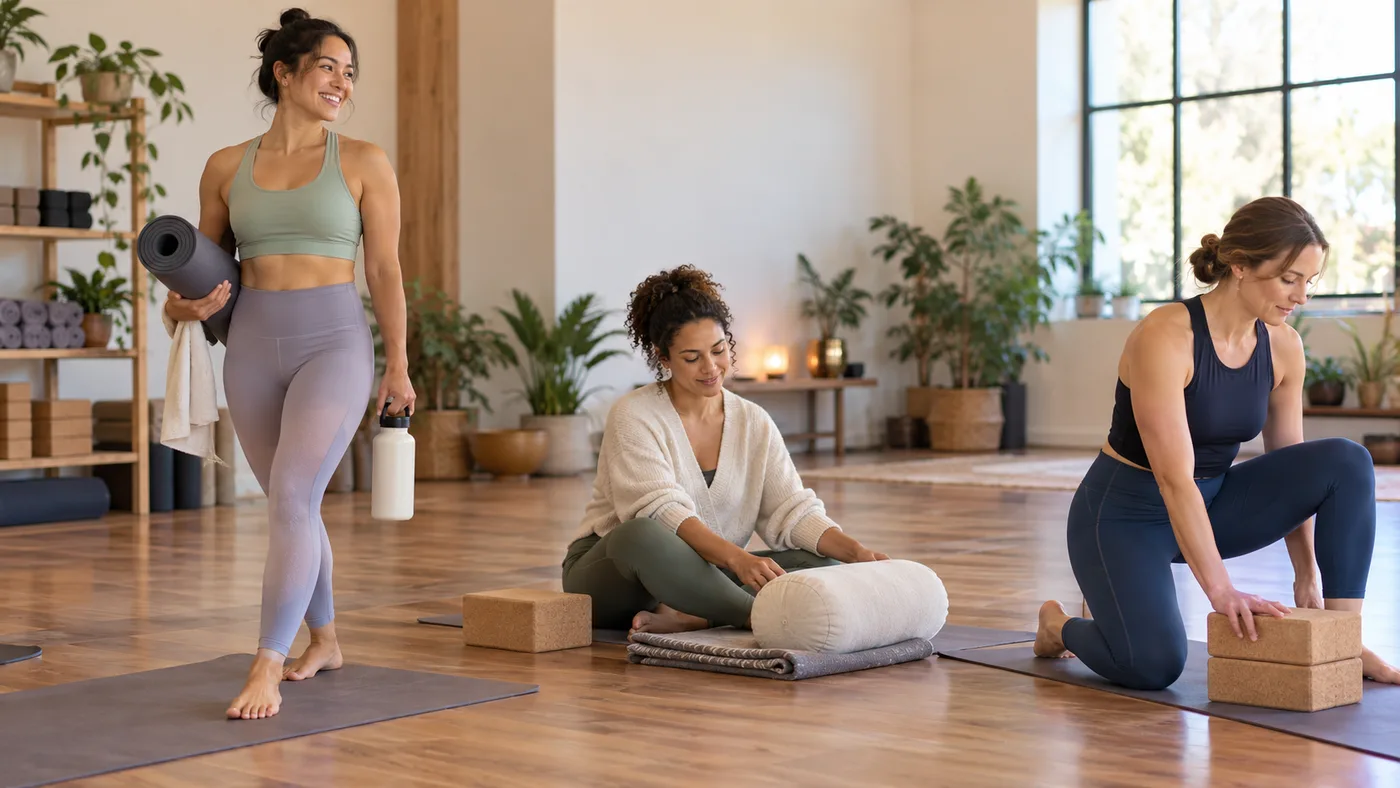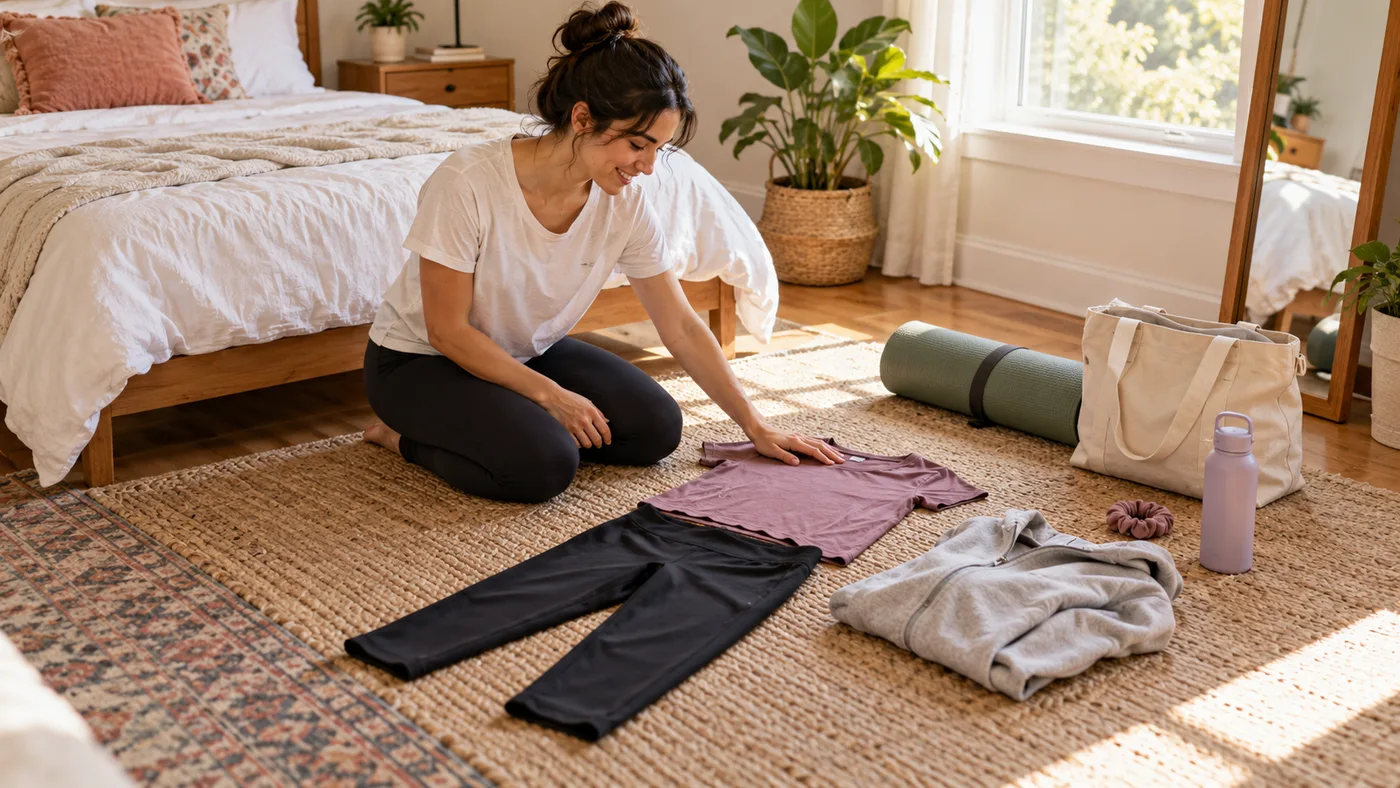
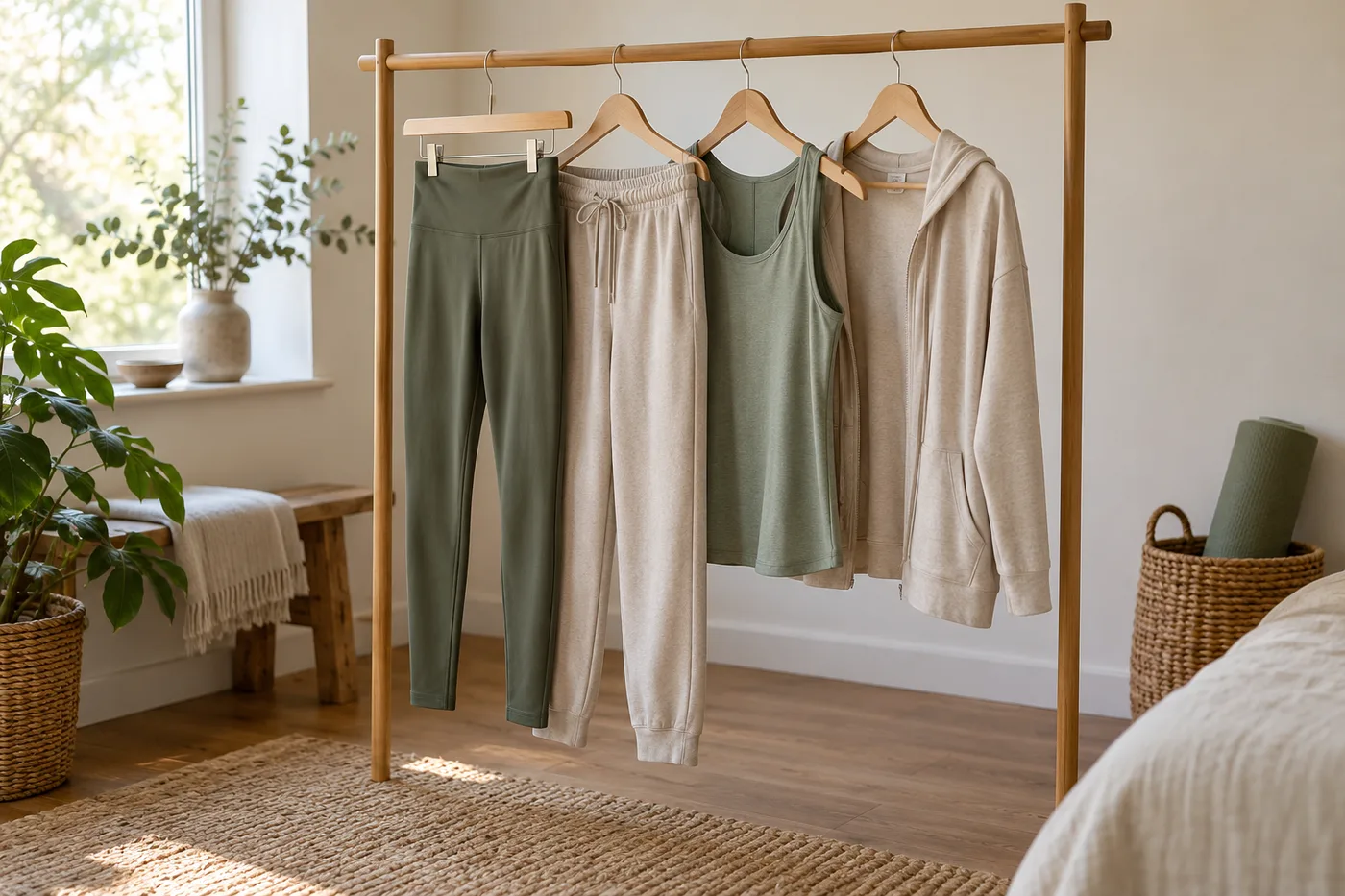
A beginner does not need a seven-outfit activewear haul. Most people can start with one secure bottom, one top that stays in place, appropriate support and an optional layer. The goal is to remove distractions while you learn what style of yoga, room temperature and fabric feel you prefer.
The best starter wardrobe is deliberately incomplete. It expands only after real classes reveal a problem.
About this guide: This guide offers general clothing and packing ideas for a first class. Use the movement and coverage checks to assess the exact garments you plan to wear.
The Four-Piece Starter Kit
| Piece | What it must do | First purchase rule |
|---|---|---|
| Bottom | Stretch, stay up, remain opaque | Choose a versatile medium-weight pair |
| Top | Stay clear of face and hands | Test downward dog and reaching |
| Support layer | Match breast support to movement | Comfort and breathing before compression |
| Light layer | Manage arrival, savasana and cool rooms | Use something already owned first |
Bare feet are standard in many classes; grip socks may be required for some Pilates studios. Shoes usually stop at the studio door. Check the class rules before buying.
Bottoms: Begin With Versatility
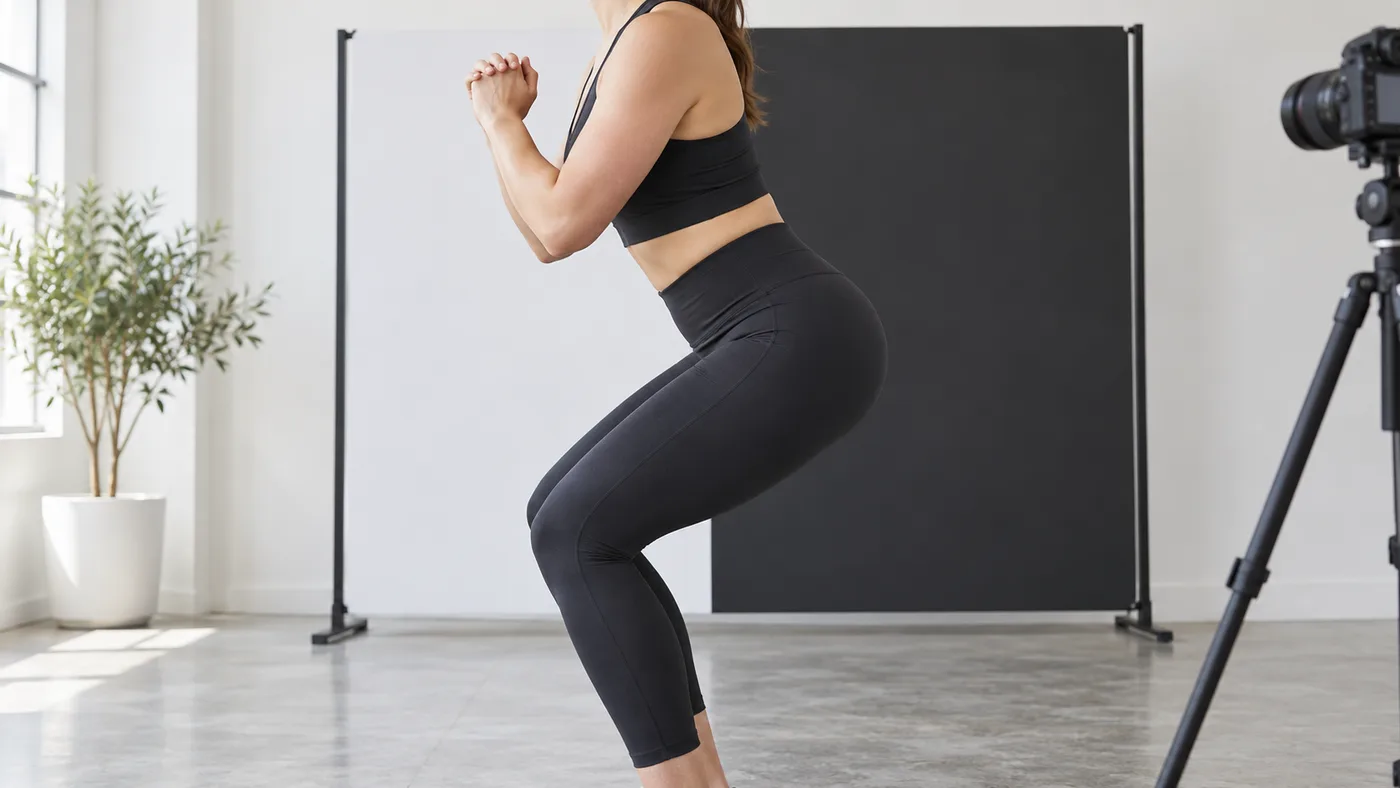
For a first legging, avoid extremes. Very thin hot-yoga tights and plush winter leggings each solve a narrow problem. A medium-weight, four-way-stretch bottom with a stable waistband can cover beginner hatha, gentle vinyasa, Pilates and home practice.
Run this test:
- Squat and fold in daylight.
- Lift each knee and step into a long lunge.
- Sit cross-legged for two minutes.
- Take five deep breaths.
- Check the hem does not sit under the heel.
The squat-proof guide separates opacity from normal underwear lines, while the compression guide helps interpret rolling and sliding.
Soft low-compression options such as CRZ Butterluxe are worth considering for gentle classes. Athleta Elation illustrates a manufacturer-labeled medium-compression option with a three-layer waistband, but its stability still needs checking on your own body. Those are design examples, not required purchases or proven fit outcomes.
Tops: The Downward-Dog Test Matters
A loose cotton T-shirt can work for slow standing practice but may fall toward the face in downward dog. A very tight crop is not automatically better if it restricts breathing or makes the wearer self-conscious.
Try the top with arms overhead, a forward fold and downward dog. Check that:
- the neck does not expose more than intended;
- the hem remains acceptably placed;
- armholes do not rub;
- seams do not press beneath bra straps; and
- a full ribcage breath remains comfortable.
A fitted tank, tucked technical shirt or top with an internal gripper can all work. Personal coverage preference is a performance requirement, not vanity.
Sports Bras: Match Support to the Class
Yoga is often low impact, but class formats vary. A gentle hatha or yin session may need light support; power yoga with jumps may need medium or high support. The correct bra keeps straps stable and permits unrestricted breathing without sharp pressure.
Test five arm circles, plank and a gentle hop only if the intended class includes impact. Removable pads can shift in washing; fixed cups add structure but may hold heat. There is no universal best configuration.
People with pain, post-surgical needs or unusual asymmetry may benefit from professional fitting rather than generic online advice.
Underwear and Seams
Seamless underwear can reduce lines, but “invisible” is not a safety requirement. Breathable fabric, a stable gusset and comfort under movement matter more. Avoid thick seams exactly where the body contacts the mat.
Dark underwear beneath pale leggings can exaggerate show-through. Perform the opacity test using what you actually plan to wear.
Layers: Use What You Own
A light sweatshirt, zip layer or long-sleeve top is useful before class and during savasana. It does not need to be yoga-specific. Choose something easy to remove without disturbing others and without metal hardware pressing into the spine.
For outdoor or winter practice, the winter sequence guide explains room and clothing preparation. For a heated class, use the hot-yoga clothing section.
A Budget Ladder
Use-what-you-have: $0 additional
Stretch leggings or athletic shorts, a secure T-shirt, comfortable support and a light layer are enough for a first gentle class. Test at home first.
Focused starter: buy one missing piece
Replace the item that creates a real problem: transparent bottoms, an unstable top or inadequate support. Do not replace the entire outfit.
Two-class rotation
After several sessions, add a second bottom or top to reduce laundry pressure. Keep both pieces compatible so either top works with either bottom.
Specialized upgrade
Only after identifying a stable habit should you buy a hot-yoga tight, winter layer, flared pant or premium matching set.
The affordable activewear guide explains cost per wear, sale traps and return policies.
Clothing by Class Type
Hatha or beginner flow
Medium-weight legging or fitted short, secure top, low-to-medium support and a layer.
Vinyasa
Stay-put waist, four-way stretch and a top that will not fall during transitions.
Hot yoga
Minimal, quick-drying layers; stable waistband; optional towel. Avoid thick cotton.
Yin or restorative
Soft low-pressure clothing and warm socks/layer for rest, if studio rules allow.
Outdoor yoga
Weather layer, sun protection, durable fabric and hems that stay clear of wet ground.
For a full breakdown, see what to wear to every yoga class.
What Beginners Can Skip
- Seven matching sets before taking a class
- High-compression leggings bought by sizing down
- Fashion flares with hems that slide under the foot
- A white or pastel bottom without a daylight test
- Heavy jewelry or exposed zippers
- “Detox” fabrics or unsupported wellness claims
- Premium pieces whose care routine you will not follow
Care Basics
Read the garment label. In general, cold water, mild detergent, no fabric softener and low heat protect stretch fibers. Wash sweaty garments promptly, separate rough towels and close zippers. Owning fewer pieces works only when the laundry plan matches class frequency.
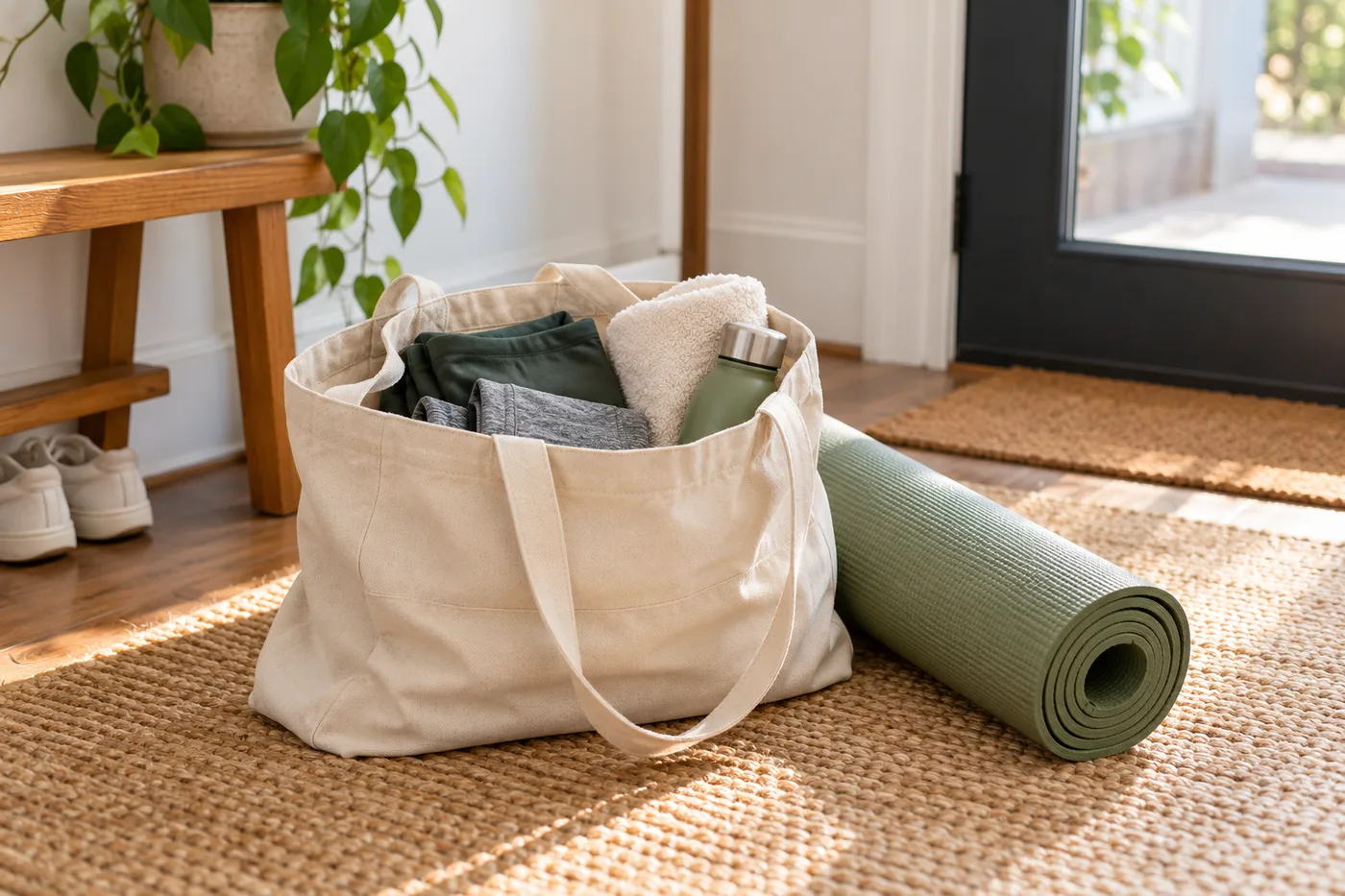
First-Class Packing Checklist
- Tested bottom and top
- Appropriate support
- Light layer
- Water bottle
- Hair tie or headband if useful
- Towel if the studio or class requires it
- Mat only if not supplied
- Any medication or personal safety item
- Studio arrival and footwear instructions checked
First-Class Clothing Questions
Do yoga clothes have to be tight?
No. They need to stay clear of hands and feet and allow teachers to see enough alignment when necessary. Tapered loose pants can work.
Can I wear shorts?
Yes, especially in heat. Check coverage through lunges and seated positions and avoid hems that bunch uncomfortably.
Do I need a yoga brand?
No. Fit, movement and care matter more than the label.
How many outfits do I need?
One for the first class. Two rotations are usually enough for a beginner practicing a few times per week with regular laundry.
The First-Class Rule
Buy information before buying variety. One real class can teach more about heat, coverage and waistband preference than fifty product pages. Start with a functional outfit, record what distracted you and solve only that problem.