About this guide: These are general ideas for building a practice routine, not treatment or individualized instruction. Choose suitable movements with a qualified teacher; illustrations provide context rather than verified movement or breathing demonstrations.
At 8:55 a.m., there may be time for one deliberate breath before the first meeting but no room for a mat. At lunch, two minutes of comfortable movement may be realistic. In the evening, five quiet minutes may fit better than another scheduled class. Those small openings are the subject of this guide.
This is a menu for weaving attention, breathing, brief movement and rest into an ordinary day. Readers looking for a progressive calendar with longer sessions, rest days and weekly reviews should use the separate 30-day beginner habit plan.
NCCIH describes yoga as including postures, breathing and meditation, and notes possible wellness benefits alongside the need for appropriate practice. The ideas below are habits, not medical treatments.
1. Use a One-Minute Arrival
Attach one minute of attention to an existing cue: after waking, before opening a laptop or after arriving home.
- Feel both feet or the support beneath the body.
- Notice three natural breaths.
- Relax the jaw and shoulders.
- Name one sensation without trying to change it.
- End when the minute ends.
The constraint matters. A practice that is truly one minute remains possible on a difficult day. It also avoids turning mindfulness into another performance target.
Minimum version: one complete exhale.
Expanded version: five minutes of seated or standing awareness.
2. Practice Gentle Breathing, Not Maximum Breathing
Slow breathing can support attention, but forceful techniques can cause light-headedness and are not appropriate for everyone. Begin with ordinary nasal or comfortable breathing; let the exhale soften naturally without long holds.
Try five rounds:
- inhale comfortably;
- exhale a little more slowly;
- pause only if it happens naturally;
- stop if dizzy, anxious or breathless.
Do not use breathing practice to delay care for chest pain, severe shortness of breath or panic symptoms. Beginners should learn forceful or prolonged breath retention from qualified instruction.
Minimum version: relax one exhale.
Expanded version: three minutes of comfortable paced breathing.
3. Interrupt Sitting With a Movement Snack
Every 60–90 minutes, use a cue such as finishing a call:
- stand and feel the feet;
- raise and lower arms twice;
- perform three gentle chair squats;
- place hands on a desk for a supported half Downward Dog;
- turn the chest gently each direction; and
- walk for one minute.
This is not a replacement for recommended physical activity. It is a practical interruption to one static position. Modify for the environment and health needs.
The beginner pose guide provides setup and modification cues, while the 20-minute sequence is available when more time exists.
4. Build a Five-Minute Bookend
Choose a morning or evening sequence and keep it unchanged for two weeks.
Morning option
- Mountain Pose — 5 breaths
- Chair variation — 3 rounds
- Low Lunge — 3 breaths each side
- Wall Downward Dog — 5 breaths
- Stand and pause
Evening option
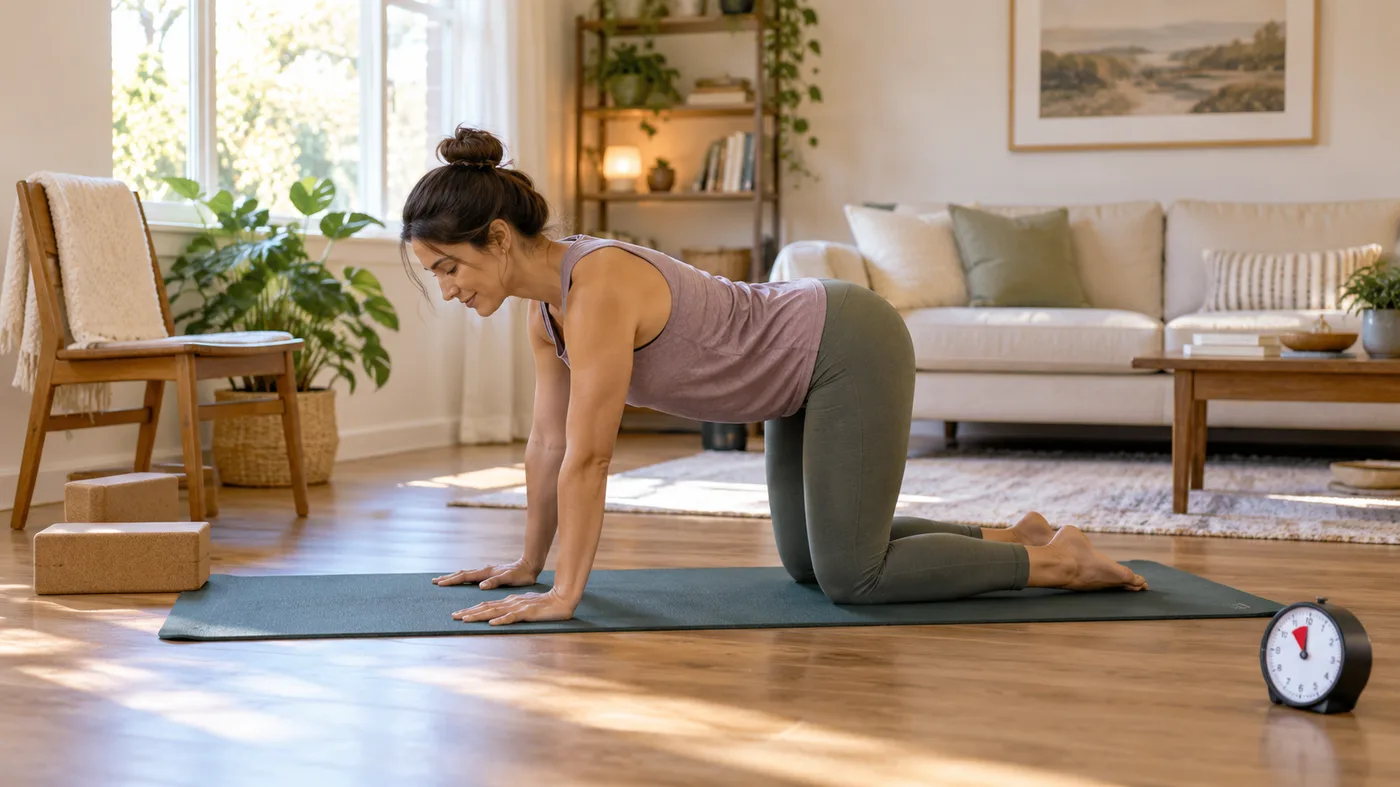
- Cat–Cow — 6 rounds
- Supported child's pose or seated rest — 5 breaths
- Supine Twist — 3 breaths each side
- Supported Savasana — 2 minutes
A familiar sequence lowers decision effort. More variety is not always more sustainable.
Minimum version: Cat–Cow plus rest.
Expanded version: the full 30-day yoga habit plan.
5. Choose Sustainable Classes
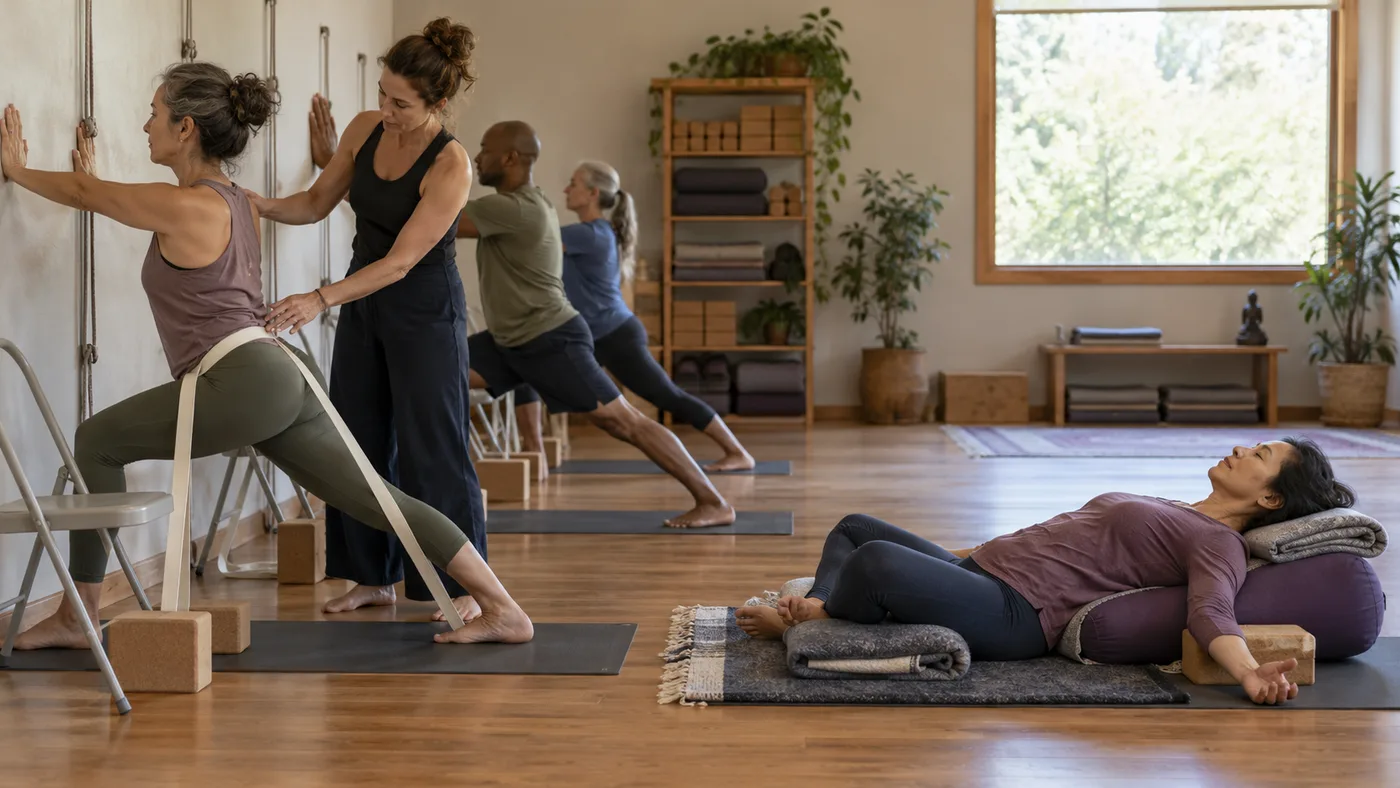
A class supports daily life only when travel, cost, intensity and recovery fit. Evaluate a studio or online plan using:
- teacher qualifications;
- level description;
- modification culture;
- total weekly cost;
- commute;
- schedule;
- room heat;
- cancellation rules; and
- how the body feels the next day.
One well-matched class plus two short home practices can be more sustainable than an unlimited membership used intensely for one month.
The hot-yoga evidence guide explains why intensity and heat should not become proof of progress.
Create a Practice Menu
Instead of one rigid plan, create three versions.
| Day | Practice | Example |
|---|---|---|
| Green: time and energy available | 20–40 minutes | Full sequence or class |
| Amber: limited time/energy | 5 minutes | Familiar bookend |
| Red: recovery or difficult day | 1 minute | Comfortable breathing/rest |
The red version protects continuity without overriding illness or necessary rest. A missed day does not create debt; resume at the next cue.
Design the Environment Once
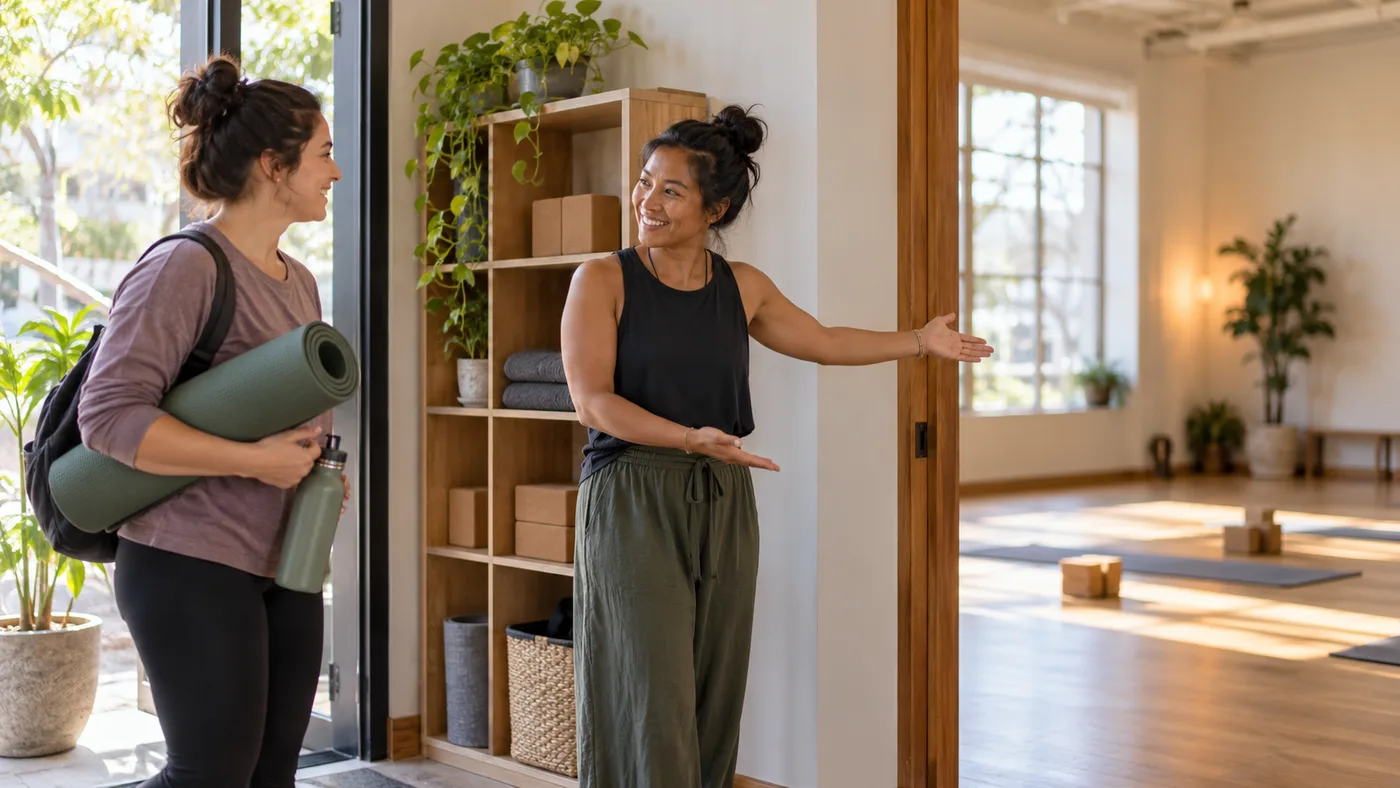
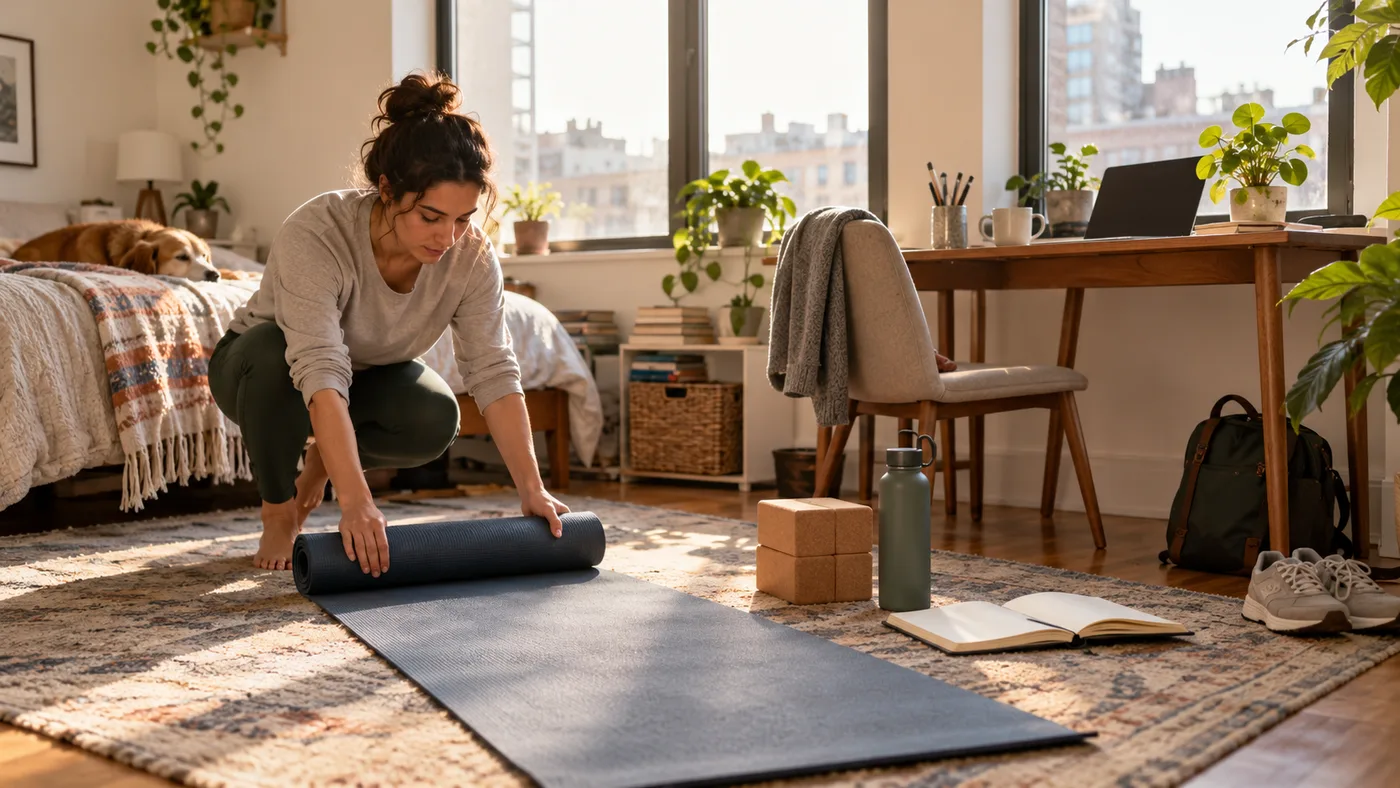
Reduce setup rather than demanding more willpower. Keep one clear practice area, place blocks or a chair nearby and store a three-minute sequence where it is visible. Choose clothing the night before only when changing is a real barrier. Silence notifications for the exact practice window.
If the home environment is unpredictable, define two locations: the normal mat space and a chair-based backup. The cue should describe an action—“after I close the work laptop, I stand by the chair”—rather than an aspiration such as “practice when I feel motivated.”
Track What Helps
Record only:
- date;
- version used;
- discomfort;
- energy before/after; and
- one note for next time.
Do not use pose depth, calories or daily perfection as primary measures. Consistency is useful only when the practice remains appropriate.
A Seven-Day Micro-Practice Menu
This sample week keeps the daily cue while changing the physical load:
- Monday: five minutes of Cat–Cow, low lunge and a supported forward fold.
- Tuesday: three minutes of gentle breathing plus a short walk.
- Wednesday: a 10–20 minute beginner sequence such as this timed home practice.
- Thursday: two one-minute movement breaks during the workday.
- Friday: balance practice beside a wall, followed by covered rest.
- Saturday: a class or longer self-directed session if recovery is normal.
- Sunday: restorative positions only, or no physical practice.
The menu deliberately alternates stress and recovery. If soreness, illness, poor sleep or pain changes the day, replace the planned session with quiet breathing, a supported position or rest. Consistency means returning to the cue; it does not require loading the same tissues every day.
When Daily Practice Is Not the Goal
Rest after illness, unusually poor recovery, escalating pain or clinician advice. Practice can also become compulsive. If missing a session creates distress, or movement is used to compensate for food, body image or rest, seek qualified support.
Yoga should not replace medical or mental-health care. NCCIH specifically advises not using yoga to postpone seeing a health professional.
Four Sticking Points, Answered Briefly
| Sticking point | Practical response |
|---|---|
| “I do not have time for poses.” | Breathing, attention, ethical practice and meditation sit within broader yoga traditions. Modern definitions vary; this menu does not require a mat every time. |
| “One minute cannot count.” | One minute can reinforce a cue and practice attention. It is not presented as a complete movement program or a fitness dose. |
| “I am sore but do not want to break the streak.” | Escalating or sharp pain is a stop signal. Rest or obtain qualified guidance instead of protecting a counter. |
| “I missed several days.” | Resume with the smallest appropriate version at the next useful cue. Do not double intensity to repay an invented debt. |
Make Tomorrow's Practice Easy
Make practice smaller before making it harder. A repeatable minute, a movement break and two short weekly sequences can influence daily life more than an ambitious schedule that cannot survive a busy week.