About this guide: This timed sequence is a general practice framework, not individual instruction or medical advice. Learn movements and adaptations with a qualified yoga teacher; illustrations do not demonstrate every stage or transition.
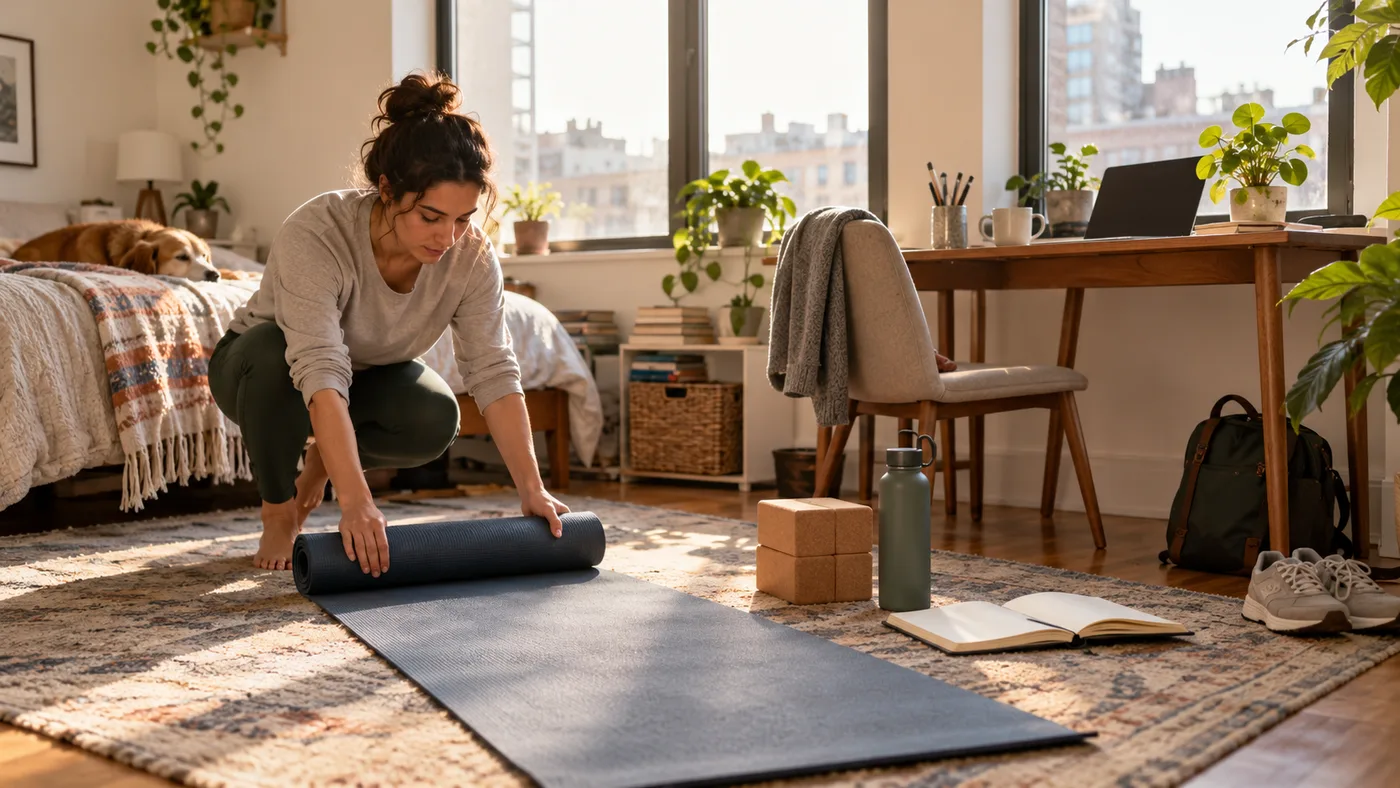
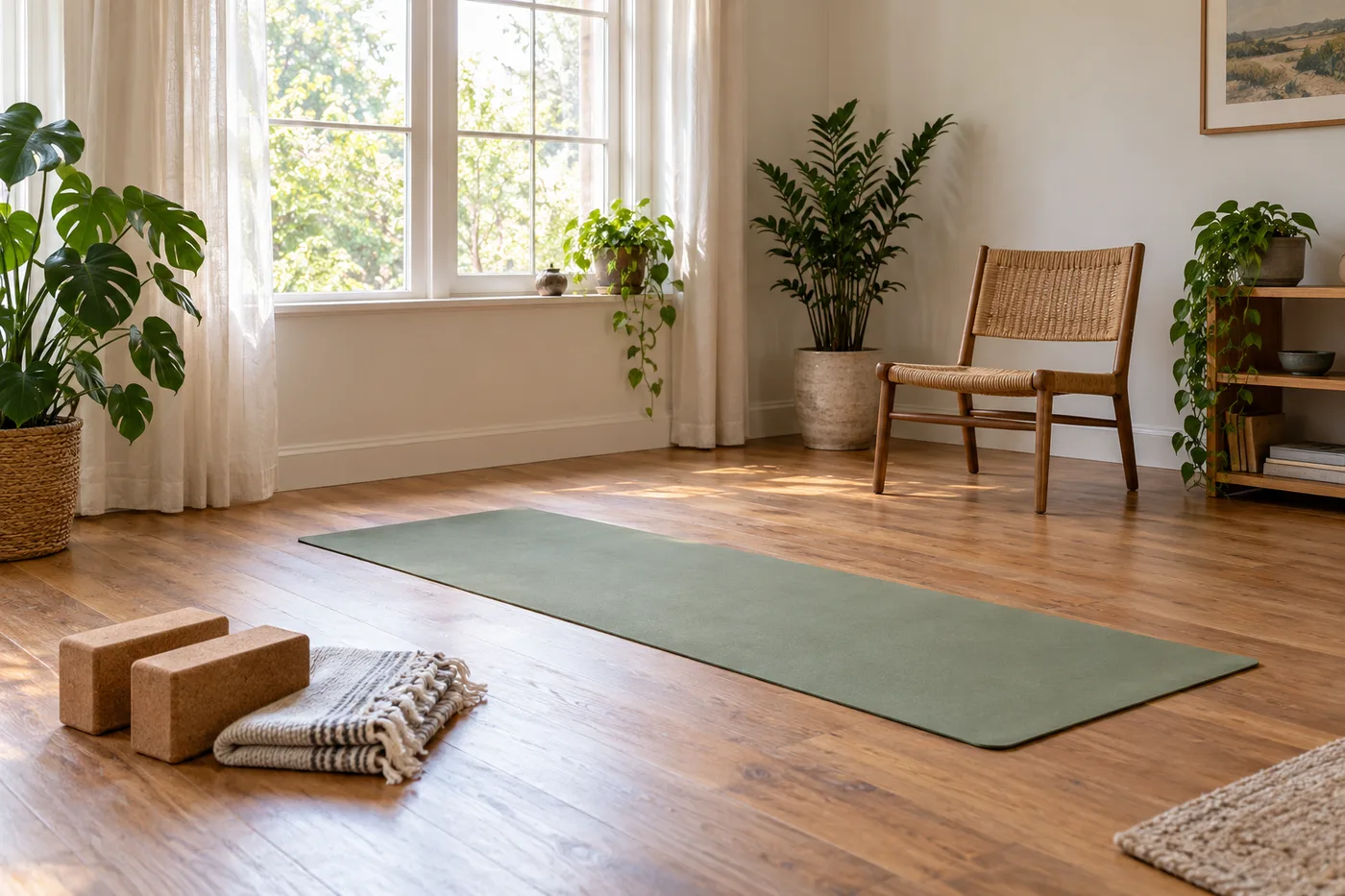
Set a chair at the top of the mat, place two blocks within reach and leave space to lie down before starting the timer. The sequence moves from arrival to spinal motion, standing work, balance, floor movement and rest. Its intended outcome is a session that can be repeated with control, without using stretch depth or sweat as a score.
Yoga is generally safe for healthy people when practiced appropriately, but injuries can occur. NCCIH recommends qualified instruction and modifications for health conditions. Obtain individual guidance for pregnancy, surgery, significant injury, severe balance problems or other medical concerns. Stop for sharp pain, numbness, chest pain, severe dizziness or unusual breathing difficulty.
Before the Clock Starts
Clear enough floor space that hands and feet cannot strike furniture. Place a chair near the top of the mat and blocks within reach. Wear clothing already tested in a fold and overhead reach; the beginner clothing guide explains what matters.
Use a stable mat, not a loose rug. Decide before starting that every pose can be shortened, supported or skipped.
Minutes 0–2: Arrive and Breathe
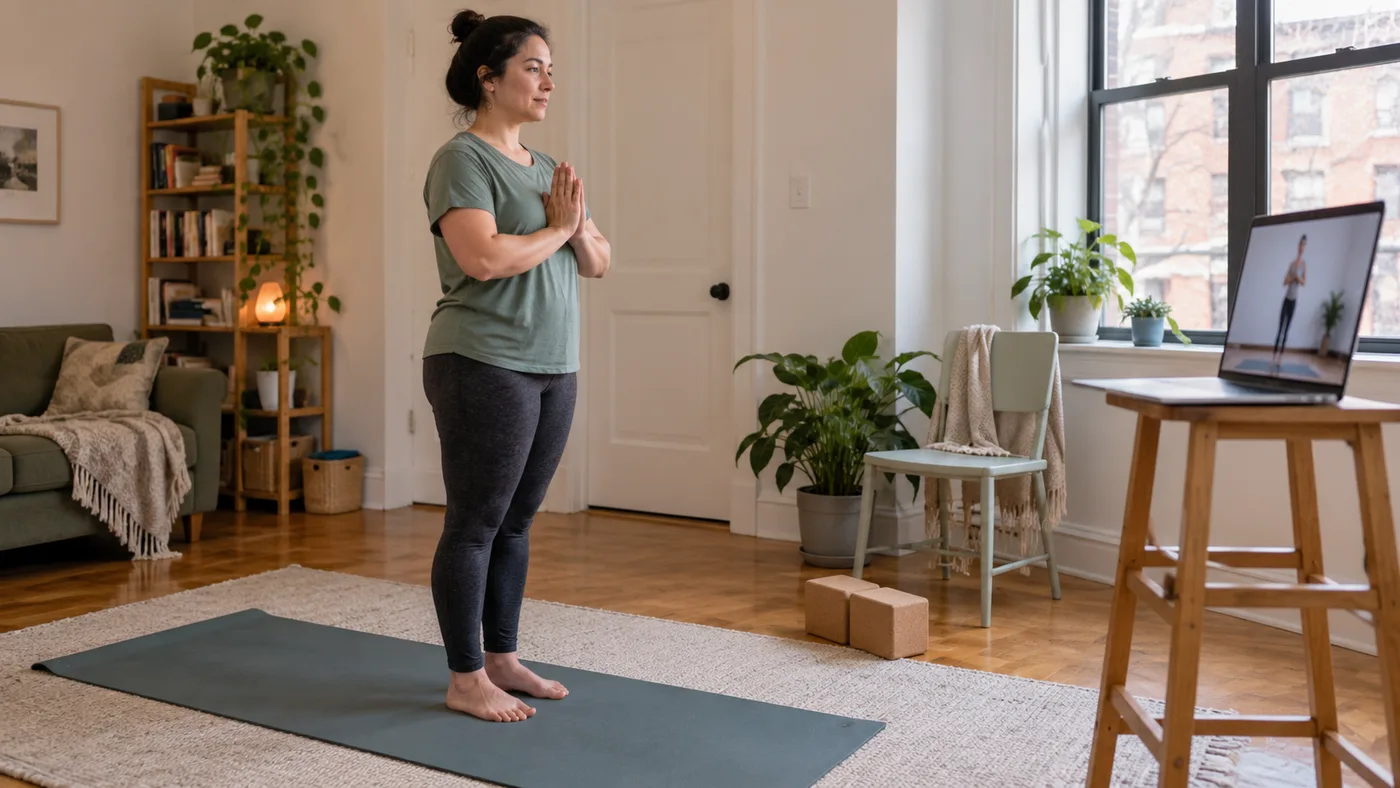
Sit on a folded blanket or stand in Mountain Pose. Rest hands comfortably. Notice natural breathing without forcing a pattern.
On each exhale, release unnecessary jaw and shoulder tension. On each inhale, feel the ribs expand. If closing the eyes affects balance or comfort, keep them open.
Goal: transition attention into the room.
Avoid: breath holds or very deep breathing that causes light-headedness.
Minutes 2–5: Warm the Spine
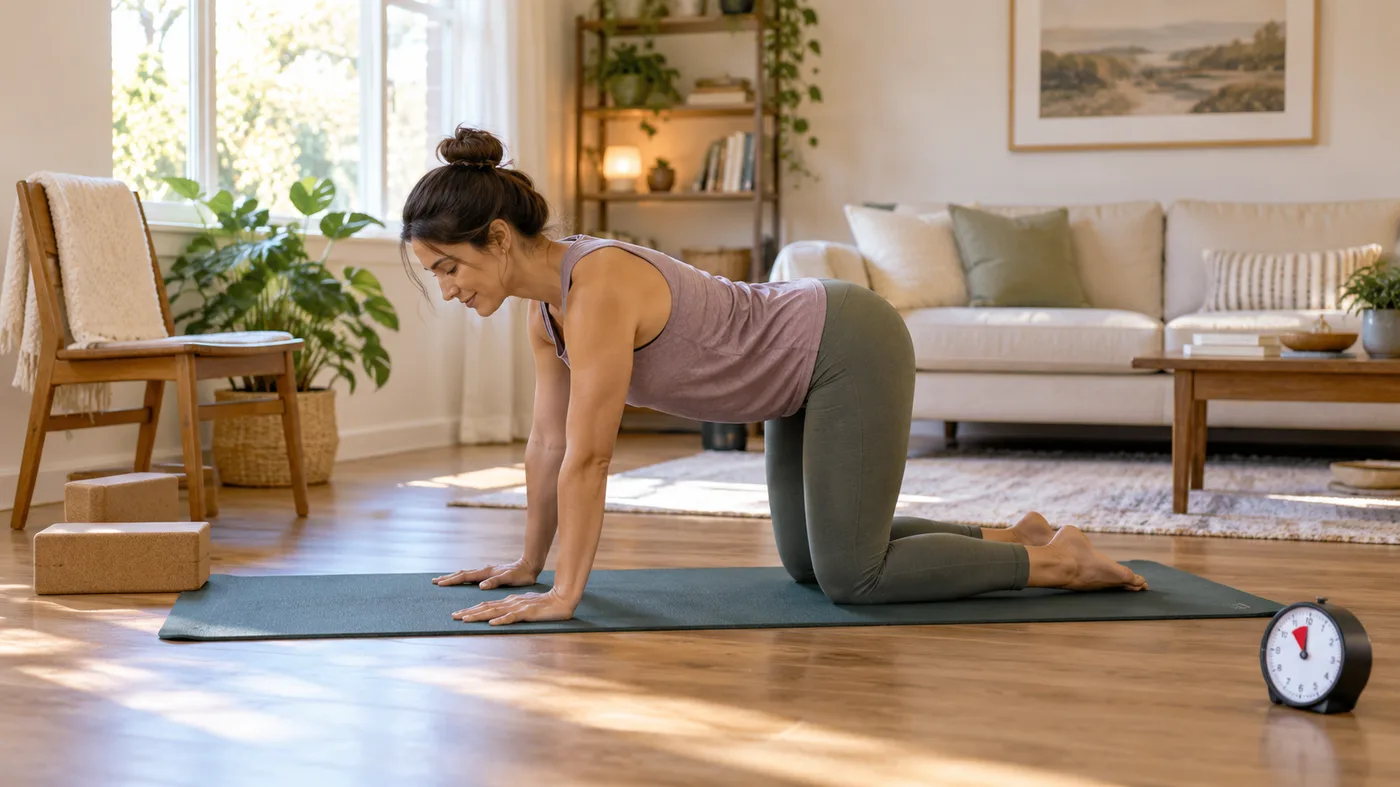
Come to hands and knees with padding under the knees.
- Inhale into gentle Cow.
- Exhale into Cat.
- Repeat six cycles.
- Move hips slowly toward heels and return three times.
- Circle wrists or make fists if hands need a break.
Keep the range smaller than maximum. A chair-supported Cat–Cow is valid when wrists or knees object.
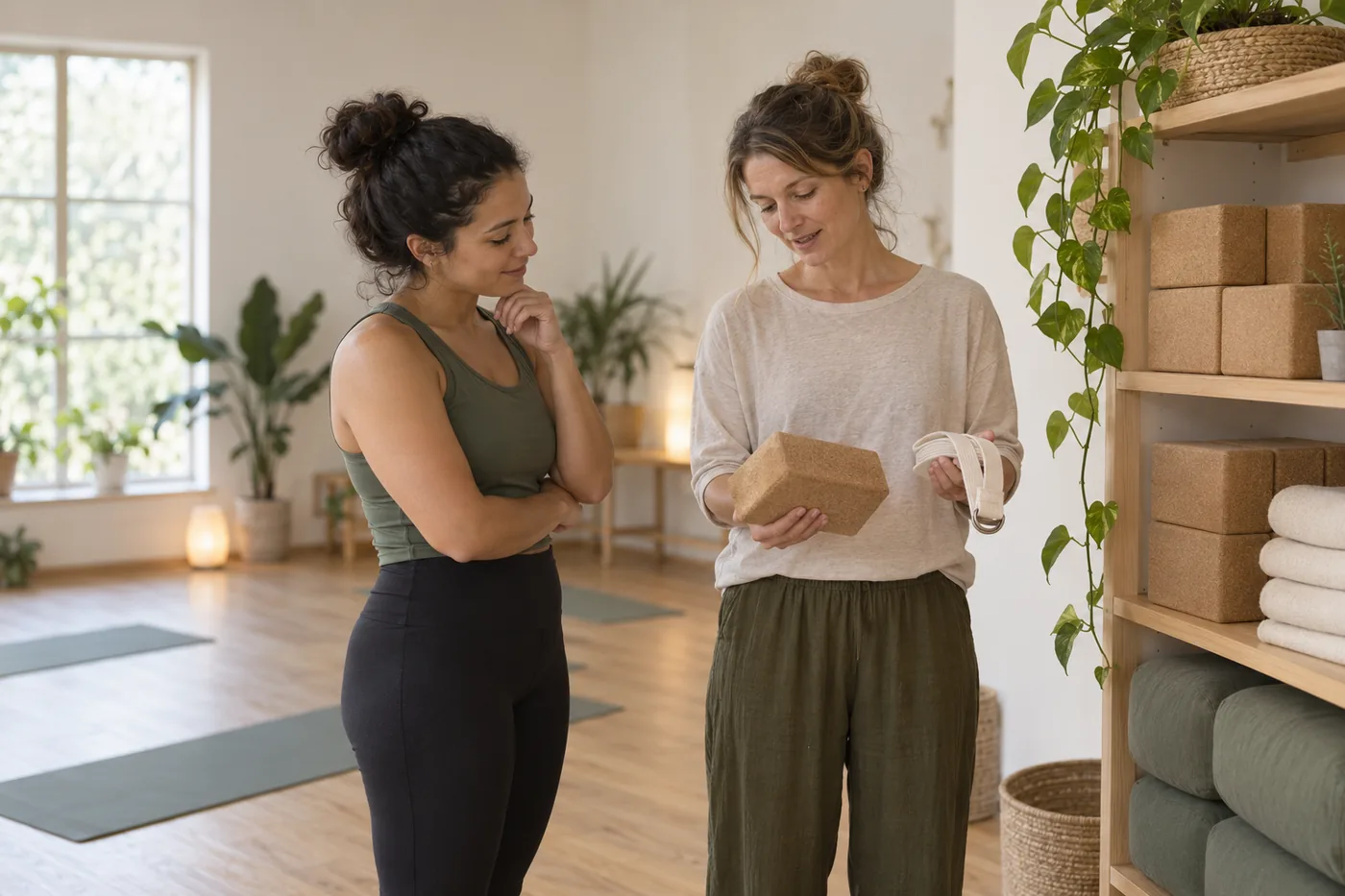
Minutes 5–8: Downward Dog and Low Lunge
Lift into Downward Dog with knees bent, or place hands on a chair for an L-shaped version. Take three breaths.
Step or guide the right foot forward; lower the left knee onto padding. Use blocks and take three breaths. Return to hands and knees, then repeat the other side.
Exit: lower the back knee before changing sides. Do not rush a step that does not reach between the hands.
Minutes 8–13: Standing Sequence
Walk or step to standing and pause.
Mountain to chair variation
Inhale arms to a comfortable height. Exhale, bend hips and knees into a small chair shape while arms move forward or hands rest on thighs. Repeat three times.
Warrior II
Step feet wide. Turn right foot out, bend the knee in the toe direction and extend arms. Stay three breaths. Straighten the leg, turn feet forward and repeat left.
Wide-leg reset
Keep feet wide, hands on hips and bend knees softly. Fold only as far as the back stays comfortable; blocks can support hands. Rise with knees bent.
Goal: warm legs and practice controlled transitions.
Avoid: forcing the front knee inward or holding breath.
Minutes 13–15: Balance
Stand near a wall for Tree Pose. Use kickstand toes, inner calf or inner thigh—never direct pressure on the knee. Hold three breaths each side.
If balance feels unsafe, keep both feet down and shift weight side to side. Training the transfer is still useful.
Minutes 15–17: Bridge or Supported Pelvic Lift
Lie on the back with knees bent and feet about hip-width. On an inhale, gently lift the pelvis; on an exhale, lower one vertebra at a time. Repeat three to five times.
Do not turn the head while lifted. If the neck, back or knees object, keep the pelvis down and practice a small pelvic tilt.
Minutes 17–18: Supine Twist
Bring knees toward the body and move them to one side with support beneath them. Take two or three breaths, return with control and change sides.
The knees do not need to reach the floor. Keep the range smaller if the shoulder lifts uncomfortably.
Minutes 18–20: Rest
Lie in Savasana with knees supported, rest on the side or place calves on a chair. Let breathing return to normal.
To finish, move fingers and toes, roll to one side and sit slowly. Pause before standing.
Modification Map
| Problem | Try |
|---|---|
| Wrist discomfort | Hands on chair, fists only if qualified guidance supports it |
| Knee pressure | Folded blanket or knee pad |
| Tight hamstrings | Bend knees; use blocks |
| Balance concern | Wall or chair, eyes open |
| Lower-back discomfort lying flat | Support knees or side-lying rest |
| Dizziness changing levels | Move slowly; pause seated; stop if persistent |
Pain is not a cue to search for a more heroic variation.
A Four-Week Progression
Week 1: Practice twice. For a complete fifteen-minute version, follow the sections from minutes 0–13, then finish with two minutes of the Rest section instead of continuing into balance and floor poses. For a gentler ten-minute option, use the complete chair-based starter. Keep transitions and final rest; stop before fatigue disrupts control.
Week 2: Complete the full sequence twice.
Week 3: Choose one change: keep two sessions and add one normal breath to a comfortable pose, or add a third session while keeping the existing holds and sequence unchanged. If adding a breath, include it within that section's time allowance; do not rush a transition or shorten final rest to make it fit.
Week 4: Maintain the frequency and holds chosen in Week 3. For feedback, you may replace one home session with a qualified beginner session of comparable or shorter duration and similar difficulty. Treat it as a replacement, not an extra workout.
Increase duration, frequency or difficulty one at a time, and repeat a week when the current version is not yet comfortable. The weeks are options rather than deadlines. The 30-day habit plan adds cues and tracking.
How to Tell Whether the Session Was Appropriate
After practice, record:
- energy before and after;
- any pain or numbness;
- which modification helped;
- breathing quality;
- whether you would repeat it tomorrow.
Improvement is not measured by heel position or fold depth. The useful outcomes are smoother transitions, less confusion and better awareness of limits.
Stop, Modify or Continue: A Practical Rule
Continue when effort is steady, breathing remains available and sensation is distributed through working muscles. Modify when the breath becomes strained, balance is unreliable or a joint feels compressed; shorten the range, use a wall, lower a knee or return to Child's Pose. Stop for sharp or radiating pain, chest pain, faintness, new numbness, sudden weakness or symptoms that continue after leaving the pose.
Do not use flexibility as the success measure. A smaller range completed with control is the complete version for that day. The NCCIH yoga safety overview recommends learning under a qualified instructor and adapting practice for health conditions. If you are pregnant, recovering from surgery or managing a significant joint, balance, cardiovascular or eye condition, ask an appropriate clinician and teacher which positions require changes before following a generic sequence.
Questions About Repetition and Progress
Can I do this every day?
A gentle version may suit many healthy people, but recovery needs vary. Alternate with walking and rest, and modify based on symptoms.
What if I cannot step forward from Downward Dog?
Lower knees and guide the foot forward, or start Low Lunge from hands and knees. The transition is optional.
Should I sweat?
Not necessarily. Sweat reflects heat, clothing and individual physiology—not session quality.
Can this replace professional instruction?
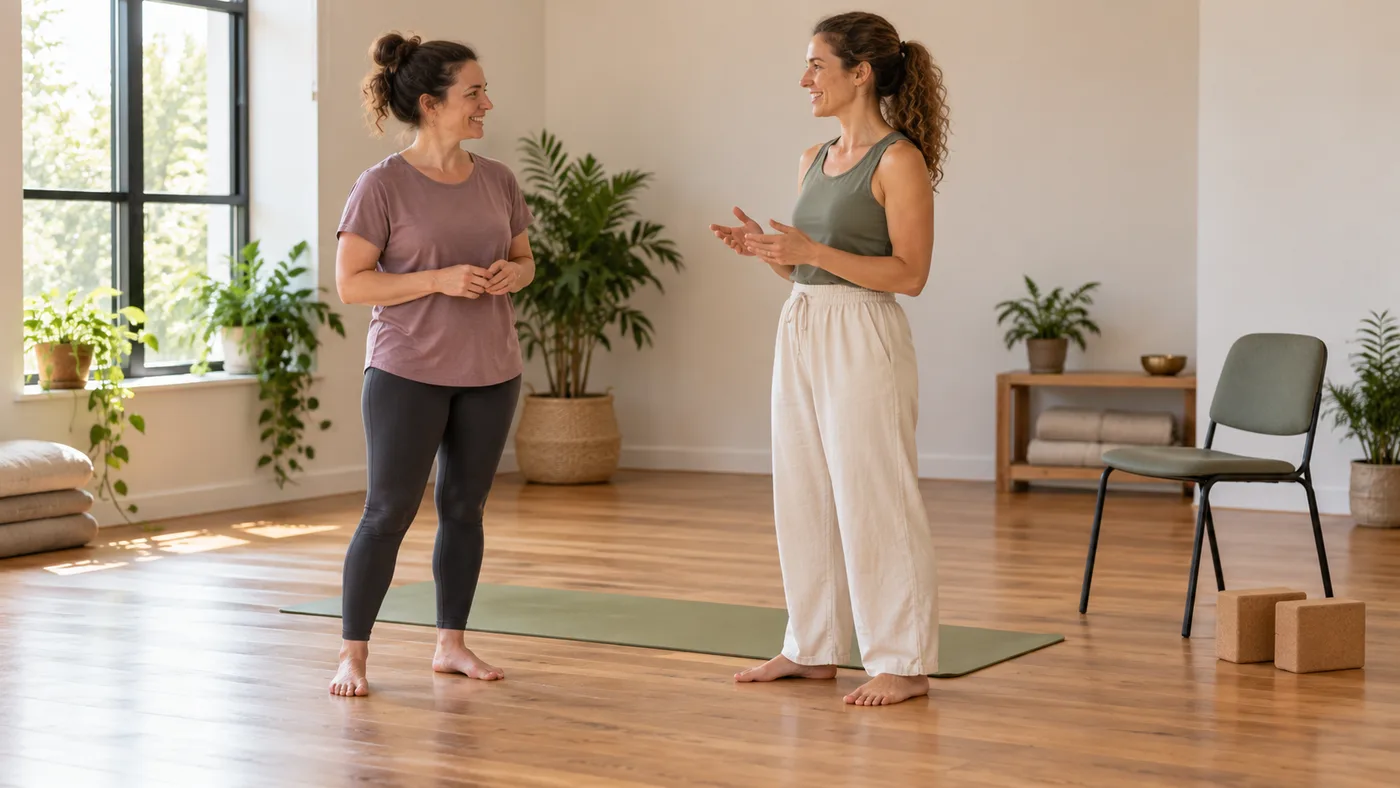
It can support home practice, but individual feedback from a qualified teacher is valuable, especially for pain, pregnancy or complex conditions.
The Yoga Alliance Scope of Practice supports keeping yoga instruction within the teacher's competence and referring health needs beyond that scope.
A Successful Session
A successful 20-minute practice ends on time, leaves the body settled and makes the next session easier to begin. Repeat before adding complexity.