About this guide: This calendar is a general practice framework, not an individualized program. Adapt the schedule and movements with a qualified teacher where needed; no participant or health outcome is claimed, and illustrations show context rather than a documented trial.
By Day 30, the useful result is a schedule you can repeat: you know when practice starts, which short version fits a difficult day, when rest replaces movement and how to resume after an interruption. The calendar below rehearses those decisions through short sessions, learning days and recovery.
This page is a structured beginner program, not a promise of transformation or thirty consecutive workouts. If you want isolated one- to five-minute ideas that can sit inside a workday without following a calendar, use Five Ways to Bring Yoga Into Daily Life.
Evidence boundary: this calendar is an editorial practice framework, not a validated clinical program or a documented participant trial. It promises a structure to test, not flexibility, weight, pain or mental-health outcomes.
Use qualified guidance for injuries, pregnancy, recent surgery, severe balance concerns or health conditions. Stop for sharp pain, numbness, chest pain, severe dizziness or unusual breathlessness. NCCIH advises gradual, appropriate practice and qualified instruction.
Set Up Before Day 1
Choose:
- cue: after coffee, after work clothes or before evening shower;
- place: a clear, stable area;
- minimum: three minutes;
- full practice: 10–25 minutes;
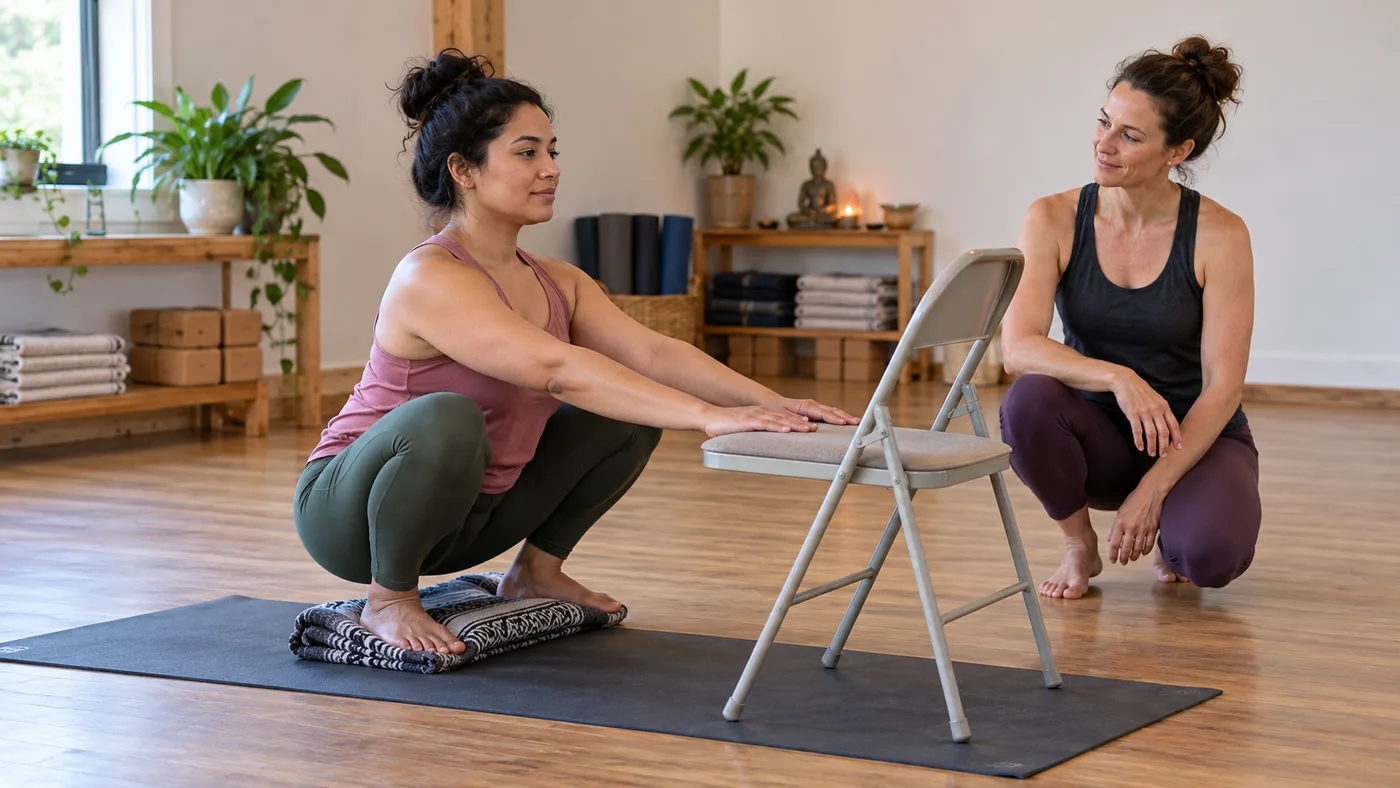
- backup: chair/wall sequence;
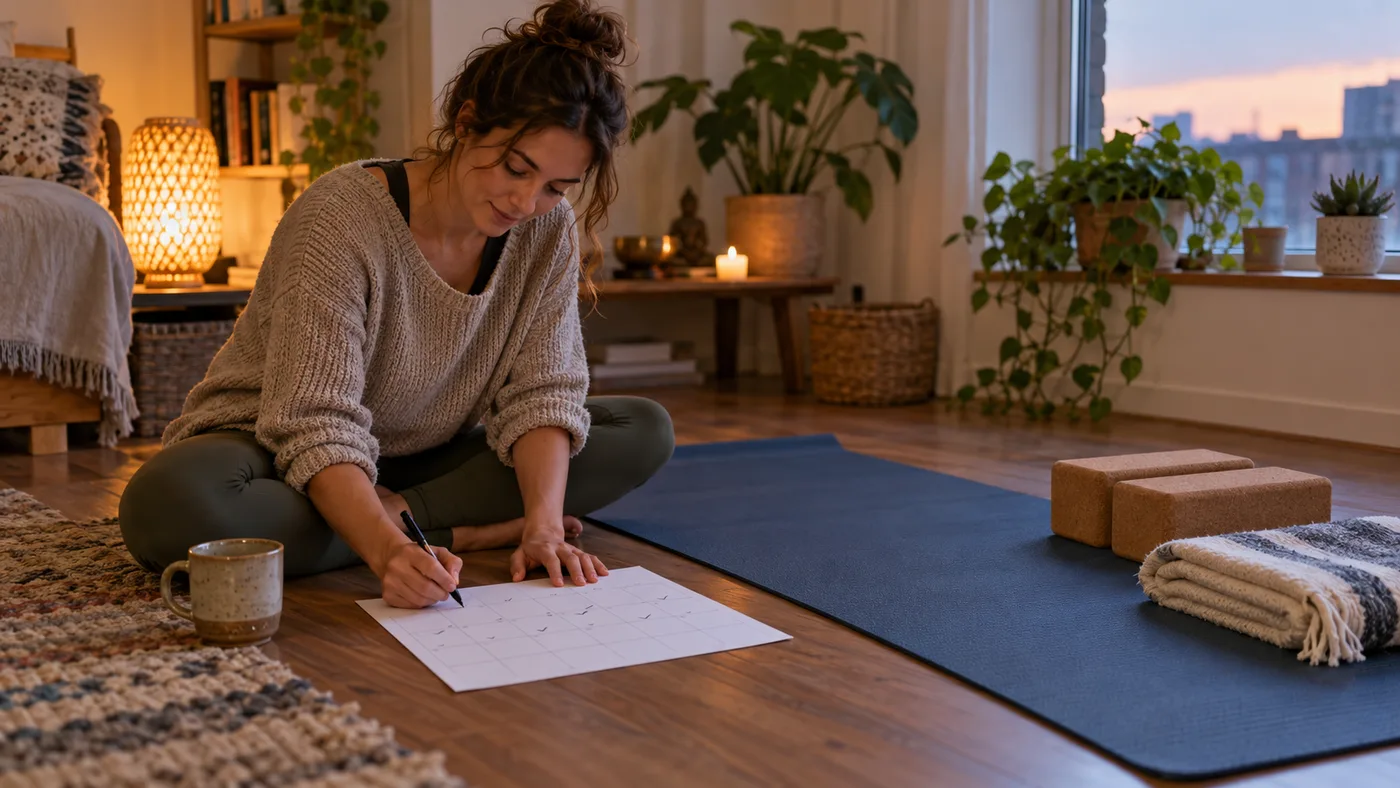
- record: paper calendar or simple note.
Put mat and props where setup takes less than two minutes. Schedule sessions on the calendar; do not rely on motivation.
The Three-Minute Minimum
On difficult days:
- one minute of natural breathing;
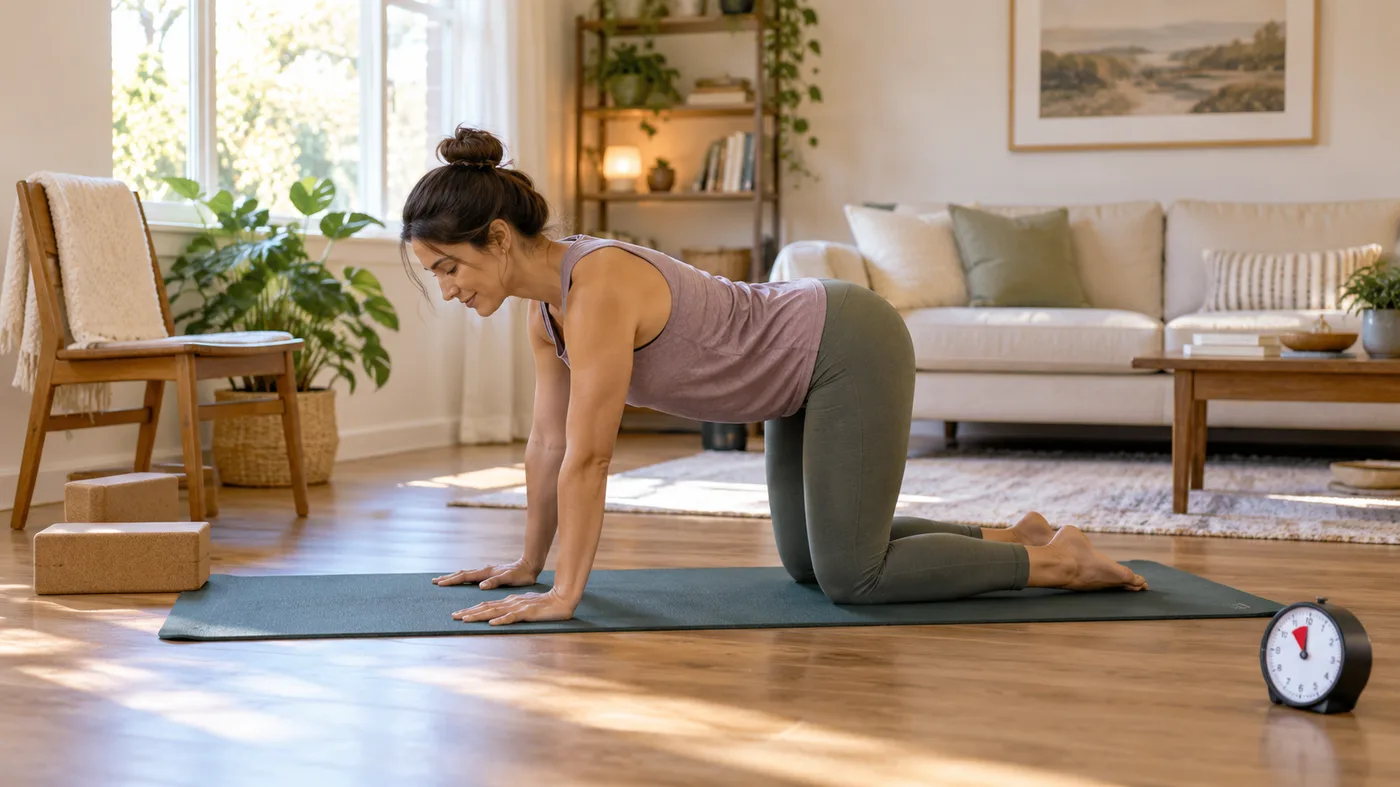
- one minute of Cat–Cow or shoulder movement;
- one minute of supported rest.
This is not a fitness dose or a debt loophole. It is a safe cue rehearsal. Acute illness, medical advice or concerning symptoms can still mean complete rest.
A Complete Ten-Minute Practice
Use this gentle version on Days 3 and 5. Begin seated in a stable, non-wheeled chair with the back supported as needed and both feet resting on the floor or a stable foot support. It avoids floor transfers. Each time block includes pauses and returning to a comfortable neutral position; it does not require holding one movement for the whole block.
- Minutes 0–1 — Arrive: Sit comfortably, let the hands rest on the thighs and notice natural breathing.
- Minutes 1–3 — Seated Cat–Cow: With hands on thighs, gently tip the pelvis and move the chest forward on an easy inhale, then round slightly on an easy exhale. Use a small range, keep the neck comfortable and pause between cycles.
- Minutes 3–5 — Shoulders and arms: Make a few slow shoulder rolls in each direction. Raise and lower one arm within a comfortable range, then the other; give both sides time without forcing an overhead reach.
- Minutes 5–7 — Ankles: Keep one foot supported while making small circles with the other ankle. Use about one minute for each side, including pauses; return both feet to support before changing sides.
- Minutes 7–10 — Supported rest: Settle the back and feet on their supports and let breathing remain natural. Finish with a quiet pause; if standing afterward, use the chair for support and rise only when steady.
Shorten or skip an uncomfortable movement and use the remaining time for supported rest. This editorial starter routine provides a complete alternative to cutting the linked twenty-minute practice off mid-section; it is a general framework rather than individualized instruction.
Week 1: Make Starting Easy
Day 1 — Baseline, 10 minutes
Mountain, Cat–Cow, chair-supported Downward Dog, Supine Twist and rest. Record energy and discomfort.
Day 2 — Minimum only
Complete three minutes at the same cue. Stop on purpose to prove the minimum is real.
Day 3 — Beginner sequence, 10 minutes
Use the complete ten-minute practice above, including its final supported rest.
Day 4 — Rest and prepare
No required pose practice. Keep the cue by checking the space and taking one normal breath.
Day 5 — Repeat Day 3
Repeat the same complete ten-minute practice. Do not add poses. Notice whether setup is easier.
Day 6 — Walk or ordinary activity
Yoga is not the entire physical-activity plan. Choose comfortable general movement if appropriate.
Day 7 — Five-minute review
Write: easiest cue, main barrier, one uncomfortable movement and one useful modification.

Week 2: Stabilize the Sequence
Day 8 — 15 minutes
Use Mountain, Cat–Cow, Downward Dog/chair, Low Lunge, Warrior II, Twist and rest.
Day 9 — Minimum or rest
Choose based on recovery, not guilt.
Day 10 — 15 minutes
Repeat the same sequence, holds and total duration. Let familiarity be the change today.
Day 11 — Learn, not perform
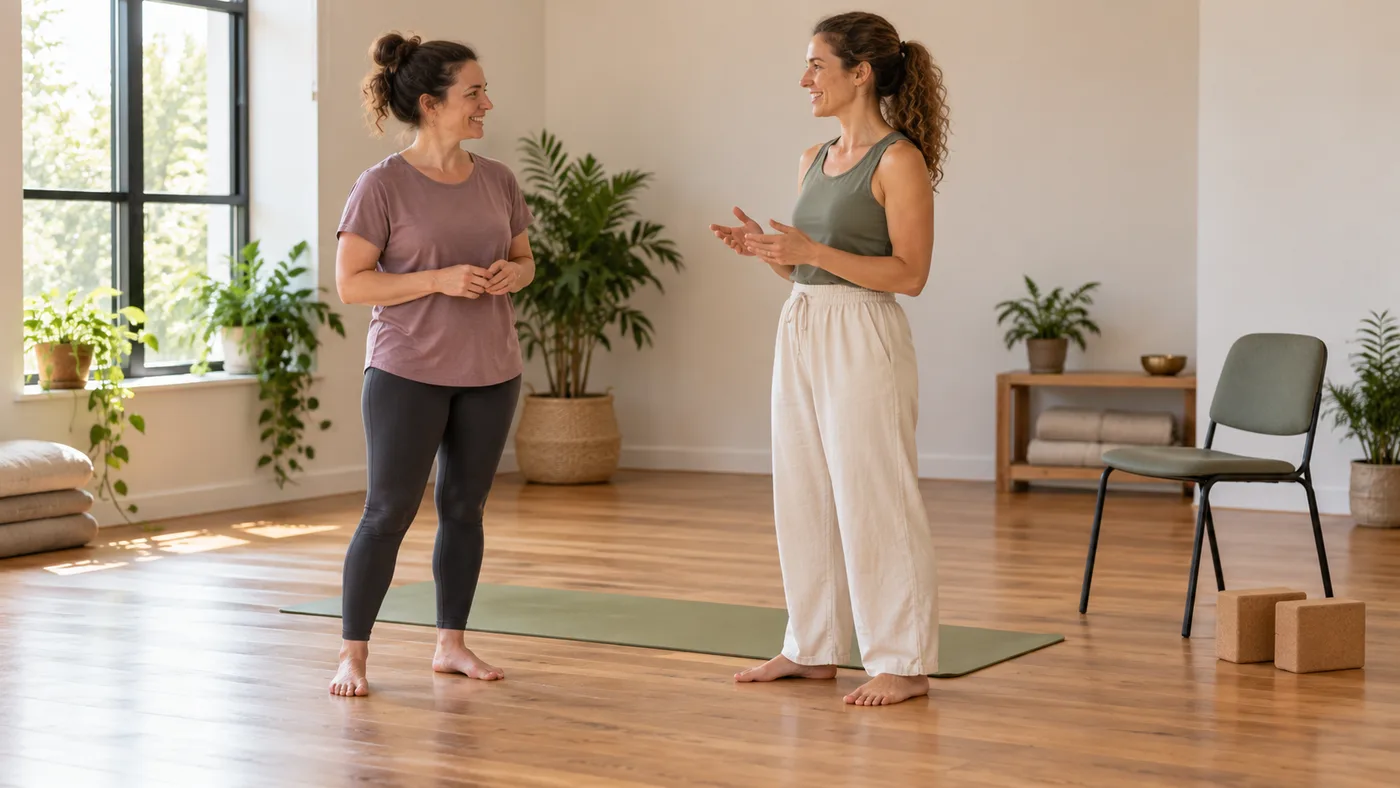
Read the eight-pose beginner guide or attend a qualified beginner class. Practice one modification.
Day 12 — 15 minutes
Use the modification deliberately, even if the unsupported pose is possible.
Day 13 — Five-minute mobility
Shoulder rolls, ankle circles, Cat–Cow and rest.
Day 14 — Review
Record frequency, pain, energy and whether the cue still fits. Move the cue if necessary.
Week 3: Add Choice Without Chaos
Create a menu:
- A: 20-minute balanced practice;
- B: 10-minute gentle practice;
- C: three-minute minimum.
Day 15 — A practice
Use the full 20-minute sequence.
Day 16 — C practice
Protect the habit with the minimum.
Day 17 — B practice
Choose gentle spinal motion, lunge, twist and rest.
Day 18 — Rest
No make-up session.
Day 19 — A practice
Repeat the same sequence; familiarity is the goal.
Day 20 — Explore style
Sample a beginner yin, hatha or vinyasa class from a qualified teacher. Avoid extreme or heated formats as a novelty challenge.
Day 21 — Recovery review
Which style increased willingness to return? Which increased fatigue? Adjust next week.
Final Phase: Days 22–30
Day 22 — 20–25 minutes
Choose A. Increase only duration or challenge.
Day 23 — Minimum
Keep it intentionally small.
Day 24 — Technique day
Practice transitions and exits, not deeper poses.
Day 25 — Rest
Prepare clothing and space for tomorrow.
Day 26 — 20–25 minutes
Choose the style most likely to continue after Day 30.
Day 27 — Five-minute practice
End while energy remains.
Day 28 — Optional class
Use qualified instruction for feedback. The practice counts even if modifications are used throughout.
Day 29 — Personal sequence
Build 15 minutes from: arrival, warm-up, two standing poses, floor pose and rest.
Day 30 — Review and next schedule
Choose two to four weekly practice windows, one minimum cue and one class/learning source. Celebrate with a plan, not a punishing challenge.
What to Track
Use five fields:
| Date | Version | Minutes | Energy before/after | Pain or modification |
|---|
Do not track calories, weight or pose depth as the primary habit score. Early success means starting predictably and responding to symptoms appropriately.
Missed-Day Rules
- One missed day creates no debt.
- Resume at the next scheduled cue.
- After three missed sessions, use the minimum for one week.
- If pain caused the break, obtain guidance before resuming.
- Do not double duration to “catch up.”
- Change a cue that repeatedly conflicts with real life.
Progression Rules
Increase only one variable per week. The calendar is a menu to adapt, not a requirement to advance: if the next phase would increase both session length and the number of movement sessions, carry forward the previous phase's limit for one of them. Treat a class or technique session as a replacement for a planned movement session rather than an extra workout. Repeat a phase when needed.
Choose just one variable when making an increase:
- frequency;
- duration;
- difficulty;
- heat; or
- external load.
Adding all at once hides the cause of pain or fatigue. Hot yoga is not a required progression; read the evidence and risk guide before considering it.
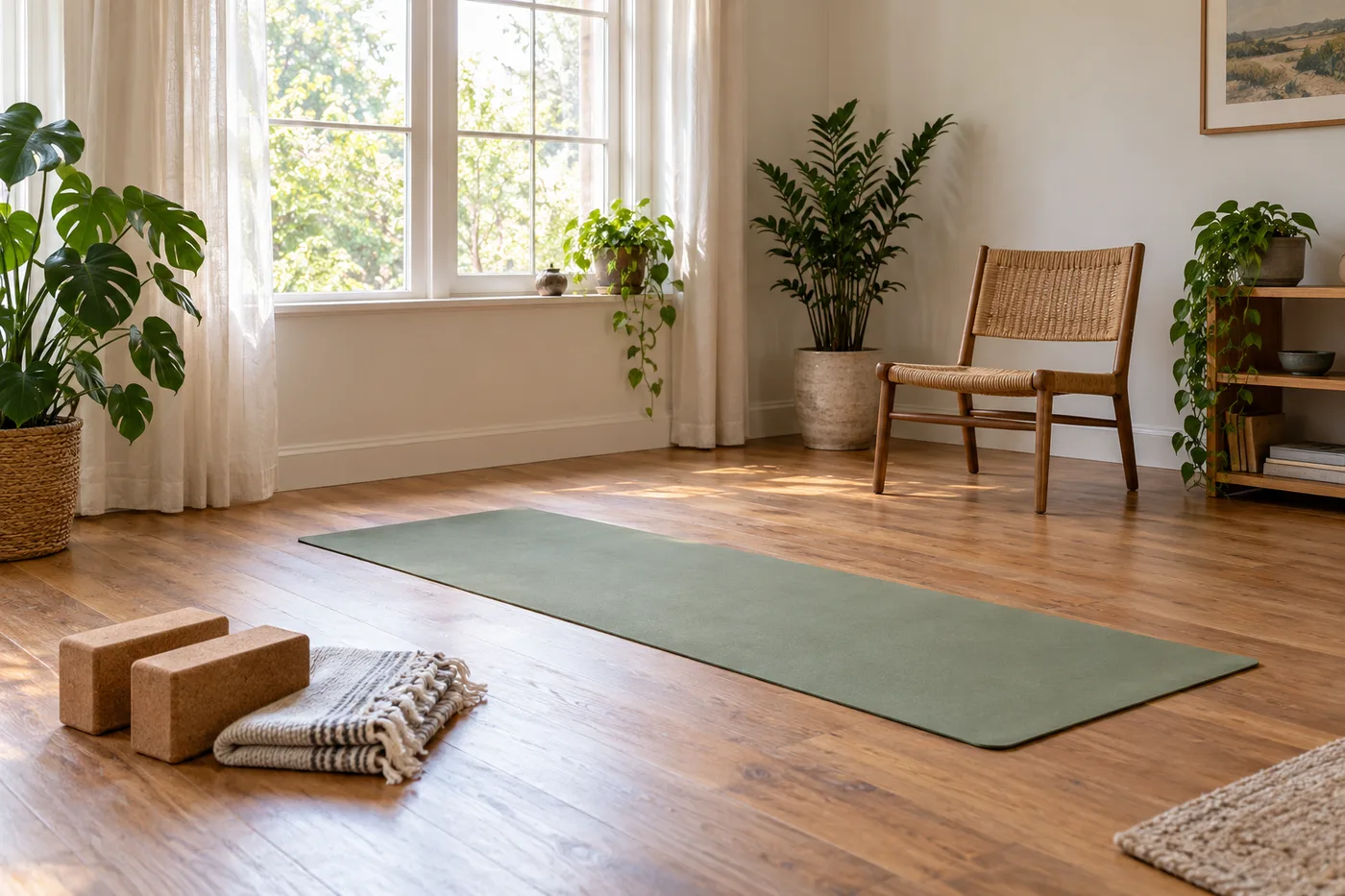
Environment and Equipment
A stable surface and clear area matter more than premium gear. Use the mat guide if slipping or knee pressure interrupts practice. Wear tested clothing; do not make shopping the cue.
Keep props visible. A chair, blocks and blanket lower the cost of starting on a stiff or tired day.
When to Pause the Plan
Pause and seek appropriate help for escalating pain, numbness, fainting, chest pain, severe shortness of breath or symptoms persisting after rest. Fever or acute illness may require rest. Mental distress around missing practice, compulsive exercise or compensation for eating also deserves support.
Yoga should support life, not become a daily test of worth.
After Day 30
Use a stable weekly pattern:
- two 20–30-minute practices;
- one optional class or longer session;
- one or two minimum/mobility days; and
- genuine rest.
Review monthly. If practice feels stale, change one sequence—not the entire system.
Adjusting the Plan Without Abandoning It
If daily practice becomes a burden: keep the planned rest days and move toward two to four appropriate sessions per week. The daily calendar is a cue-building device, not a permanent attendance rule.
If soreness changes the plan: choose complete rest or a gentle option according to the sensation. Sharp, worsening or unexplained pain needs assessment rather than a streak-preserving substitute.
If a heated class looks like the next challenge: learn in a cooler beginner environment first. Heat adds risk and is not a required progression.
If shopping feels like progress: wait for a documented problem—slipping, knee pressure or unavailable support—to identify the item. Start with the safe equipment already available.
What Success Looks Like on Day 30
Day 30 is not a finish line. The plan succeeds when you know when to begin, what to do on a low-energy day, how to modify and how to return after interruption.
Sources and Further Reading
Source-use note: the general beginner resources below inform safety and pose-selection context. They do not validate this exact 30-day schedule or document participant outcomes.