About this guide: This pose guide is general education, not individual instruction or medical advice. Learn suitable variations with a qualified yoga teacher; illustrations do not verify alignment, prop placement or the suitability of a variation.
If your heels rise, your torso leans forward or you need a block under the seat, you have not failed Malasana. Those details help identify the version of the squat that you can control today.
Malasana—often called Garland Pose or a yogi squat—is a deep squat with the knees separated and the torso moving between the thighs. Foot angle, stance width and depth vary with bone structure, limb proportions, mobility and injury history. This guide therefore starts with support and exit control rather than a photograph of a supposedly perfect final shape.
Evidence boundary: the prop options and cues below synthesize general yoga-safety guidance and instructional sources; they are not outcome data and cannot assess an individual joint or diagnose the reason a squat feels limited.
Before You Practice
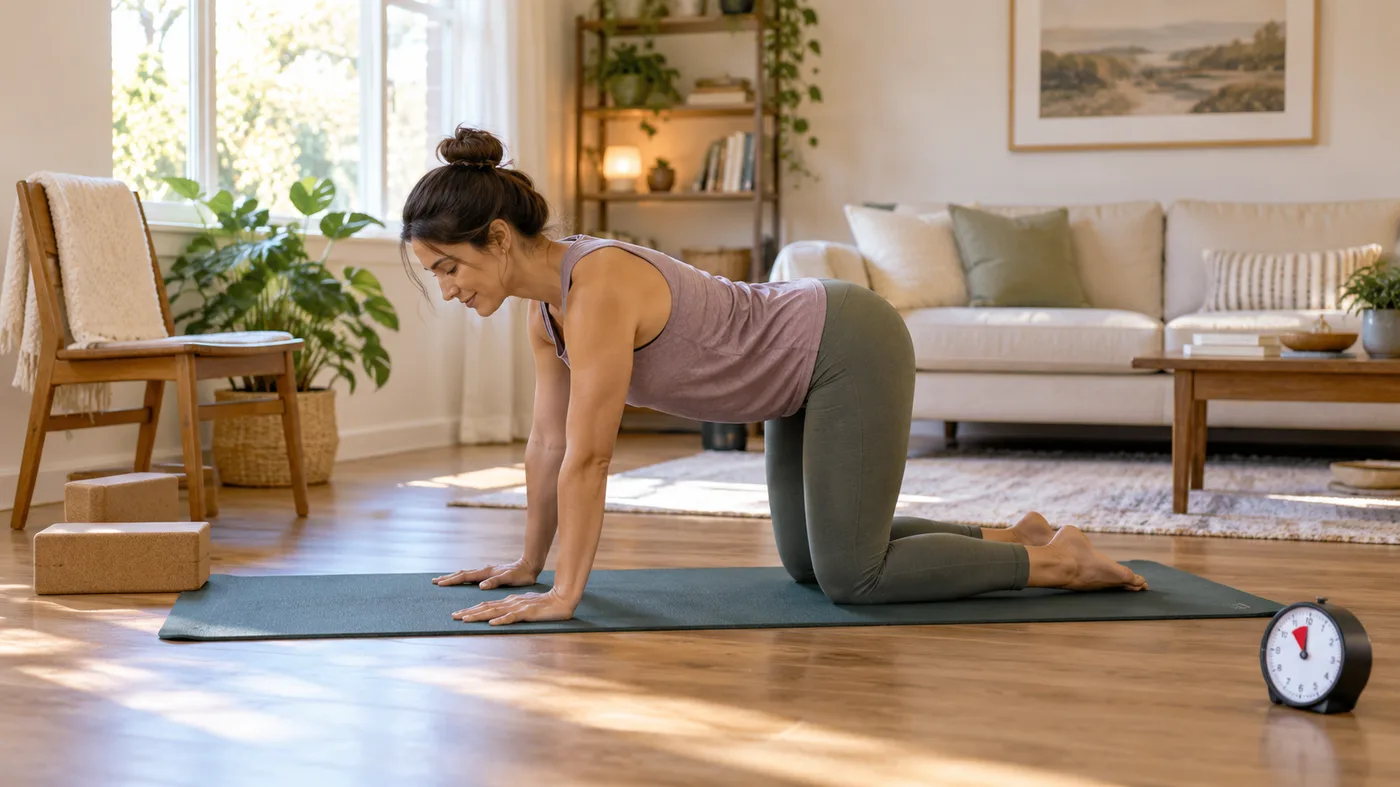
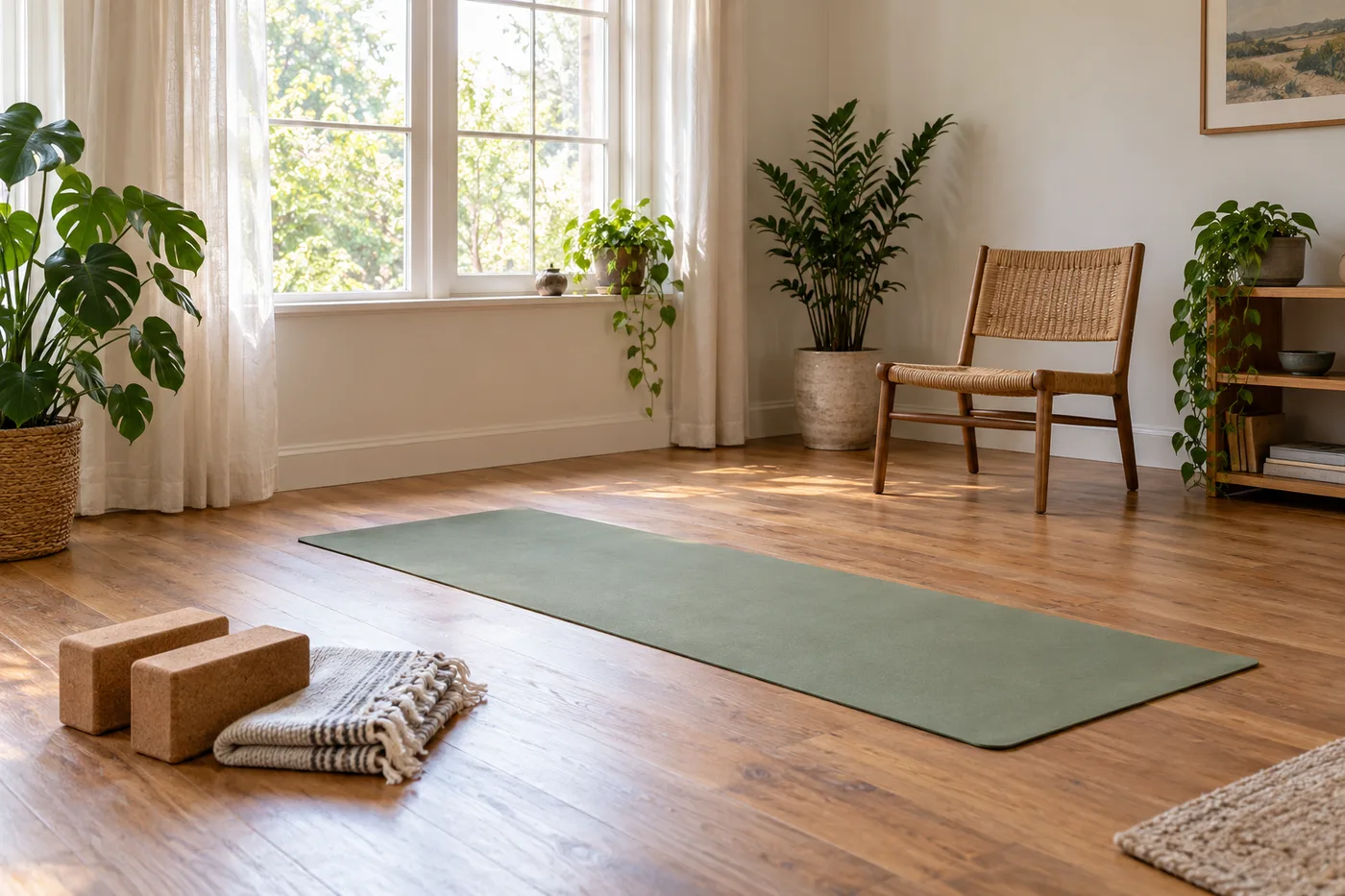
Use a stable mat, two blocks, a folded blanket and a wall or chair. Warm up with ankle circles, Cat–Cow, supported Low Lunge and a few shallow squats.
Seek individualized advice for current knee/hip injury, recent surgery, severe balance issues, pregnancy-related restrictions or pain. Stop for sharp joint pain, catching, numbness, dizziness or loss of control. NCCIH's yoga safety guidance supports gradual, appropriately modified practice.
Malasana Step by Step
- Stand with feet slightly wider than hips. Turn toes outward only as much as comfortable.
- Place one or more blocks behind you and a folded blanket under heels if needed.
- Bend knees in the same general direction as the second/third toes.
- Lower toward the blocks while keeping the whole foot or supported heel grounded.
- Let the torso incline forward between thighs.
- Bring palms together only if comfortable; otherwise, place hands on blocks or a chair.
- Stay for three normal breaths.
- To exit, place hands down or on thighs, shift weight evenly into feet and rise slowly—or sit fully on the block before changing position.
Do not spring upward. A controlled exit is part of the pose.
What the Pose Should Feel Like
A manageable Malasana may create muscular effort in legs and a broad stretch through ankles, inner thighs or back. It should not create sharp knee pinching, hip catching, numbness or breath restriction.
The torso does not have to be vertical. The heels do not have to touch the floor unsupported. The feet do not have to be parallel. Those visual goals can conflict with individual structure.
If Your Heels Lift
Heels often rise because ankle dorsiflexion is limited, the stance does not fit proportions or balance shifts backward. Place a folded blanket or wedge under both heels and keep pressure even.
Do not force heels down by collapsing arches. Over time, practice supported ankle motion separately:
- knee-to-wall rocks with heel grounded;
- calf stretch with straight knee;
- soleus-biased stretch with bent knee; and
- controlled shallow squats.
Support is not cheating; it lets the rest of the pose organize safely.
If You Cannot Lower Comfortably
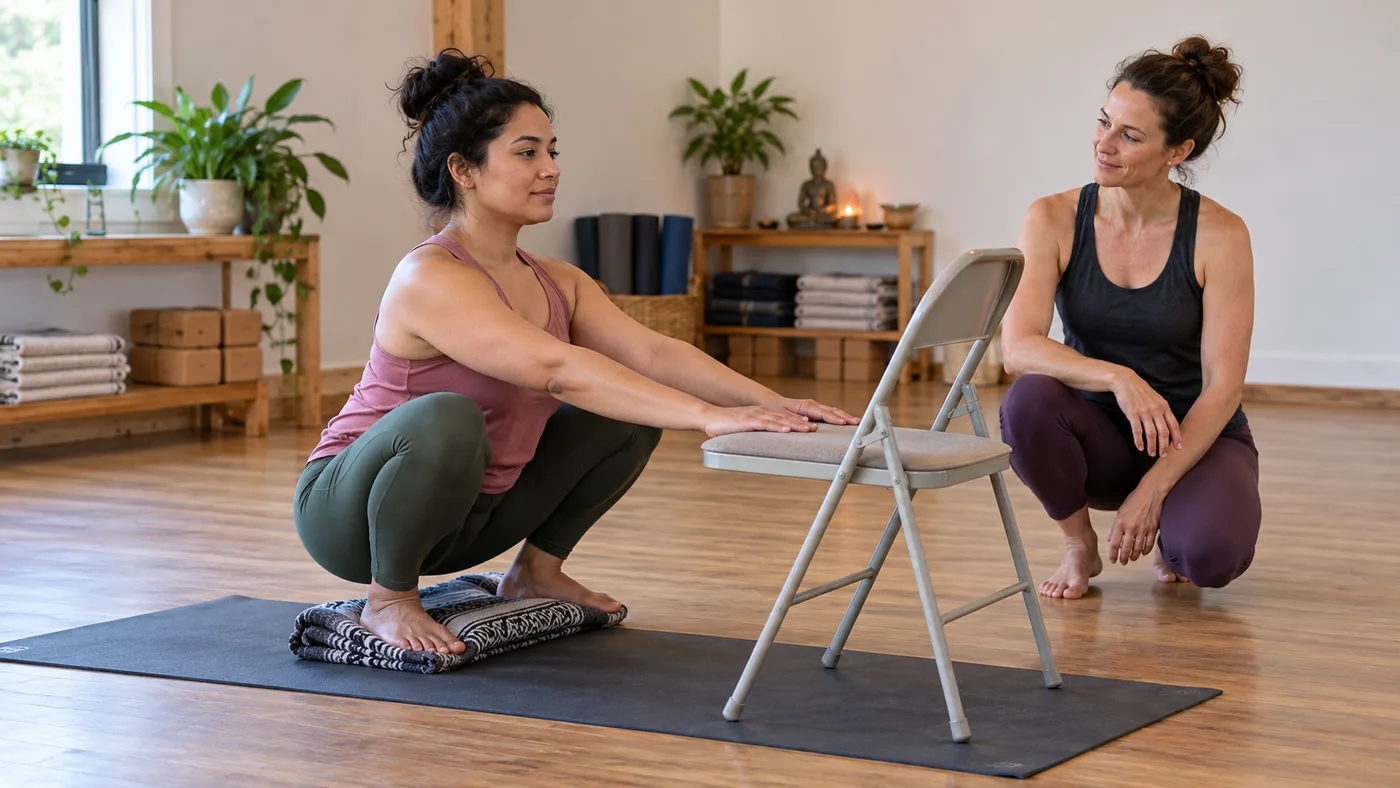
Place one or more blocks beneath the seat and lower until supported. Increase block height until knees and hips feel manageable. Hands can hold a chair.
Yoga Journal's supported variations include heel and seat support. The correct block height is the one that permits breathing and a controlled exit.
A very wide stance is not automatically easier. Try small changes in width and toe angle without forcing the knees.
Knee Alignment Without Rigidity
“Knees must never pass toes” is not a universal rule for squatting. In Malasana, knees may travel forward depending on proportions and ankle range. The more useful checks are:
- knees track generally with toes;
- feet maintain active contact;
- pain does not increase;
- motion is controlled; and
- the chosen depth can be exited.
If knees collapse inward uncontrollably, reduce depth, widen or change foot angle, and use support.
Spine and Chest
Malasana includes hip flexion and often some spinal rounding. The aim is not to force a perfectly straight back. Lengthen through the crown and create room to breathe, then allow the shape your structure supports.
Pressing elbows hard into inner knees can irritate joints or create a performance contest. Use gentle reciprocal pressure only if comfortable.
Common Mistakes
- Forcing heels down
- Dropping into the bottom without control
- Using hands in prayer as proof of “full pose”
- Ignoring sharp knee or hip sensation
- Holding breath
- Pushing knees wider with excessive elbow force
- Rising quickly and becoming dizzy
- Practicing maximal depth without warming up
Four Useful Variations
Heels elevated
Best when ankle range limits the squat. Keep the lift symmetrical.
Seat supported
Best for balance, knee/hip tolerance and longer breathing. Stack blocks securely.
Chair-assisted
Hold a stable chair and lower only as far as controlled. Do not pull on lightweight furniture.
Wall squat
Slide down a wall into a partial squat. This is not the same final pose, but it builds leg control.
A Seven-Minute Preparation
- Cat–Cow — 1 minute
- Low Lunge with back knee supported — 1 minute each side
- Knee-to-wall ankle rocks — 30 seconds each side
- Three chair-assisted squats — 1 minute
- Supported Malasana — three breaths, twice
- Rest standing or seated — remaining time
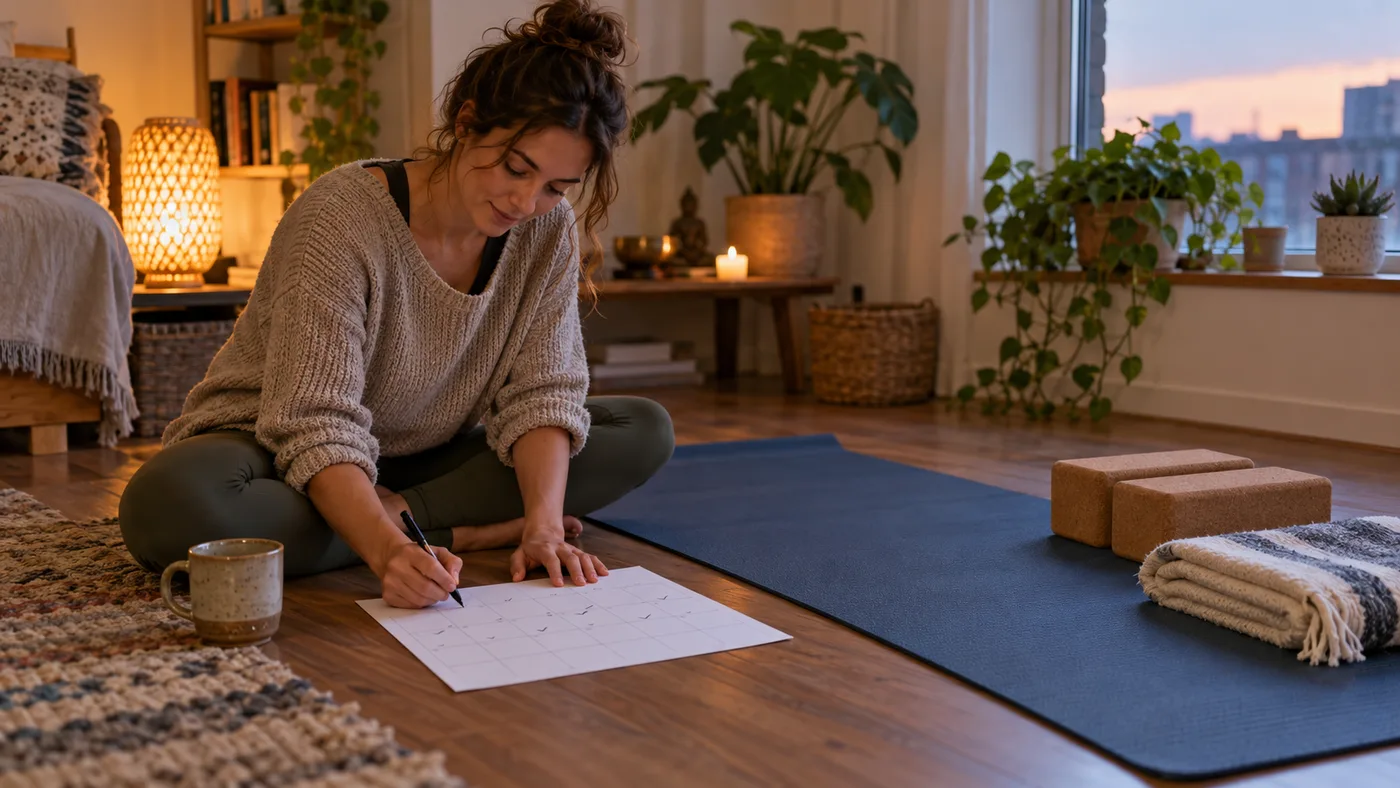
Repeat two or three times per week rather than pushing one long hold. The beginner pose guide supplies a balanced surrounding practice.
Progression
Progress by reducing support only when control remains:
- higher seat block;
- lower seat block;
- heel support only;
- fingertips on support;
- unsupported position, if appropriate.
Do not reduce heel and seat support simultaneously. Progress is also being able to breathe and exit more smoothly at the same depth.
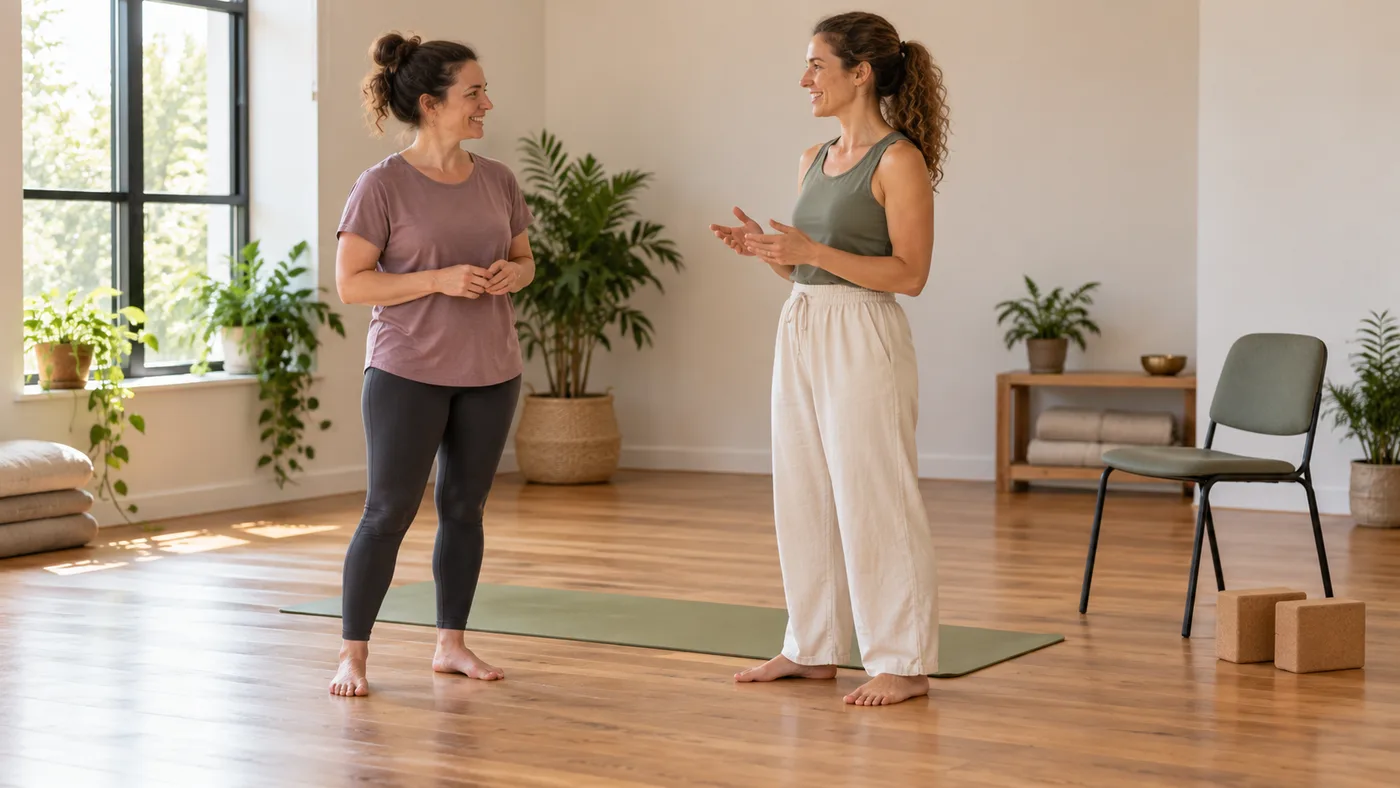
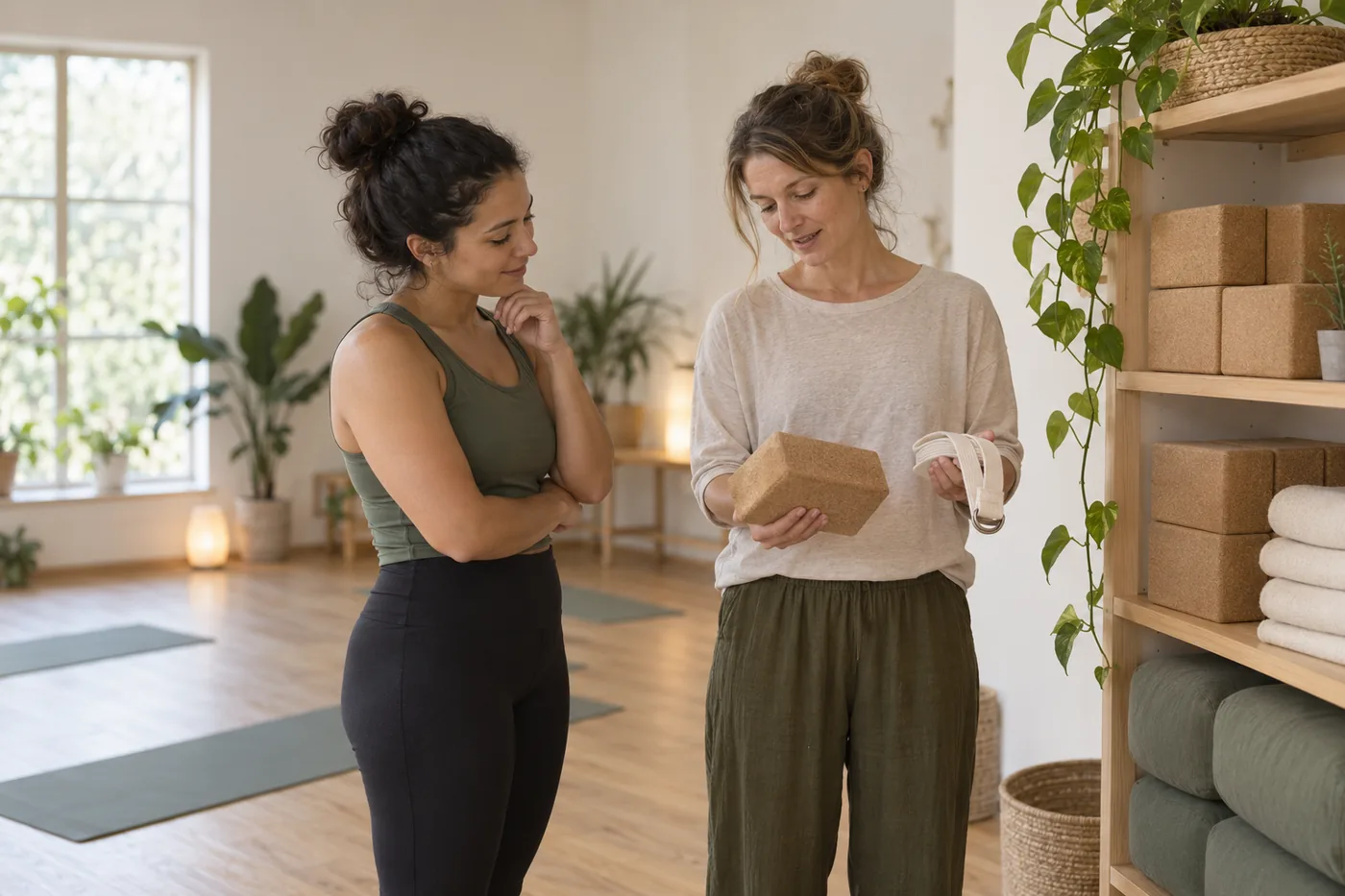
Questions a Teacher Should Help You Resolve
Why can some people squat easily without practice?
Ankle range, hip structure, limb proportions, daily habits and training all contribute. Ability is not a moral or fitness score.
Should feet point straight ahead?
Not necessarily. A modest toe-out often accommodates hip and ankle structure. Knees should track compatibly.
Is Malasana good for back pain?
It may feel helpful to some people and aggravating to others. It is not a diagnosis or treatment. Persistent pain needs qualified evaluation.
How long should a beginner hold it?
Three comfortable breaths with support is enough. Quality and exit control matter more than duration.
A Working Definition of Progress
A useful Malasana is stable, breathable and repeatable. Elevate heels, support the seat and change stance until the pose fits the person—not the photograph.