About this guide: This capsule is a wardrobe-planning model. Brand examples are research starting points; adapt quantities to your actual classes, laundry schedule and drying time. Illustrations show the concept rather than a documented personal wardrobe.
The quickest way to expose a bad capsule is laundry day. If the only reliable legging is still damp, the nine-piece aesthetic has failed even if every color coordinates. A working capsule covers actual activity, weather, drying time and the trip from studio to the rest of the day.
Begin with two weeks of wardrobe data before buying. Note the activity, weather, adjustments, laundry bottleneck and item repeatedly missing. The “core nine” below is a planning model to adapt after that audit, not a mandatory shopping list.
The Core Nine
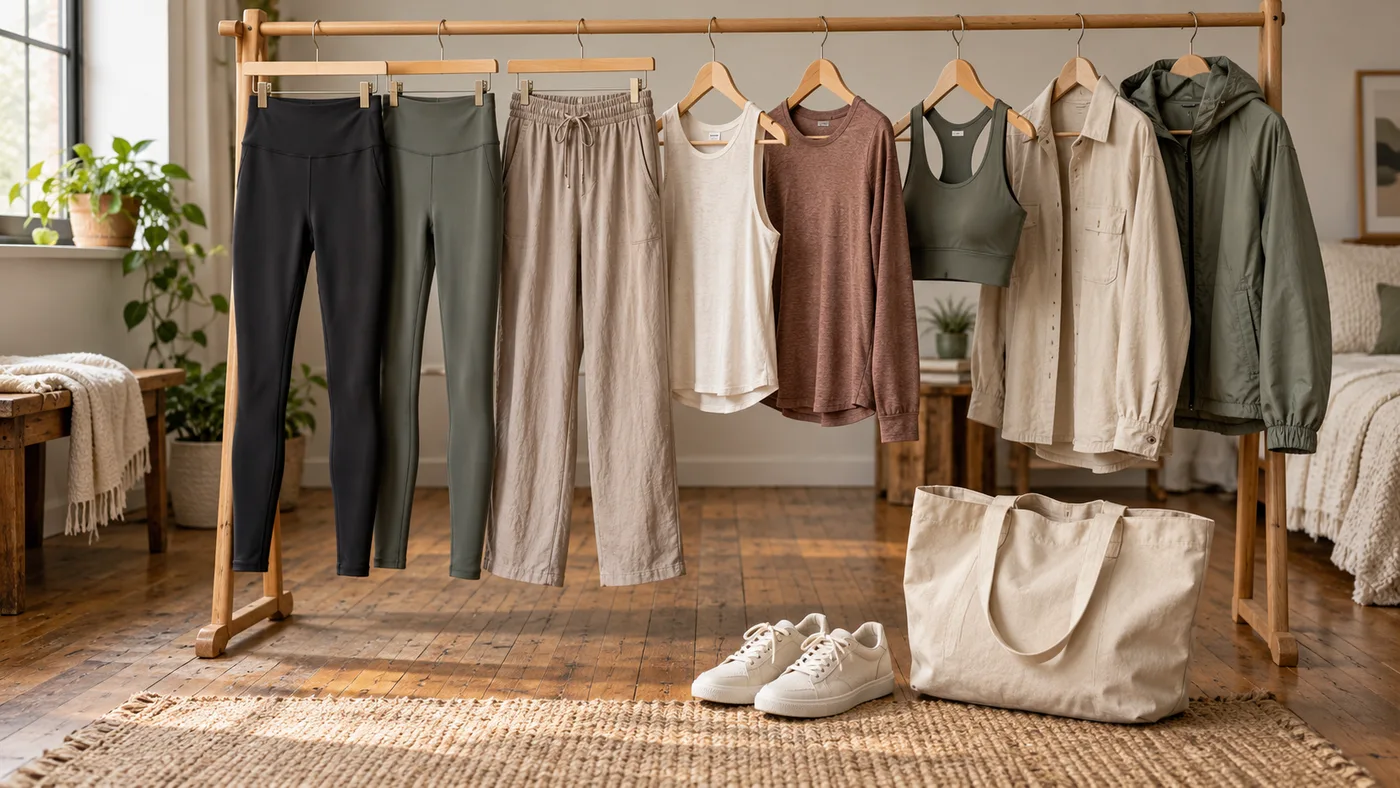
- Lightweight sweat-ready legging
- Soft low-compression legging
- Medium-compression training tight
- Low-support studio bra/top
- Medium-support bra
- Fitted tank or tee
- Relaxed quick-dry tee
- Removable jacket or overshirt
- Jogger or straight-leg stretch pant
Not every person needs all nine. A yin-only practitioner may skip the training tight; a runner may replace the soft legging with a running tight. Roles matter more than count.
Assign Each Piece a Job
| Piece | Primary job | Secondary job |
|---|---|---|
| Lightweight legging | Hot/summer class | Travel base |
| Soft legging | Yin, gentle yoga | Daily wear |
| Training tight | Power/Pilates/gym | Vinyasa |
| Studio support | Low-impact class | Layering |
| Medium support | Faster class | Walking |
| Fitted top | Inversions | Under layers |
| Relaxed tee | Commute | Casual wear |
| Jacket | Temperature control | Street polish |
| Jogger | Travel/recovery | Warmup |
If two products have identical jobs, one must justify itself through laundry need or materially better fit.
Build a Color System
Choose:
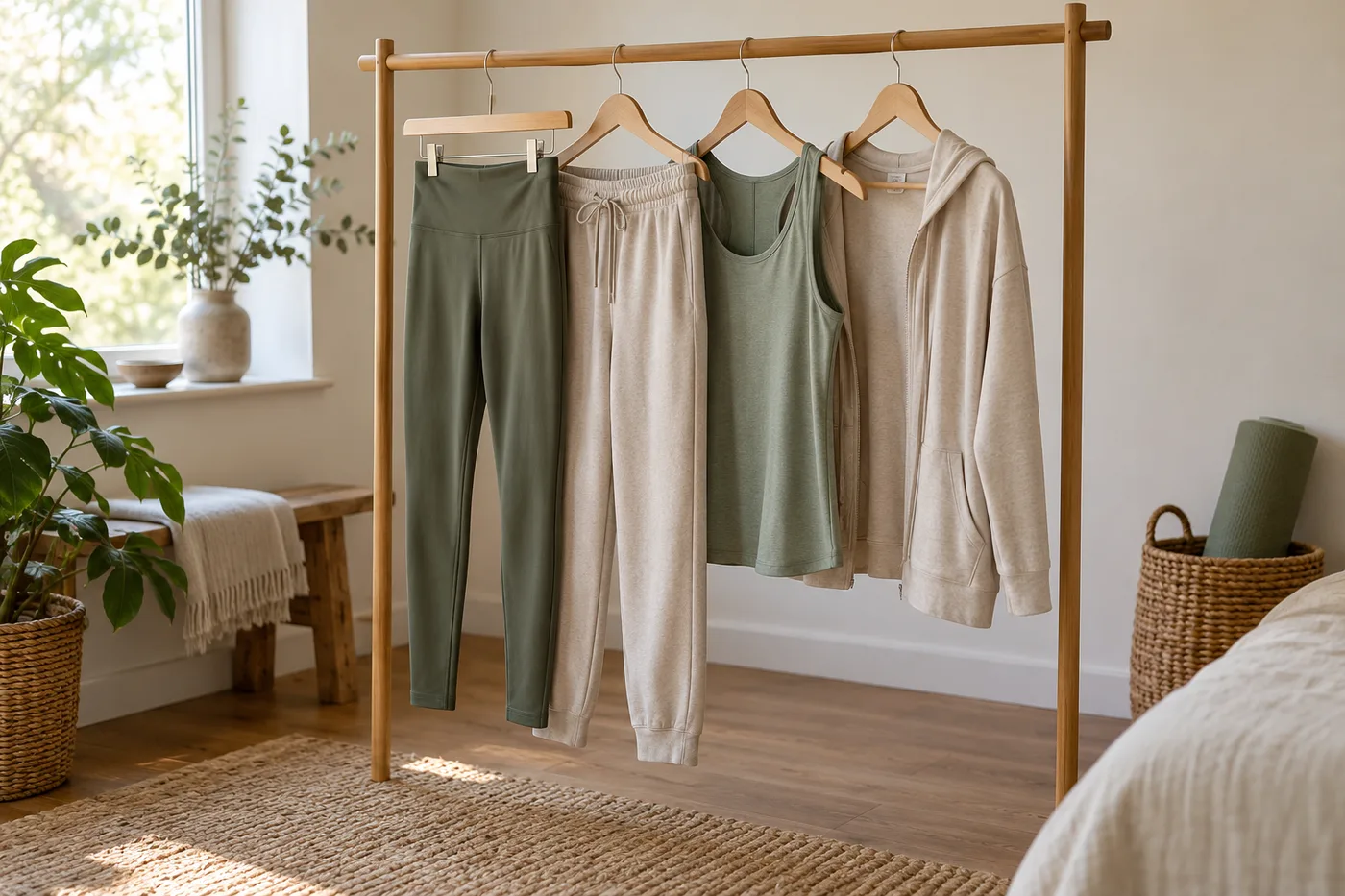
- two neutrals;
- one main color;
- one optional accent.
Every top should work with at least two bottoms; every layer with at least four outfits. Use pale color where opacity and sweat are easier to manage—often tops or layers rather than fit-critical bottoms.
A coordinated palette is useful because it reduces decisions, not because all clothing must look identical.
Four Outfit Formulas
Vinyasa class
Medium-compression tight + fitted top + appropriate support.
Hot class
Lightweight legging/short + minimal quick-dry top + towel; add layer only for travel.
Studio-to-errands
Soft or training legging + relaxed tee/overshirt + jacket.
Travel/recovery
Jogger + fitted base + light layer.
The detailed class clothing guide helps assign the correct bottom.
Buy in the Right Order
- Fit-critical support and bottom
- Second bottom for laundry rotation
- Secure top
- Weather/commute layer
- Casual crossover bottom
- Trend item only after the system works
Start with the problem that interrupts practice. The affordable activewear guide gives a five-wash trial before duplication.
Use the Three-Outfit Rule
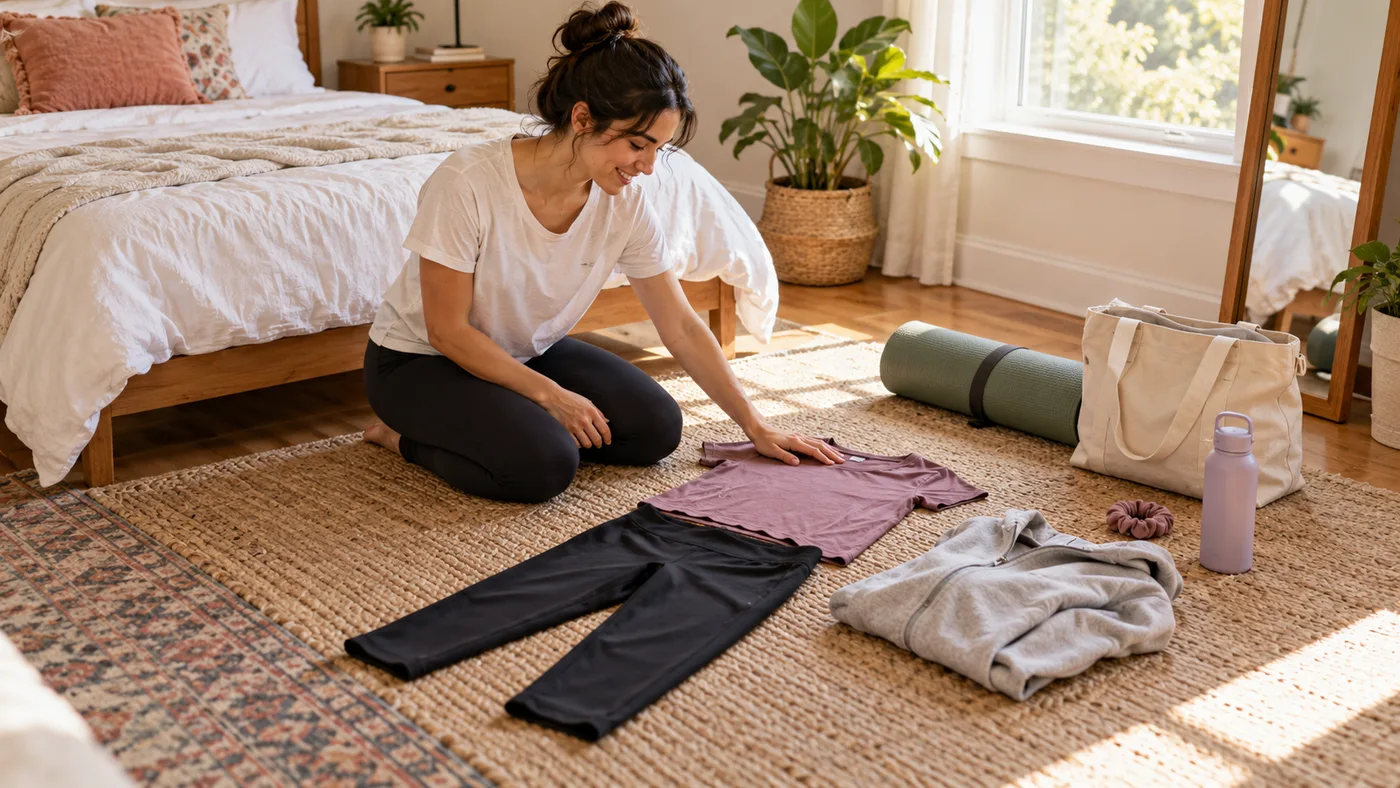
A new item must create at least three outfits with pieces already owned. Photograph the combinations before purchasing. If the item requires a new bra, shoe and layer, it is not joining the capsule; it is launching another wardrobe.
Exception: safety- or weather-specific equipment can serve one critical function.
Balance Fitted and Relaxed Shapes
A simple street formula is one fitted and one relaxed piece:
- fitted legging + relaxed overshirt;
- jogger + fitted tank;
- flare + close tee;
- training tight + structured jacket.
This is styling guidance, not a body rule. Comfort and personal preference override silhouette formulas.
Shoes and Bags
Footwear is outside the yoga practice but crucial to crossover. Choose according to walking, weather and destination—not legging color. A small bag should hold phone, keys, layer and bottle without rough hardware rubbing soft fabrics.
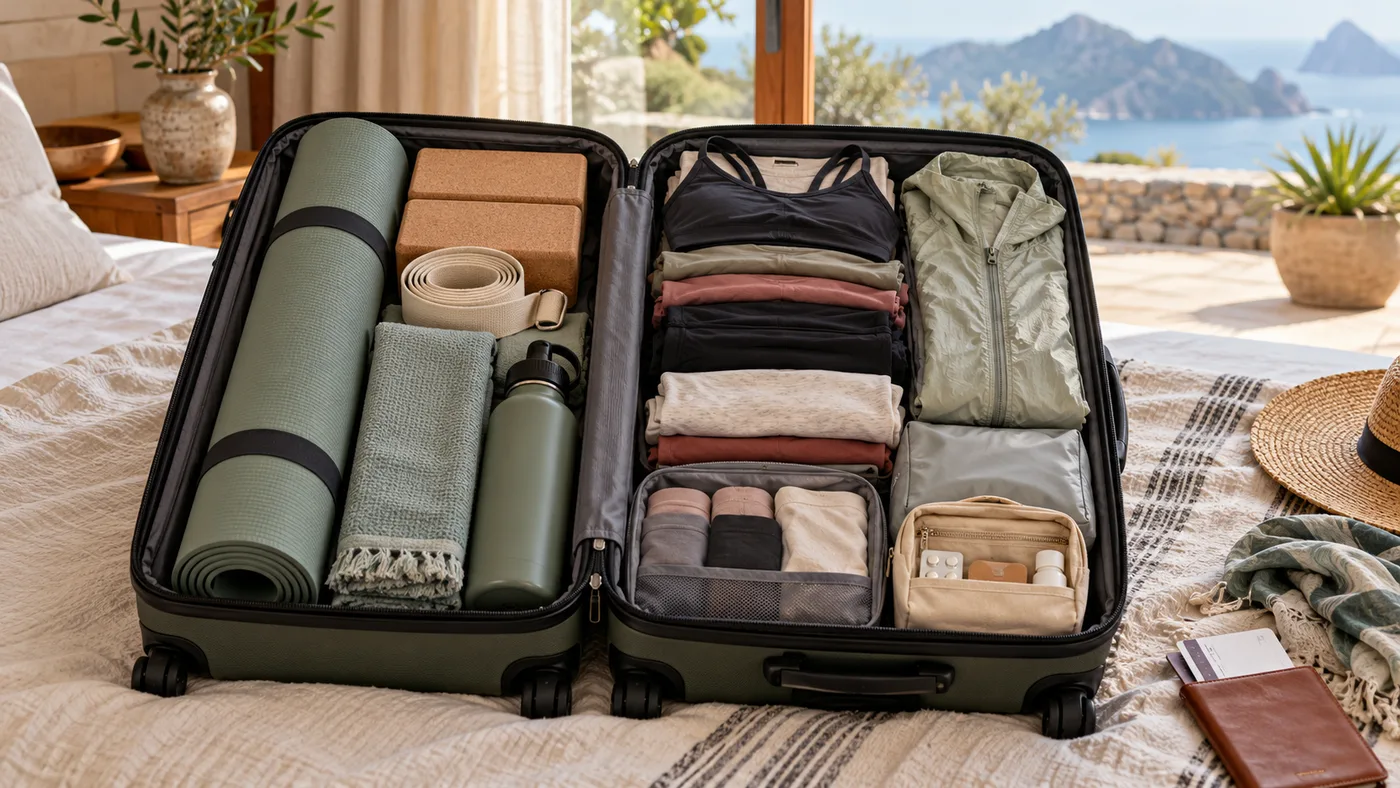
Avoid leaving damp clothing or mats sealed inside a bag. The retreat packing guide offers a better wet/dry system.
Laundry Determines Quantity
Count each garment type separately, using the busiest interval before washed items are available fully dry, not the average number of classes per week:
estimated base rotation = ceiling(maximum wears needed in one replenishment interval ÷ planned wears per item before washing)
Treat this as a planning estimate, not an exact answer for every timetable. Partial laundry batches, classes during washing or drying, and washing an item before its planned repeat wear can change availability. Check each class in order, garment by garment: count only a clean, fully dry item or one still suitable for an allowed repeat. Dirty, washing and damp items are unavailable. If a class has no suitable item, add rotation or change the laundry timing; an unspecified spare must not conceal a known shortfall.
Here, a wear is one use requiring that garment. The interval ends only when the washed items can be worn again; include any classes during washing and drying. Use one wear per item when a fresh garment is needed for every class. A higher repeat count is a personal planning assumption only when the garment's condition, activity and care requirements allow it—not a hygiene guarantee. Tops, bras and bottoms can require different counts.
For example, six classes a week with two laundry batches can fall into intervals of four and two classes. If every class needs a fresh legging, the base is four, not the weekly average of three. If three classes occur before clean, dry replacements are available, three fresh-use pairs are needed. With no laundry, count the whole period; with no relevant uses, that category's base is zero.
Round up to whole garments, then add a named buffer for a delayed wash, slow drying or an extra class. Do not count a damp pair as available. Two or three fit-tested bottoms can be enough for some schedules; the actual intervals determine whether that rotation works.
Care System
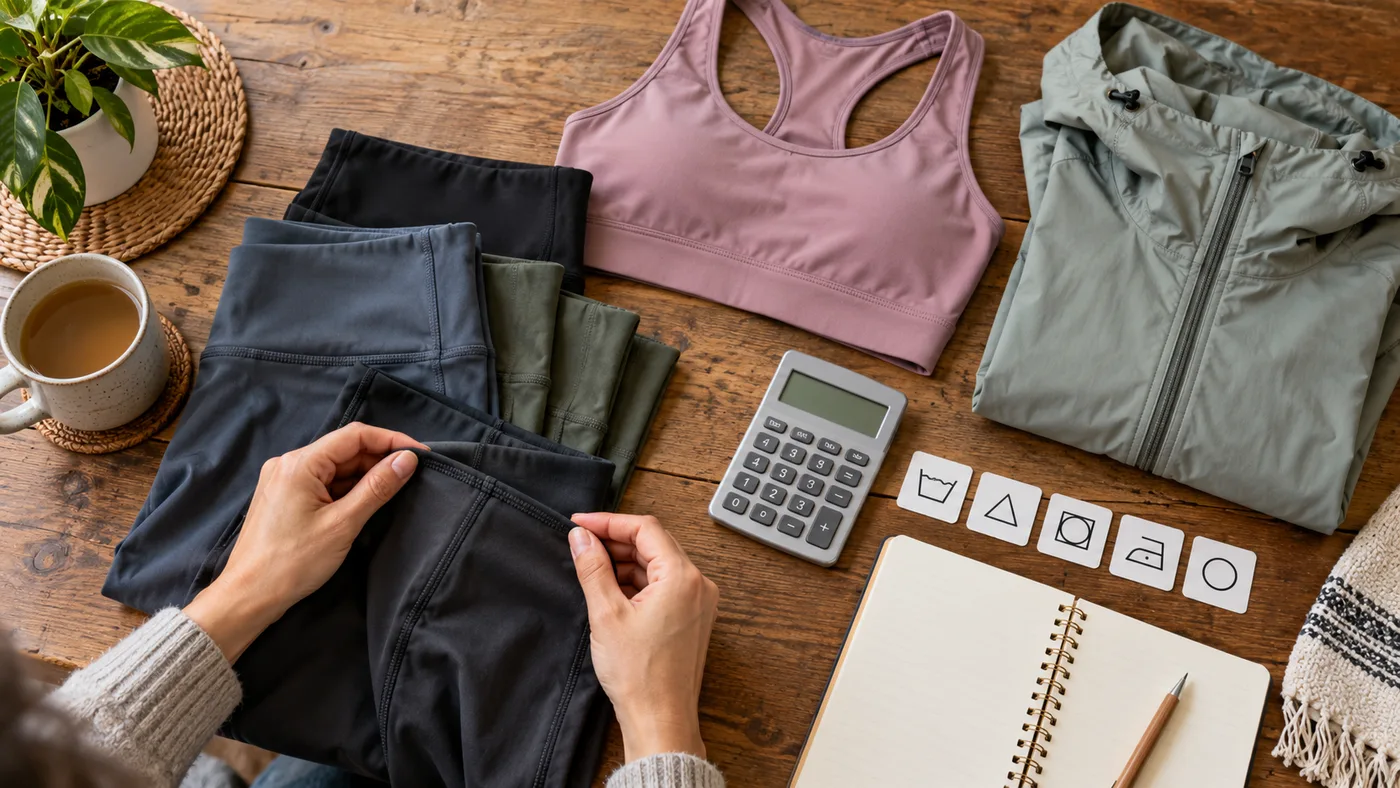
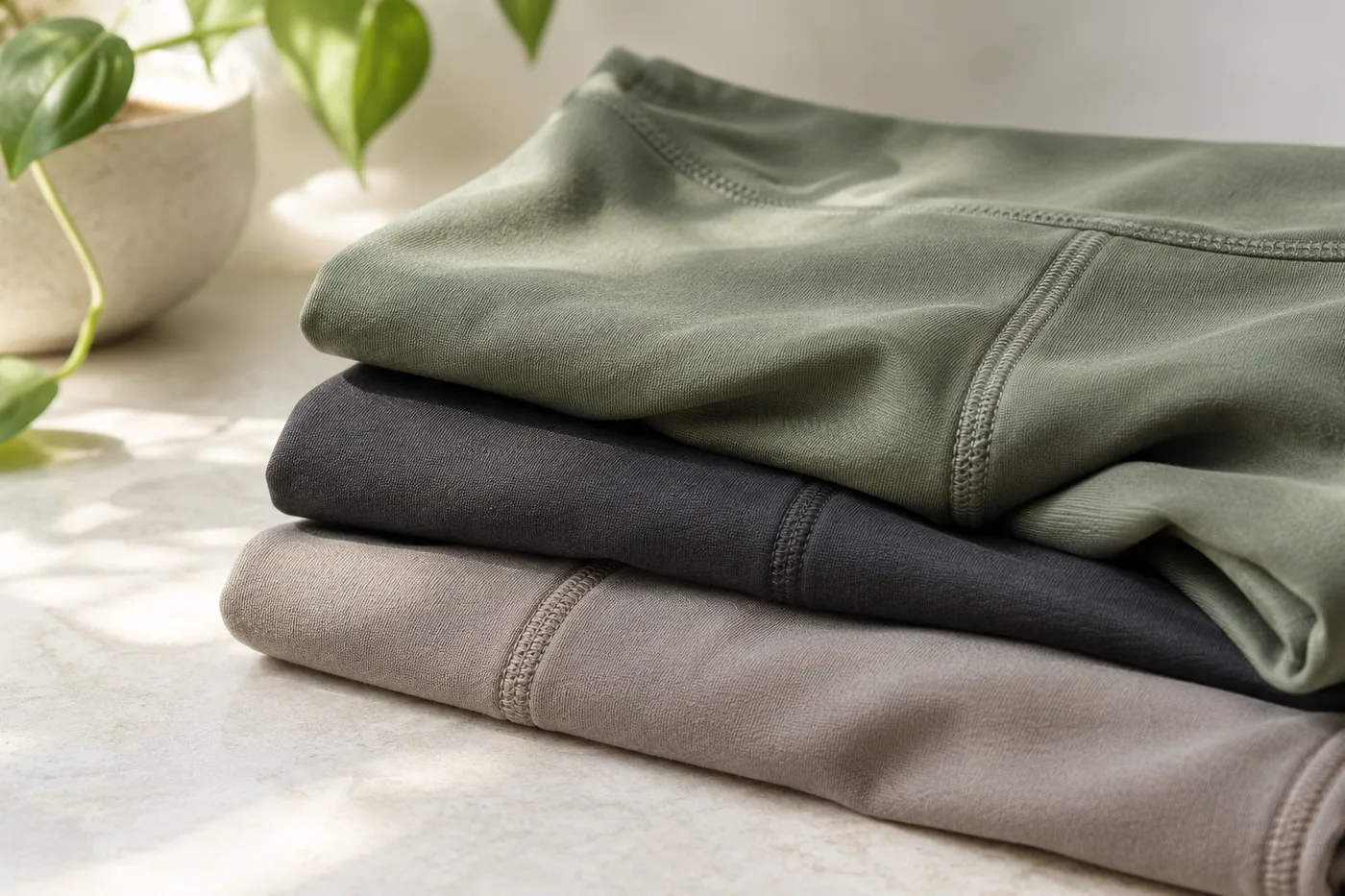
- Sort rough from soft fabrics.
- Turn technical garments inside out.
- Close hardware.
- Skip fabric softener.
- Wash cold according to labels.
- Air-dry when practical.
- Store fully dry.
- Repair loose seams early.
Keep a ventilated hamper for activewear. A system that requires a hot emergency wash every class is not sustainable.
A Two-Week Wear Audit
For fourteen days, record:
- item worn;
- activity;
- comfort;
- adjustments;
- laundry status; and
- whether you would choose it again.
At the end:
- keep high-use/high-comfort pieces;
- alter or repair solvable fit;
- reassign functional but imperfect items;
- responsibly sell/donate suitable excess;
- recycle only where textile programs accept the material.
Do not use a capsule project as permission to replace everything.
Set Replacement Triggers Before Shopping
Replace a core piece when it can no longer perform its assigned job—not simply when a new color launches. Useful triggers include irreparable seam failure, persistent odor after correct washing, loss of waistband recovery, visible thinning in a high-stress area or a fit change that creates pain or constant adjustment. Pilling alone may be cosmetic; trim it carefully only when the care label and fabric permit.
Keep a short “repair, retire or replace” note. Repair a loose hem or small seam when structurally sensible. Retire an item from public or high-impact use when coverage or support has failed, but reuse it for low-stakes home wear if comfortable. Replace only after recording which feature failed. That record prevents buying the same weak construction again and makes sustainability a concrete wear decision rather than a marketing label.
Rotate by Season Without Rebuilding
Keep the fit-critical core stable and rotate only climate layers. Summer may swap a legging for a fitted short and add a sun layer; winter may add a base top, insulated jacket and warm commute pant. Store off-season pieces clean and fully dry.
At each seasonal change, inspect elastic recovery, seams and high-friction zones before shopping. If an existing layer still performs, return it to the capsule. Seasonal color drops are not functional gaps.
Brand Research to Explore
The site's current research pages discuss CRZ Butterluxe, Athleta Elation, Vuori and POPFLEX. These are source-based research examples, not items validated by a YogaLists wear test. Use the linked guides to identify the exact model, size and color, then assess fit, function and laundry performance before choosing for your own capsule.
Capsule Troubleshooting
- The count feels too small. Add enough rotation to cover weekly activity plus washing and drying time. Nine is a model, not a target.
- You want to include flares. Keep them if the hem is safe and they make at least three real outfits; accept that they may be less useful for fast flows or wet ground.
- Nothing matches exactly. Coordination is sufficient. Exact sets can reduce interchangeability when one unusual color only works with its partner.
- New releases keep breaking the plan. Require three outfits, wait 72 hours and compare the purchase with a written list of functional gaps.
Use the Wardrobe Data
A capsule is a working system. Build around activity, weather and laundry; let color simplify; buy only after wear data reveals the gap. The most sustainable piece is often the one already owned and worn.
Sources and Further Reading
Source-use note: these commercial and editorial pages illustrate product categories and styling questions. They do not prove that any item fits this capsule or replace the required two-week wear audit.