About this guide: These quantities are planning examples. Adapt them to laundry access and drying time, and check destination, airline, medication and venue rules for your trip; illustrations show the concept rather than an actual packed bag.
Open the retreat schedule before opening the suitcase. Two daily practices, outdoor excursions and a slow laundry turnaround change the list far more than an inspirational packing photo does. Trip length, sweat level, climate, baggage limits, dress expectations and supplied props determine the useful quantities.
Before packing anything, email the retreat and ask five questions:
- Are mats, blocks, straps, blankets and towels supplied?
- How many practices occur each day, and are any heated?
- Is laundry available, and how quickly will clothes dry?
- Are sessions indoors, outdoors or both?
- Are there cultural, dining or excursion dress requirements?
Quick Printable Checklist
Documents and money
- Passport/ID and copies
- Visa or entry documents
- Travel insurance details
- Retreat address and emergency contact
- Payment cards plus local backup method
- Transport confirmations
- Required health/vaccination documents
- Offline copies on phone and paper
Health and personal safety
- Prescription medication in original packaging
- Enough medication plus delay buffer where permitted
- Clinician letter if required for controlled medication
- Allergy information
- Basic first-aid items
- Sunscreen and insect protection as appropriate
- Rehydration/electrolyte product only if individually appropriate
- Menstrual products
- Earplugs and sleep mask
- Emergency contacts
Never check essential medication in hold luggage.
Practice clothing
- 2–4 bottoms
- 3–5 quick-drying tops
- 2–4 sports bras/support layers
- Underwear and socks
- One long sleeve
- One warm layer
- One rain/wind layer if needed
- One comfortable non-practice outfit
- Sleepwear
- Swimwear if relevant
- Destination-appropriate footwear
The clothing ranges are starting examples, not limits. Recalculate them for the practice schedule and clean-and-dry laundry intervals below.
Yoga gear
- Travel mat only if needed
- Mat towel for sweat or supplied mats
- Strap if not supplied
- Small knee pad if personally useful
- Refillable bottle
- Hair ties/headband
- Grip socks only if required
- Breathable laundry bag
- Small quick-dry towel
Technology
- Phone and charger
- Country-appropriate adapter
- Power bank within airline rules
- Headphones
- Downloaded tickets/maps
- Minimal camera equipment only if genuinely used
How Many Outfits?
Calculate each garment type across the longest interval before washed items return fully dry:
estimated base quantity = ceiling(uses needed in the busiest no-replenishment interval ÷ planned uses per item before washing)
This is a planning estimate. Partial wash loads, classes during washing or drying, or a wash that interrupts an item's planned repeat uses can change the count. Walk through the actual class times and assign each required garment: it must be clean and fully dry, or still suitable for an allowed repeat. Do not count dirty, washing or damp items. If any class lacks an available piece, pack more or change the laundry timing; a spare should cover uncertainty, not hide a known gap.
A use means one practice requiring that garment. The interval includes washing and drying time, not just the wait until a machine is available. Count tops, bras and bottoms separately. Use one use per item when a fresh garment is needed for each class. Repeating an item is conditional on its actual condition, activity, personal needs and care instructions; a planned repeat count does not guarantee hygiene.
For example, six classes before any clean, dry replacements are available require three bottoms only if two uses per bottom are appropriate. If every class needs a fresh bottom, pack six. If laundry returns clean and dry after each three-class interval, two bottoms can cover that interval under the same two-use assumption. With no washing available, the interval is the entire trip; zero relevant classes requires zero practice-specific pieces in that category.
Round up, then add an explicit spare for an extra class or laundry delay rather than capping the result to a fixed packing target. A fresh top or bra may be needed more often than a bottom, so do not automatically apply the same repeat count to all three. Bring two extra underwear changes beyond the planned minimum, but avoid doubling the whole wardrobe “just in case.”
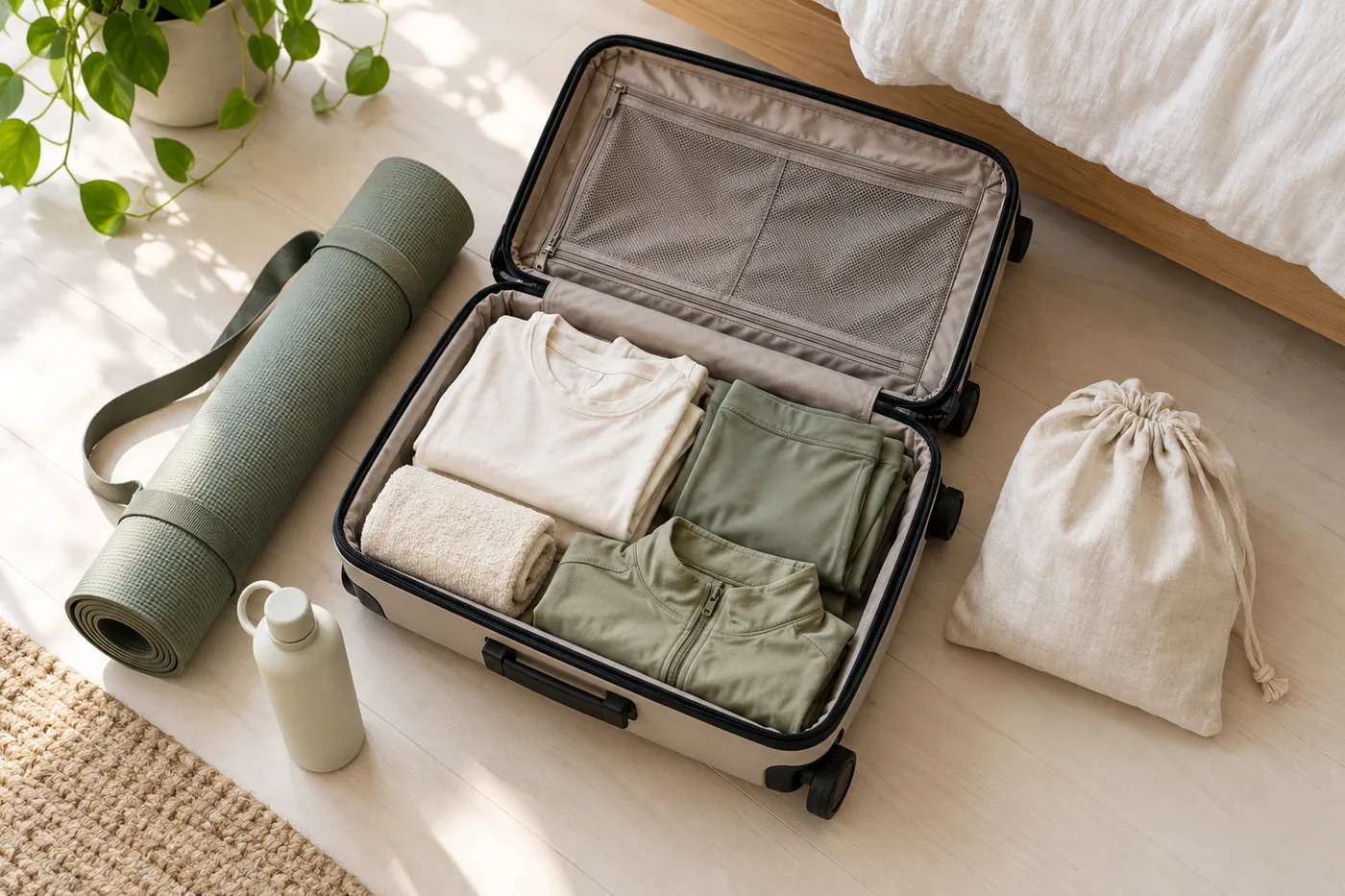
A Practical 3-Day List
Example assumptions: one moderate practice each day, no laundry, and no extra class or drying-delay buffer. Two uses per bottom are planned only if the item remains appropriate for repeat wear; tops and support layers are fresh for each practice. That gives ceiling(3 ÷ 2) = 2 bottoms and three tops/support layers. If each practice needs a fresh bottom, take three instead; add a spare if the schedule is uncertain.
- 2 bottoms
- 3 practice tops
- 3 bras/support layers, if used
- 1 long sleeve
- 1 warm or rain layer
- 1 casual bottom
- 1 sleep set
- underwear/socks
- one practice shoe/sandal strategy
A Practical 7-Day List With Laundry
Example assumptions: one moderate practice per day; wash used practice clothes after days three and six, with everything fully dry before the next day's class. The longest interval is three practices. Plan up to two appropriate uses per bottom, and a fresh top/support layer per class. The working rotation is two bottoms and three tops/support layers; the list adds one spare bottom, one or two spare tops, and optionally one spare support layer. If drying extends past the next class or there are two classes a day, recount that longer interval.
- 3 bottoms
- 4–5 practice tops
- 3–4 bras/support layers, if used
- 2 light long sleeves
- 1 warm layer
- 1 weather shell
- 2 casual outfits built from shared pieces
- sleepwear
- underwear/socks for the laundry interval
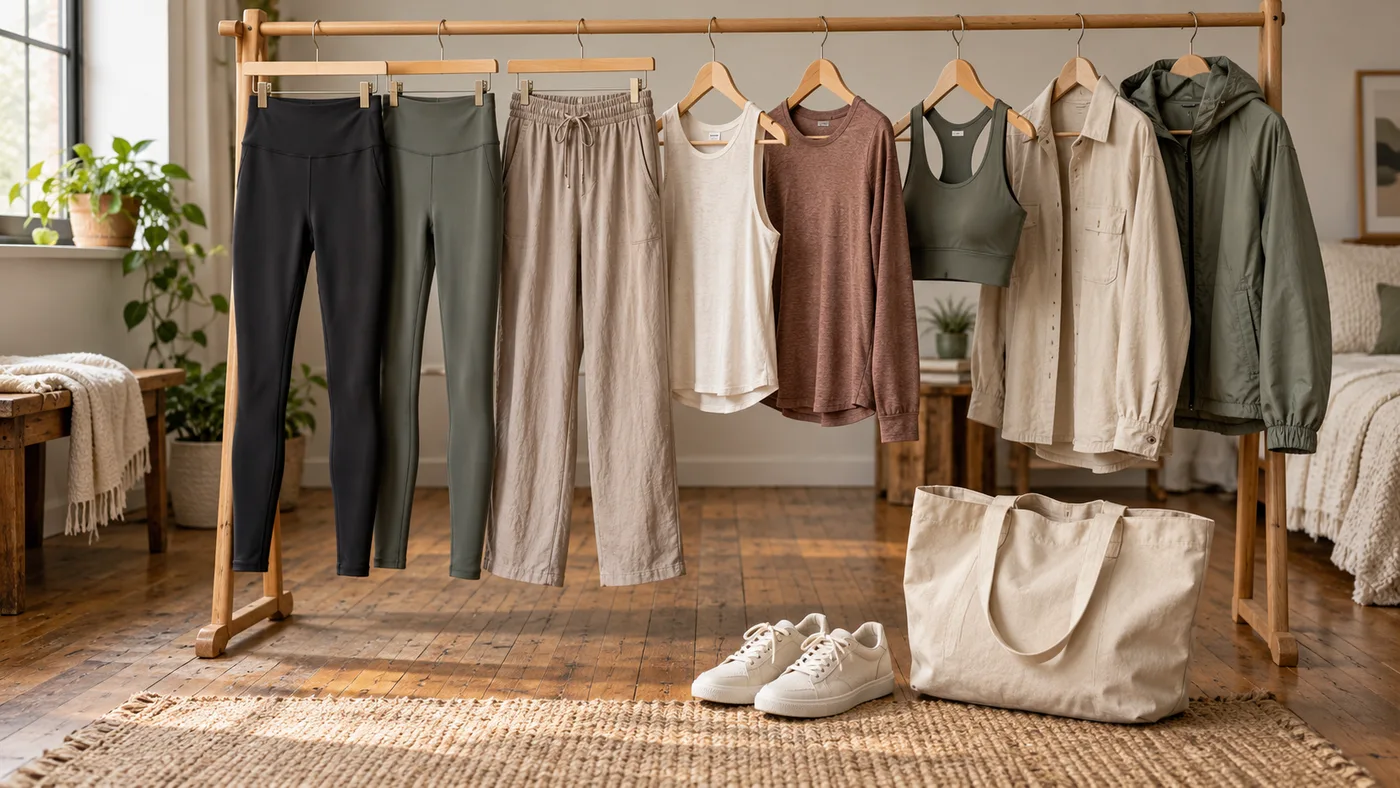
The capsule wardrobe guide helps make each top work with every bottom.
Choosing a Mat
Flying with a dense 5–7.5-pound mat is rarely efficient unless it solves a medical/fit need. Ask whether the venue provides clean mats. A thin travel mat over a supplied mat can add a personal surface and pack more easily.
Check airline dimensions and weight. Never assume straps count separately without charge. If bringing a mat, protect it from baggage belts and do not roll damp.
Climate Adjustments
Tropical or humid
Prioritize quick-dry fabric, breathable laundry storage, rain protection, sun/bug measures and a plan for wet garments. Cotton can remain damp. Bring fewer heavy layers and more top rotation.
Cold or mountain
Add base layers, warm socks, an insulated midlayer, wind/rain shell, hat and gloves. Indoor practice rooms can still be cold during Savasana. Altitude and remote access may require health planning.
Desert
Plan for strong sun and large day-night temperature changes. Add lip/skin protection, a warm evening layer and dust protection for electronics.
Urban retreat
Include one modest, simple outfit and comfortable walking shoes. Studio fashion is not a substitute for weather or transit needs.
Hot-yoga retreat
Bring a towel strategy, rapid-dry clothing and a conservative class schedule. Review the hot-yoga risks guide; multiple daily hot sessions increase recovery demands.
Cultural and Venue Respect
A retreat can include temples, villages, shared housing or silent periods. Ask about shoulder/knee coverage, shoes, fragrance, photography and phone use. A light scarf or overshirt can solve coverage without a separate wardrobe.
Do not photograph teachers, staff or participants without consent. Retreat marketing images do not create blanket permission.
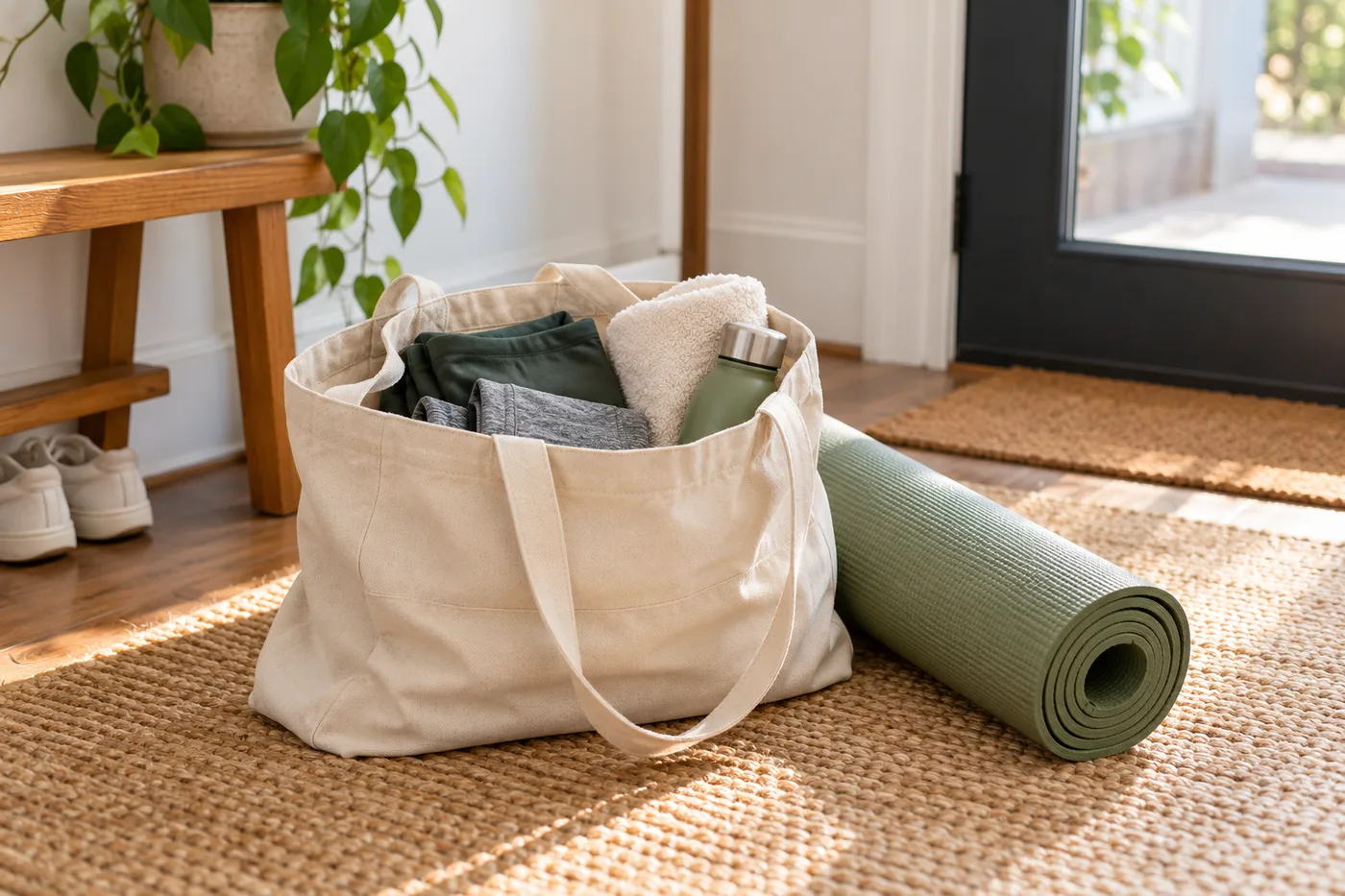
Pack the Personal Item for a 24-Hour Delay
Keep these with you:
- medication and documents;
- one practice outfit;
- underwear;
- toothbrush and minimum toiletries;
- phone/charger;
- essential support garment;
- small snack if permitted; and
- one warm layer.
This keeps a delayed suitcase from becoming a missed first day.
Laundry System
Bring a small amount of permitted detergent, a sink stopper only if useful, and a ventilated bag. Test colored garments for bleeding at home. Never hang dripping clothes over wood or shared furniture.
Separate clean, damp and dirty items. Allow mats and towels to dry fully before packing. Fast-dry fabric helps only when washing is available and items dry in time; it does not clean a used garment. If neither laundry nor permitted hand washing is available, calculate quantities for the whole trip using the repeat assumptions appropriate to each garment.
What to Leave Home
- Full blocks/bolsters when supplied
- Valuable jewelry
- A different matching set for every class
- New untested shoes or leggings
- Large supplement collections
- Essential oils in shared practice spaces
- Heavy glass bottles
- Work equipment for a retreat intended to disconnect
- “Just in case” duplicates without a scenario
The beginner clothing guide explains why tested fit matters more than a new outfit.
Departure-Day Check
- Weather and travel alerts checked
- Airline baggage rules rechecked
- Retreat transfer confirmed
- Medication and documents in personal item
- Props confirmed with venue
- First outfit accessible
- Laundry plan realistic
- Emergency contact has itinerary
- Home obligations and out-of-office set
- Bag weighed after water bottle is empty
Packing Decisions People Often Leave Too Late
- Mat: take one only when the venue does not supply a suitable option or a personal surface justifies the baggage. A travel mat can be a useful compromise after checking dimensions and weight.
- Seven-day bottom count: the example's three bottoms cover a two-item rotation plus one spare under its stated one-class-a-day, three-day laundry assumptions. High sweat, slow drying or more classes changes the answer; recount the longest interval before clean, dry replacements arrive.
- White clothing: pack it only after sweat, opacity and laundry tests. Dark coordinated pieces may be simpler where stain treatment is limited.
- A special retreat wardrobe: unnecessary. Fit-tested practice clothing, destination layers and culturally appropriate casual clothes cover the functional jobs.
Zip the Bag Only After This Check
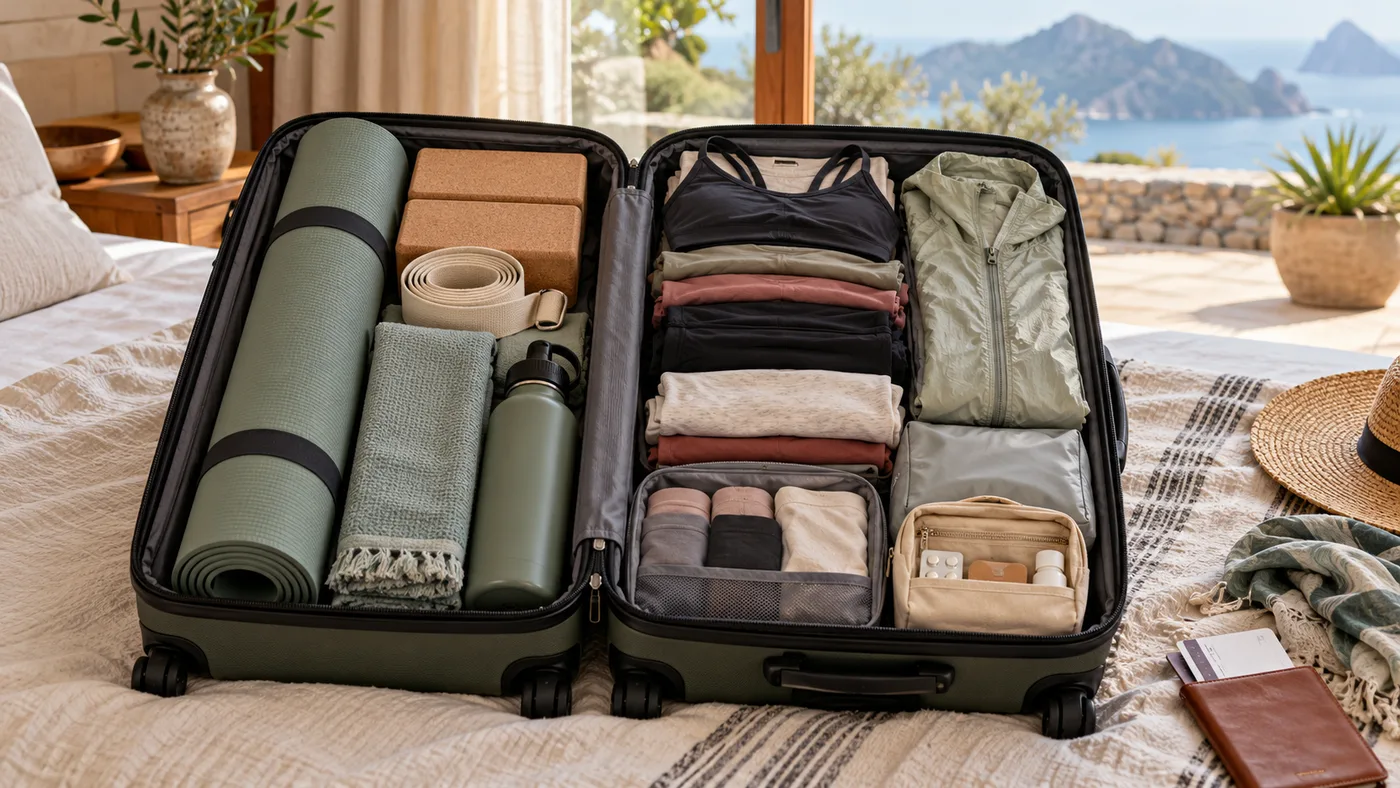
Pack for the schedule, climate and laundry—not the fantasy photograph. A small tested capsule leaves room for attention, which is why the retreat exists.
Sources and Further Reading
Source-use note: commercial clothing and mat pages were used to identify packing categories, not to establish airline, entry, medication or venue rules. Verify those rules with the relevant official provider for the actual trip.