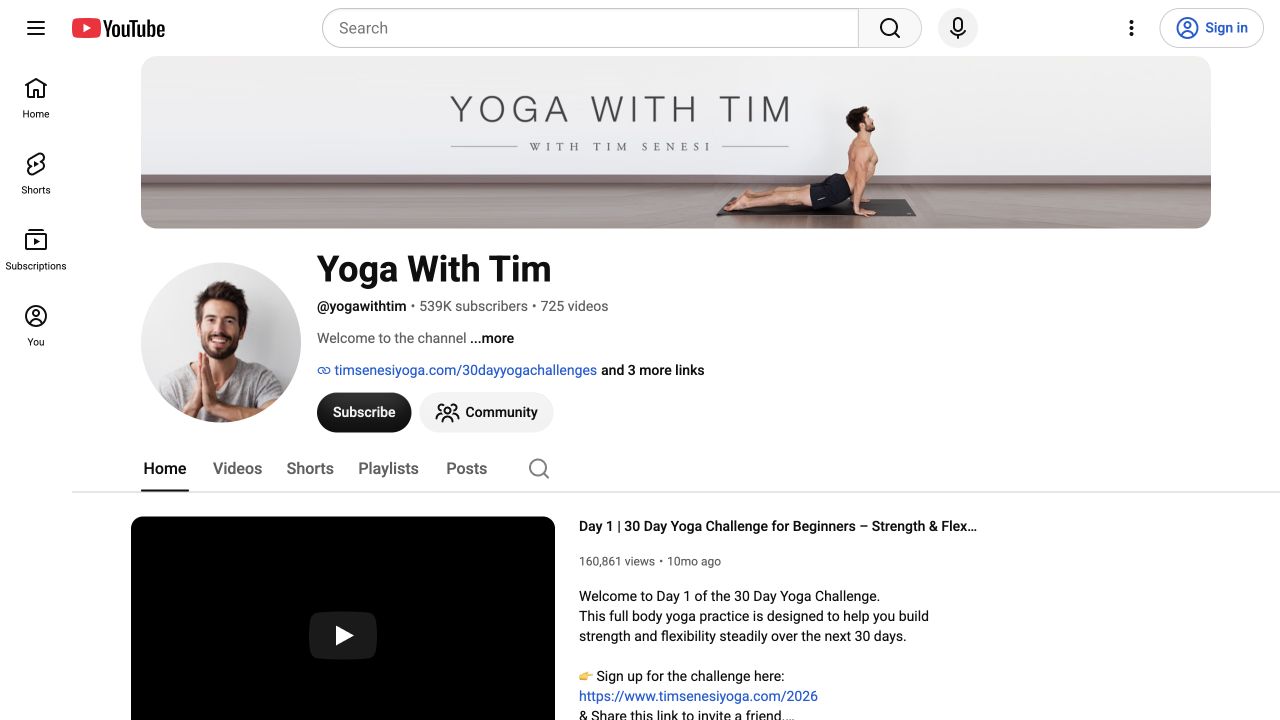
Tim Senesi's Yoga With Tim channel offers vinyasa with an emphasis on alignment, breath, and yoga philosophy, alongside a separate membership offering. This guide introduces those teaching themes and ways to explore his free classes. The sources reviewed here are limited; they do not support a definitive assessment of the entire library or independent verification of his credentials.
Official YouTube: Yoga With Tim on YouTube
What the available interview tells us
The most substantive archived source is a 2019 episode of psychologist Seth Gillihan's podcast, summarized on the host's page as “How to Get the Most out of Your Home Yoga Practice”. The page is show notes, not a full transcript, so its details should not be stretched beyond what it records.
According to that summary, Senesi began practicing during college while living what he later described as a toxic lifestyle. He found that his first class quieted his mind, and his practice gradually accompanied changes in drinking, drug use, relationships, and daily choices. This is his personal history, not evidence that yoga produces the same changes for everyone.
More useful for choosing a class is the description of his influences. The episode says B. K. S. Iyengar's work strongly shaped Senesi's approach, and that he recommended both Light on Yoga and Light on Life. It also describes a vinyasa influence from Vinnie Marino. Put together, those references suggest a teacher interested in both the organization of poses and the continuity of a flowing class—not simply exercise performed at maximum speed.
Senesi's official site uses similar language in 2026. It describes his signature offering as vinyasa combined with alignment, breath work, and philosophy. The site also points readers to a free challenge, longer member classes, and mobility-focused material. Those are first-party descriptions, and this profile does not assess the paid membership or confirm how consistently every free video follows that formula.
The likely reader fit
Yoga With Tim may be worth sampling if you want:
- a physically active home practice with more alignment attention than a workout-only flow;
- a recurring teacher rather than a different instructor every session;
- a challenge format that removes the daily decision about what to practice;
- occasional discussion of breath, inward attention, and philosophy; or
- a bridge between shorter free classes and longer structured sessions.
You may prefer another channel if you need a very quiet practice, prenatal specialization, chair yoga, condition-specific clinical guidance, or frequent real-time personal corrections. The archive reviewed here also does not establish that Senesi is the right teacher for a specific injury or chronic-pain condition.
A sensible three-step trial
Start with observation, not a month-long promise.
First, choose a beginner or foundational class whose title clearly states a level and duration. Watch the opening setup before joining. Check whether props are named, whether the camera angle lets you see the relevant joints, and whether instructions arrive before the transition.
Next, try one ordinary vinyasa session on a separate day. The useful question is not whether it makes you sweat; it is whether you can maintain a steady breath and understand why the sequence is progressing as it does.
Finally, sample the first day of the official free 30-day challenge rather than automatically committing to all of it. Review the rest-day pattern, class lengths, and level progression. A challenge is only helpful when its schedule fits your recovery and existing activity.
If those three experiences feel coherent, the channel may suit you. If you repeatedly pause to decode instructions, feel hurried into load-bearing shapes, or dislike the amount of philosophical framing, another teacher may be a better match.
What remains unverified
The source set does not provide a sufficiently detailed, independently checked account of Senesi's teacher training, certifications, complete career timeline, or current YouTube catalog.
The official site makes general claims about improving strength, flexibility, movement, and aches. Those are promotional descriptions, not individualized medical advice. A yoga video cannot diagnose pain or tell whether a pose is appropriate for your history. Stop if movement causes sharp pain, numbness, dizziness, or worsening symptoms, and obtain qualified guidance when health circumstances require it.
About this profile: This research-based profile draws on one substantive interview summary and official pages. It introduces the free channel, challenges and paid community within that limited source base.
Sources and reporting notes
- Yoga With Tim official YouTube channel — official channel destination linked by Senesi's own site.
- Yoga With Tim official site — current first-party description of free classes, challenge formats, vinyasa, alignment, breath work, philosophy, and member offerings.
- Yoga With Tim: 2026 30-Day Challenge — first-party schedule and participation information for the free challenge mentioned in the sampling plan; availability may change.
- Seth Gillihan: “Tim Senesi — How to Get the Most out of Your Home Yoga Practice” — 2019 episode notes used for background and stated teaching influences; no full transcript was available in the reviewed archive.