
About this guide: This guide applies general exercise-nutrition information to common practice situations. It is not an individual food, fluid or medical prescription; consult an appropriately qualified professional for personal needs. Illustrations are not evidence of a recipe or nutrition outcome.
Start with two facts: what the session asks of you, and when you last ate. A gentle 30-minute class after lunch, an early-morning power flow and a 90-minute heated session lead to different food and fluid decisions. The rest of the training week matters as well.
For many recreational sessions, ordinary meals supply what is needed: adequate total food, familiar carbohydrate sources, protein across the day, fluid, sleep and foods the gut tolerates. This guide deliberately avoids personal calorie, protein, sodium and fluid prescriptions. People with diabetes, kidney or heart conditions, an eating disorder, pregnancy or medication-related fluid concerns need individualized professional guidance.
Evidence boundary: the Academy of Nutrition and Dietetics material cited below addresses exercise nutrition generally rather than yoga as a uniquely studied category. The class-specific examples are editorial applications, not yoga-specific clinical findings or an individual nutrition prescription.
First Match Fuel to the Session
| Session | Likely need | Common mistake |
|---|---|---|
| Gentle/restorative under 60 min | Normal meals and hydration | Buying unnecessary supplements |
| Vinyasa/power 45–75 min | Carbohydrate availability; normal protein | Training under-fueled |
| Hot or long class | Fluid planning; possibly sodium depending on sweat/duration | Treating sweat as detox or overdrinking plain water |
| Yoga plus strength/running | Recovery based on total workload | Evaluating yoga in isolation |
| Early morning class | Small tolerated snack or planned meal after | Forcing a large meal immediately before |
Before Yoga
The Academy of Nutrition and Dietetics advises that pre-workout timing depends on tolerance, commonly one to four hours. Closer to class, smaller and lower-fat foods may feel easier because fat, fiber and large volume slow digestion.
Examples:
- banana and yogurt;
- toast with nut butter;
- oatmeal with milk and fruit;
- rice with egg or tofu several hours before;
- a small smoothie when solids are difficult.
A person who ate a normal meal a few hours earlier may need nothing. Test food in ordinary sessions, not before a retreat challenge or unusually hot class.
During Yoga
Most short, moderate sessions require only access to water. Long, very sweaty or repeated sessions may justify carbohydrate/electrolyte planning, but needs vary. Sports drinks are tools, not default wellness beverages.
Use a sensible individual plan informed by thirst, session duration, heat and prior professional advice; do not force large volumes in a short period. Thirst alone may not prevent mild dehydration during exertion, while overdrinking can contribute to hyponatremia. The CDC heat guidance explains both boundaries and emphasizes health conditions and medications.
For hot yoga, use the full benefits and risks guide, not nutrition alone.
After Yoga
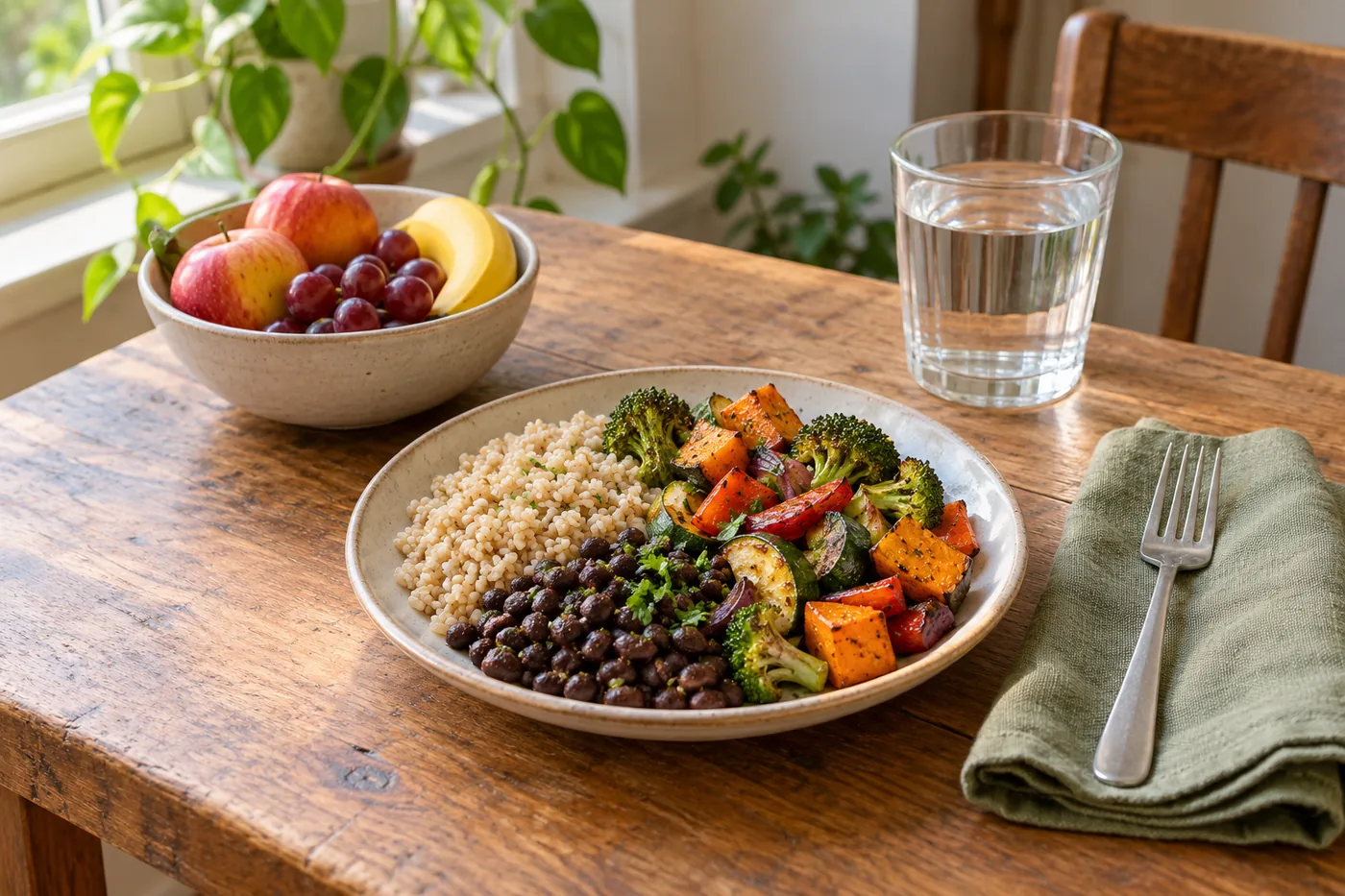
Recovery food matters most when the session was intense, long, hot or followed by another workout. The Academy recommends combining carbohydrate and protein after demanding exercise to replenish fuel and support repair.
Food-first examples:
- Greek yogurt, fruit and oats;
- rice, vegetables and tofu/chicken;
- beans, tortilla and cheese;
- eggs and toast with fruit;
- milk or fortified soy drink with banana;
- lentil soup and bread.
There is no magical 15-minute “anabolic window” for a recreational gentle class. Eating a balanced meal within a practical timeframe is enough for many people.
Carbohydrates: Activity Fuel, Not a Failure
Carbohydrates support working muscle and nervous-system demand. More intense or longer practice generally benefits from better carbohydrate availability. Restricting carbohydrate while increasing power yoga, running or lifting can worsen fatigue and recovery.
Choose familiar foods: grains, fruit, starchy vegetables, dairy or legumes according to tolerance and dietary pattern. The amount depends on the total training day, not a universal yoga formula.
Protein: Support the Whole Day
Protein contributes amino acids for repair and adaptation, but a large shake cannot compensate for chronically low energy intake or sleep. Distribute protein-containing foods across meals and snacks.
Most recreational practitioners can meet needs through food. Competitive athletes, vegans, older adults or people with medical constraints may benefit from a registered dietitian's individualized calculation. Do not turn a general article into a prescription.

Hydration and Electrolytes
Hydration starts before class; it is not a challenge to complete at the studio door. Urine color, thirst, climate and body-weight changes can offer clues, but none is perfect.
Electrolytes may be useful with heavy sweat, long duration or repeated heat exposure. More sodium is not appropriate for everyone. Kidney disease, heart failure, hypertension management and some medications change the decision.
Emergency signs are not a nutrition problem to self-treat. For new or unexplained chest pain or pressure, severe breathing difficulty, confusion, seizures, unresponsiveness or collapse, stop exercise and call 911 in the United States, or the local emergency number elsewhere. Alert staff or someone nearby; do not drive yourself or wait for food, fluid or supplements to work. See the American Heart Association's warning signs and NHS breathing guidance.
Sudden severe headache without a known cause, new one-sided weakness, or sudden speech, vision or coordination changes also need an immediate emergency call, even if they ease. See the American Stroke Association's warning signs.
In heat, begin cooling for suspected heat stroke while emergency help is coming and stay with the person. Persistent vomiting, marked weakness, a persistent headache without the emergency signs above, or a brief faint with full recovery require urgent medical assessment; a person who remains confused or unresponsive needs emergency services. Use the hot-weather symptom action plan for heat-related first aid. These overlapping symptoms cannot reliably distinguish dehydration, overdrinking or another illness at home.
“Detox” Claims
Sweating does not prove toxins are leaving in a meaningful health-improving way. Juice cleanses and severe restriction can reduce energy, worsen dizziness and conflict with heat safety. The liver and kidneys perform detoxification; no yoga drink replaces them.
Recovery Beyond Food
Sleep
Training adaptation occurs during recovery. A perfectly timed snack does not cancel chronic sleep loss.
Total energy
Low energy availability can impair health and performance even when protein intake appears high. Persistent fatigue, recurrent injury, menstrual disruption or declining performance deserves qualified evaluation.
Training load
Power yoga plus running plus strength work counts as a combined week. Schedule easy days rather than treating yoga automatically as recovery.
Alcohol
Alcohol can interfere with sleep, hydration and recovery. It is particularly unhelpful before or after heavy heat exposure.
A Simple Recovery Smoothie
Use this as food, not medicine:
- milk or fortified soy drink;
- banana or berries;
- yogurt or silken tofu;
- oats if more carbohydrate is needed;
- optional nut/seed butter for energy.
Adjust allergies, portion and ingredients. A smoothie is convenient, not inherently superior to a meal.
Sample Decision Paths
Gentle evening class after dinner: water as needed; no special recovery food unless hungry.
Morning power class: small tolerated snack before, then breakfast with carbohydrate and protein.
Hot 90-minute class: arrive hydrated, take water, consider individual electrolyte needs, cool down and eat a normal balanced meal.
Yoga after strength training: recovery should reflect the strength session; include adequate carbohydrate, protein and total energy.
Common Food Decisions Around Class
| Decision | Evidence-bounded answer |
|---|---|
| Practice before breakfast? | Some people tolerate a gentle morning session without food; others feel weak or nauseated. Test timing and a familiar small snack rather than treating fasting as a rule. |
| Take protein immediately? | Not after every class. Following harder training, a practical meal or snack containing carbohydrate and protein can support recovery. |
| Buy coconut water? | It supplies fluid and some electrolytes but is not uniquely required. The choice depends on sweat, the rest of the diet, preference and medical needs. |
| Use yoga for weight loss? | Yoga may contribute to activity and broader health habits, but weight change is multifactorial. A general article cannot prescribe restriction or predict an individual's result. |
Practical Conclusion
Fuel the life and training week, not the yoga label. Regular meals, tolerated pre-session food, appropriate fluid and a balanced recovery meal solve most needs. Supplements belong only where a real gap exists.
Sources and Further Reading
- Christopher R. Mohr, PhD, RD, with Academy Staff RDN reviewers, Timing Your Pre- and Post-Workout Nutrition (reviewed July 23, 2024)
- Academy of Nutrition and Dietetics: how to fuel a workout
- Backer and Freer, CDC Yellow Book, Heat and Cold Illness in Travelers (published April 23, 2025)
- CDC/NIOSH, Heat-related Illnesses (updated March 3, 2026)
- American Heart Association, Heart Attack, Stroke and Cardiac Arrest Symptoms
- American Stroke Association, Stroke Symptoms
- NHS, Shortness of breath (reviewed January 30, 2024; emergency-number wording adapted for US and international readers)
- NCCIH, Yoga: Effectiveness and Safety (updated August 2023)